
Trees
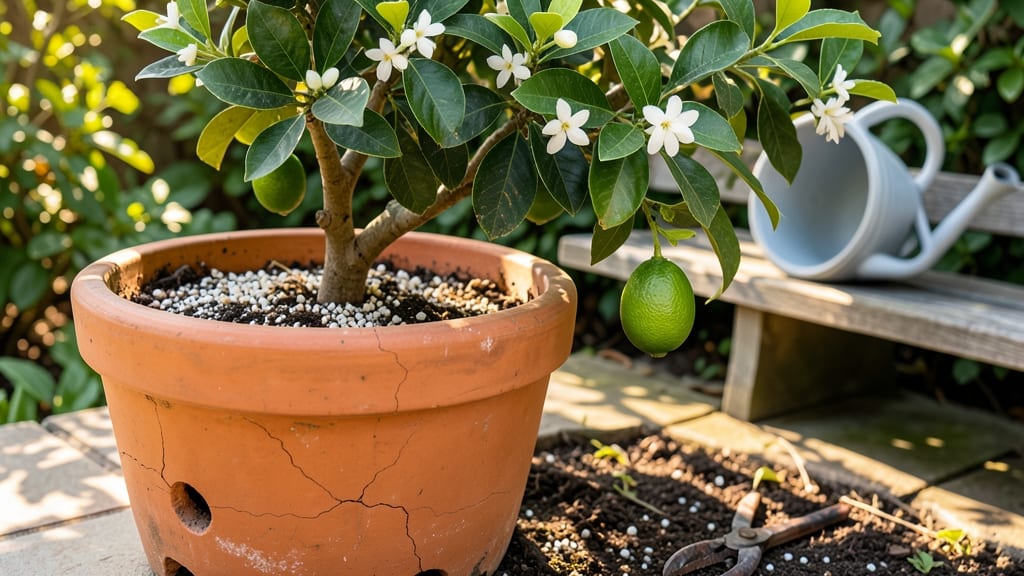
Growing lime trees in pots lets you enjoy fresh, fragrant fruit on your patio—no backyard required. 🌿 My first attempt with a dwarf Meyer lime tree proved that with the right pot, sunlight, and care, these citrus trees thrive in containers just as well as in the ground.
The secret isn’t complicated: it’s matching their Mediterranean roots to your climate by controlling water, soil, and temperature shifts.
Start with a 5-gallon pot for young trees, upgrading to 15-20 gallons as they grow. Dwarf varieties like Meyer limes stay under 6 feet tall, making them perfect for patios or balconies.
Use a well-draining citrus mix—equal parts potting soil, perlite, and compost—to prevent soggy roots, and always choose pots with drainage holes. Most beginners overwater, so let the top inch of soil dry before watering again.
By summer, you’ll harvest small, tangy limes that taste nothing like store-bought. The glossy leaves stay vibrant year-round with 6+ hours of morning sun, and regular pruning keeps the tree compact. Even in winter, a sunny windowsill or grow light keeps your tree alive—no citrus grove needed.
The only trade-off? You’ll need to fertilize every 4-6 weeks during growing season to replace nutrients washed away.
This works for any dwarf citrus—lemon, orange, or kumquat—just adjust the care slightly for each variety. The key is consistency: lime trees in pots reward patience with years of fruit, but they’ll let you know when something’s wrong with yellow leaves or stunted growth.
Let’s get your tree growing strong from day one.
📚 In This Guide
- What you need
- Instructions
- Tips and common mistakes
- Wrapping up and next steps
What you need
- ● Dwarf lime tree variety: Choose a cold-hardy dwarf variety like Citrus aurantifolia 'Mexican Lime' or Citrus × latifolia 'Bearss Lime' (ensure it’s grafted for best results).
- ● Pot: A 5-gallon or larger container with drainage holes (minimum 18-inch diameter for mature trees). Terracotta or fabric pots work well.
- ● Well-draining potting mix: A blend of 50% citrus-specific soil, 30% perlite or pumice, and 20% compost (avoid garden soil—it compacts!).
- ● Slow-release citrus fertilizer: Look for one with a balanced NPK ratio (e.g., 6-6-6 or 10-10-10) + micronutrients like iron and zinc.
- ● Mulch: Organic mulch (e.g., bark chips or straw) to retain moisture and regulate soil temperature.
- ● Gloves & pruning shears: For handling sap (lime trees can be sticky!) and trimming.
- ● Watering can with a rose attachment: Ensures gentle, even watering (avoid overhead spraying).
- ● pH test kit: Lime trees thrive in slightly acidic soil (pH 6.0–7.0).
- ○ Support stake (optional): For young trees to prevent toppling in windy conditions.
- ○ Citrus food or Epsom salt (optional): Boosts magnesium for greener leaves.
Step-by-Step instructions for growing dwarf lime trees in containers
Here’s how to keep your potted lime tree lush and productive year after year.
🪴 Step 1: Choose the Right Pot and Drainage Setup
Start with a 15-20 gallon container—lime trees need room for roots to spread, and smaller pots dry out too fast. I always pick unglazed clay pots because they breathe better and prevent root rot. Add 3-4 drainage holes if your pot doesn’t have them, and place a 2-inch layer of gravel or broken pottery at the bottom. This keeps water flowing out instead of pooling around roots.
Here’s the thing—lime trees hate soggy feet. If your pot lacks drainage, water will sit and suffocate the roots. I’ve seen even drought-tolerant citrus trees fail because of this. Use the finger test after watering: stick your finger 2 inches deep into the soil. If it’s still damp after a day, you’ve got too much water.
🌱 Step 2: Plant With Well-Draining Soil and Essential Nutrients
Fill the pot with a mix of 50% citrus-specific potting soil, 30% perlite or pumice, and 20% compost. Lime trees need slightly acidic soil (pH 6.0-7.0)—test your mix with a kit if you’re unsure. Gently remove the tree from its nursery pot and loosen any circling roots with your fingers. Place it in the center of your container, then backfill with soil, pressing lightly to eliminate air pockets.
Don’t skip the slow-release citrus fertilizer at planting time. I mix in 2 tablespoons per gallon of soil to give the tree a nutrient boost right away. Water deeply after planting to settle the soil and remove any air gaps. You’ll know it’s right when water runs out the drainage holes—this ensures the roots make full contact with the moist mix.
☀️ Step 3: Position for Maximum Sunlight and Protection
Lime trees need 6-8 hours of direct sunlight daily, but they’ll burn if exposed to hot afternoon sun in summer. I place mine on a covered patio where they get morning sun and afternoon shade. If you’re indoors, a south-facing window with a grow light (12-14 hours/day) works, but natural light is always better.
Watch for these signs: Yellowing leaves mean too much sun; stretched, pale growth means not enough. If leaves start curling or develop brown spots, move the tree to a shadier spot immediately. In winter, if temperatures drop below 40°F, bring it indoors near a bright window—lime trees are tender and won’t survive frost.
💧 Step 4: Water Deeply and Maintain Consistent Moisture
Water your lime tree once a week in summer, but check the soil first. Stick your finger 2-3 inches deep—if it feels dry, water thoroughly until it runs out the drainage holes. In winter, cut back to every 2-3 weeks, as the tree’s growth slows. Overwatering is the #1 killer of potted citrus, so always let the top 1-2 inches of soil dry out between waterings.
I like to water in the early morning so excess moisture evaporates during the day. Avoid wetting the leaves—this can cause fungal issues. If you notice drooping leaves that don’t bounce back after watering, it’s a sign of root stress. Adjust your watering schedule or check for drainage problems.
✂️ Step 5: Prune for Shape and Health Twice a Year
Prune in early spring (before new growth starts) and late summer to shape the tree and encourage fruit production. Use sterilized pruning shears to cut back 1/3 of the new growth from the previous season. Remove any dead, diseased, or crossing branches first—this keeps air flowing and prevents pests. I also trim any suckers (shoots growing from the base) to direct energy into the main trunk.
Here’s the trick: Never prune more than 25% of the tree at once—this stresses the plant. After pruning, give the tree a light fertilizer to help it recover. You’ll see new, bushier growth within 4-6 weeks if you’ve pruned correctly. If your tree looks bare or leggy after pruning, it’s getting too little light—move it to a sunnier spot.
Tips & tricks for perfectly thriving potted lime trees
Confession: I nearly lost my first potted lime tree to overzealous watering—until I learned these key tricks that make all the difference.
Drainage is Non-Negotiable: That 2-inch gravel layer in Step 1 isn't just about looks—it's your tree's lifeline. I've seen roots rot within weeks when people skip this, even with "drought-tolerant" varieties. For extra insurance, add a layer of coir fiber below the gravel—it wicks away excess moisture better than plain rocks. And if your pot has no drainage holes? Drill them yourself—lime trees will forgive many things, but soggy roots won't.
Soil Mix Secrets: The 50-30-20 ratio in Step 2 works, but here's what nobody tells you—the citrus-specific potting soil should contain mycorrhizal fungi to help roots absorb nutrients. If yours doesn't, add a sprinkle of mycorrhizal powder when planting. Also, mix in 1 part sand if your perlite is too coarse—this creates the perfect balance of aeration and moisture retention. I test my mix's drainage by filling a cup with water—if it drains in under 30 seconds, it's perfect.
Sunlight Strategy: Those 6-8 hours of sunlight in Step 3 are critical, but timing matters more than you'd think. Place your tree where it gets morning sun and afternoon shade—this prevents leaf scorch. If you're using a grow light (12-14 hours/day), position it 12-18 inches above the tree and adjust as the tree grows. Pro tip: Rotate your pot quarter-turn weekly to ensure even growth—you'll notice leaves on one side getting leggy if you don't.
Winter Survival Hack: The 40°F threshold in Step 3 is your warning sign, but here's how to extend your tree's outdoor season. Move it to a garage or sunroom where temps stay above 40°F, even if it's not sunny. I've kept mine outdoors until 35°F with a frost cloth wrapped around the pot—just make sure it gets some light. And if you must bring it indoors, quarantine it for 2 weeks to prevent pests from hitching a ride.
Pro Tips for Growing Lime Trees In Pots
- Confession: I nearly lost my first potted lime tree to overzealous watering—until I learned these key tricks that mak...
- Drainage is Non-Negotiable: That 2-inch gravel layer in Step 1 isn't just about looks—it's your tree's lifeline. I've...
- Soil Mix Secrets: The 50-30-20 ratio in Step 2 works, but here's what nobody tells you—the citrus-specific potting so...
Frequently asked questions
Got questions about growing lime trees in pots? You’re not alone! Here are answers to the most common concerns—from sunlight struggles to harvest timing—so you can keep your citrus thriving.
How much sunlight do potted lime trees really need?
Dwarf lime trees need 6–8 hours of direct sunlight daily. If you’re in a shady spot, supplement with a grow light (12–14 hours/day) to prevent weak growth. South-facing windows or balconies work best—just rotate the pot weekly for even exposure!
Can I grow a lime tree indoors year-round?
Yes, but it’s tricky! Indoor lime trees need bright light, high humidity (50%+), and warm temps (65–75°F). Use a humidifier or pebble tray, and fertilize monthly with citrus-specific food. Expect slower growth and smaller fruit compared to outdoor pots.
When will my potted lime tree produce fruit?
Dwarf varieties like ‘Meyer’ or ‘Improved Meyer’ can bear fruit in 3–5 years with proper care. Patience is key—focus on well-draining soil, regular watering, and winter protection (below 40°F). First fruits may be small, but they’ll improve with age!
Why are my lime tree leaves turning yellow?
Yellow leaves usually signal overwatering, nutrient deficiency, or root rot. Check the soil—it should be damp but not soggy. Flush the pot with water, trim dead roots, and repot if needed. A balanced citrus fertilizer (every 2 months) can also help!
What’s the best pot size for a young lime tree?
Start with a 5–7 gallon pot for young trees (up to 3 feet tall), then upgrade to 10+ gallons as roots grow. Use pots with drainage holes and terracotta (breathable material) to prevent root rot. Repot every 2–3 years in spring.
Pro Tip:
Need a space-saving hack? Try espalier training—gently bend branches into a flat plane against a wall or trellis. This keeps the tree compact while maximizing fruit production!
Wrapping up and next steps
Growing lime trees in pots is a rewarding journey that brings fresh citrus to your doorstep—literally! 🌿 With the right dwarf variety, sunlight, and care, you’ll enjoy vibrant foliage and delicious fruit in just a few years.
Whether you’re a beginner or a seasoned gardener, the key is patience, consistency, and a little love for your leafy companion.
Now that you’re armed with the know-how, why not start today? Pick your pot, choose a healthy sapling, and give your lime tree the sunshine it craves. Before you know it, you’ll be savoring homegrown limes straight from your patio! 🍋✨