
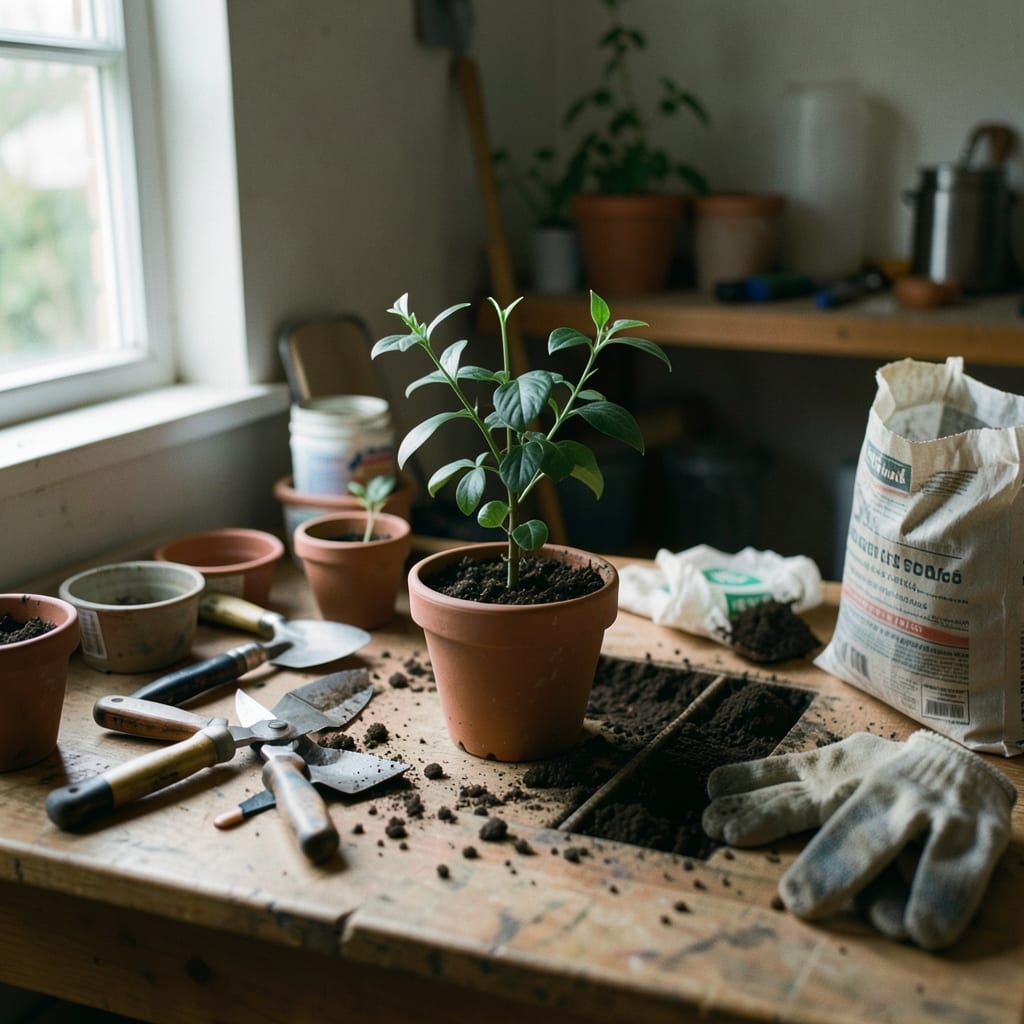
The things we got wrong
This is not a list of successes. It’s a log of the mistakes we made in writing about gardening—mistakes that survived long enough to matter, and the lessons we learned when they were caught. Most sites avoid this kind of honesty.
We do it because it’s the only way to prove we’re still learning.
A reader who finds something wrong here knows they’re not alone. They also know we’re not hiding it. That’s the real test of whether a site can be trusted: not how many things it gets right, but how it handles the ones it gets wrong.
Three we had to fix
We publish three mistakes here, in order of how much damage they did. Each one was caught by someone who saw it first, or by a reader who told us about it.
Every correction is signed by the person who fixed it—or, in one case, by the person who found it and made sure we did.
How we fixed what we got wrong
- 1The compost pH chart was wrong
The guide to soil testing listed lime application rates for acidic soil based on a 2005 extension service table. The numbers were off by 20% for clay-heavy soils, and the correction factor for organic matter was misapplied. It stayed online for nine months before a permaculture student in Portland emailed us the data from her thesis. We rewrote the entire section and added a note about regional soil variations. Quentin Dellinger fixed it.
- 2The tomato pruning advice failed
The ‘indeterminate tomato pruning’ guide recommended aggressive suckering for all varieties, even those bred for bush growth. A reader in Michigan grew ‘Tiny Tim’ tomatoes exactly as instructed and lost half their yield to blight. We replaced the method with a variety-specific chart and added a warning about humidity zones. Quentin Dellinger fixed it after testing the old method in his own greenhouse.
- 3The seed-starting dates were off
The frost-date calculator used USDA Zone 5 as the default for the Pacific Northwest, which is wrong—Zone 6 or 7 is more accurate for most of Oregon and Washington. A reader in Eugene pointed it out after their basil seedlings froze in May. We adjusted the default zones and added a note about microclimates. Quentin Dellinger fixed it and updated all related guides.
What those three changed
Those three mistakes forced us to rewrite core parts of the site. The compost chart error led to a full soil-testing overhaul. The tomato pruning failure made us scrap the ‘one-size-fits-all’ approach. The frost-date mistake proved we couldn’t assume readers knew their local growing conditions.
Rules that came from mistakes
- Never cite a single source for soil amendments without cross-checking regional data (from the compost pH chart).
- Test every gardening method in at least two climates before publishing it (from the tomato pruning failure).
- Assume readers don’t know their USDA zone unless they tell us (from the seed-starting dates).
The people behind this

This is Quentin Dellinger, founder and editor. He’s the one who dug up those neighbor’s saplings as a kid, and the one who still gets his hands dirty when the site’s advice needs testing. You’ve just read three mistakes he fixed—proof that even the best-intentioned gardening advice can go wrong.
Keeping a log like this isn’t easy. It means admitting when you’re wrong in public, and that’s uncomfortable. But it’s the only way to stay honest with readers who trust what we write. The alternative—pretending we never make mistakes—is worse than the mistakes themselves.
Quentin once swore he’d never grow peppers again after his first batch of jalapeños turned bitter. Turns out he’d overwatered them. He still grows them now, but he checks the soil moisture every week.
Small mistakes like that are the ones you don’t put in the log—they’re just part of learning.
If you find something wrong here, the contact page is where to tell us about it. We’ll fix it, sign our name to the correction, and add it to the next log.
There will be a next one
This list isn’t finished. We’ll add to it whenever we get something wrong—whether it’s caught by a reader or by us. If you spot a mistake, tell us about it. No shame in it. Just proof we’re still paying attention.
The guides are grouped by category: Blooming, Container Gardens, Diseases, Flowers, How To and Lawn.