
Pruning
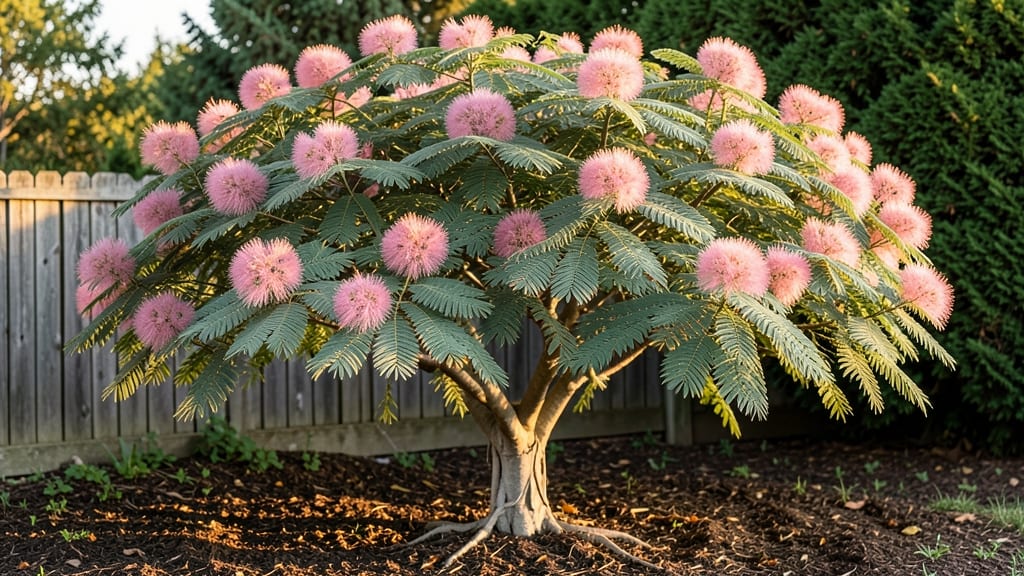
Your Albizia silk tree could be the star of your landscape—but only if you prune it right. This fast-growing beauty thrives with three strategic trims a year, not just the one most gardeners do.
I’ve learned the hard way that skipping these cuts leads to tangled branches, fewer flowers, and a tree that struggles to support its own weight.
The secret lies in timing: a light shape-up in early spring, a mid-summer cleanup after flowering, and a heavy prune in late winter before new growth starts. Each trim serves a purpose—spring opens the canopy for sunlight, summer removes spent blooms, and winter controls size while preventing disease.
With the right tools and a sharp eye, you’ll turn a wild, leggy mess into a neat, flowering powerhouse that hummingbirds adore.
What you’ll end up with is a tree that blooms longer and more abundantly each year, with silky pink puffball flowers that last from late spring through summer. The fern-like foliage stays lush, and the structure remains strong enough to handle its rapid growth.
Plus, you’ll avoid the common pitfalls—like invasive root spread in warmer climates—that turn this ornamental into a headache.
Whether you’re dealing with a young sapling or a mature tree, these techniques adapt easily. The key is consistency—just 30 minutes every few months makes all the difference. Let’s get your Albizia looking its best all year round.
📚 In This Guide
- What you need
- Instructions
- Tips and common mistakes
- Wrapping up and next steps
What you need
- ● Pruning shears – Bypass pruners (for small branches, 1-2 inches thick) or anvil pruners (for tougher cuts). Sharpness is key!
- ● Loppers – For medium branches (2-4 inches thick). Look for long-handled, bypass-style loppers for better leverage.
- ● Pruning saw – A curved-tooth pruning saw for thick branches (4+ inches). Avoid cheap saws—they can tear wood!
- ● Gloves – Heavy-duty work gloves (or gardening gloves with grip) to protect against thorns and rough bark.
- ● Safety glasses – To shield your eyes from debris, especially when sawing.
- ● Ladder or extension pole – A stable, tall ladder (or a pruning pole with a saw attachment) for higher branches.
- ● Disposable pruning bags or bucket – To collect and dispose of trimmings easily.
- ● Rubbing alcohol or bleach solution – For sterilizing tools between cuts (1 part bleach to 9 parts water). Prevents disease spread!
- ○ Tree wound sealant (optional but helpful) – A high-quality pruning sealant (like Tanglefoot Tree Wound Pruning Seal) for large cuts.
- ● Pole saw – For hard-to-reach branches without a ladder.
- ● Knee pads or a stool – If you’ll be working on the ground for extended periods.
- ● Tree pruning spray – To reduce sap buildup on tools.
- ● Marking spray or tape – For planning cuts before you start.
- ● First-aid kit – Just in case of minor scrapes or thorn pricks!
How to prune an Albizia silk tree for optimal growth
Here's the straightforward approach I use to keep these fast-growing trees strong and healthy.
Plan Your Three Strategic Pruning Sessions
Albizia silk trees thrive with three targeted pruning sessions each year: late winter (just before new growth begins), early summer (after the first flush of leaves), and late summer (to shape before fall). I mark these on my calendar because timing matters more than anything else with these trees. Prune too early, and you cut off potential blooms; too late, and you risk winter damage to fresh cuts.
Start with a clean workspace—gather your tools and lay out a tarp below the tree to catch debris. The late winter trim focuses on removing dead, diseased, or crossing branches first. In early summer, you'll prune to encourage bushiness, while late summer is about refining shape and preparing for dormancy. Each session has a distinct purpose, so don’t skip any.
Remove Dead, Diseased, and Weak Branches First
Begin every session by inspecting the tree for branches that are dead, diseased, or rubbing against others. These are your priority cuts—they prevent future problems and improve airflow. Use sharp, clean pruners to make cuts just outside the branch collar (the swollen area where the branch meets the trunk). A jagged cut here invites decay, so take your time.
Look for branches with peeling bark, fungal growth, or hollow centers—these need removal immediately. If a branch is larger than 2 inches in diameter, use a pruning saw for a clean cut. Never leave stubs; the tree won’t heal properly, and it can lead to infections. After removing the obvious offenders, step back and assess the tree’s natural shape—this will guide your next cuts.
Thin the Canopy for Better Airflow and Light
Albizia trees grow quickly and can become dense, which traps moisture and encourages pests. My goal is to open the canopy by removing 20-30% of the foliage during each pruning session. Focus on branches growing inward or downward—they compete with upward-growing branches for sunlight and weaken the tree’s structure.
Start at the outer edges and work your way in. Cut back to a healthy lateral branch (one that grows outward at a 45-degree angle) rather than leaving a stub. You’ll see the difference immediately: more light reaches the inner branches, and the tree’s shape becomes balanced. Avoid over-thinning, though—you want to maintain a full, lush appearance while still improving airflow.
Shape the Tree for Balance and Aesthetics
Once you’ve removed the deadwood and thinned the canopy, it’s time to refine the tree’s shape. Albizia trees respond well to pruning, so you can guide their growth with strategic cuts. I like to prune to encourage a slightly rounded top while keeping the lower branches for a fuller look. If the tree is leaning, trim more from the heavier side to encourage upright growth.
For larger branches, make the cut just above a bud or lateral branch to promote new growth in the right direction. Avoid cutting too close to the trunk—this can damage the branch collar and slow healing. After shaping, step back and visualize the tree’s silhouette. If it looks uneven, adjust your cuts gradually over the next session.
Clean Up and Prepare for the Next Season
After pruning, rake up all the debris and dispose of it properly—don’t leave it beneath the tree, as it can harbor pests and diseases. Sterilize your tools with rubbing alcohol or a bleach solution (1 part bleach to 9 parts water) to prevent spreading pathogens. I also apply a pruning sealant to cuts larger than ½ inch in diameter to protect them from moisture and insects.
Finally, water the tree deeply to help it recover. The roots will work to heal the cuts, and the tree will focus on producing new growth. Keep an eye on the pruned areas over the next few weeks—if you see signs of stress (like yellowing leaves), it might need extra care, such as a balanced fertilizer or more frequent watering. With consistent pruning, your albizia will stay healthy, vibrant, and well-shaped for years.
Tips & tricks for pruning an Albizia silk tree
Timing and technique make all the difference when shaping these fast-growing trees—here’s how to prune like a pro without stressing the tree.
Timing is Everything: The three pruning sessions—late winter, early summer, and late summer—are non-negotiable for albizia health. In late winter, focus on removing deadwood before new growth begins; in early summer, prune to encourage bushiness after the first leaves appear; and in late summer, refine shape before dormancy. I’ve seen trees struggle when pruned at the wrong time—spring cuts can remove potential blooms, while late fall cuts risk winter damage to fresh wounds.
Cut with Precision: Always make clean cuts just outside the branch collar using sharp tools. For branches larger than 2 inches, use a pruning saw to avoid tearing. I learned this the hard way—jagged cuts invite decay and slow healing. When thinning the canopy, aim to remove 20-30% of the foliage by targeting inward-growing branches. This opens the tree for better airflow and sunlight penetration, which prevents fungal issues and keeps the tree looking lush.
Shape with Purpose: Albizia trees respond well to guidance, so visualize the silhouette you want before making cuts. For a balanced look, encourage a slightly rounded top while keeping lower branches for fullness. If your tree leans, trim more from the heavier side to promote upright growth. After shaping, step back often—your perspective matters more than the ruler in your hand.
Post-Pruning Care: Don’t forget the cleanup! Rake up all debris to prevent pests and diseases, then sterilize your tools with rubbing alcohol or bleach solution. For cuts larger than ½ inch, apply pruning sealant to protect against moisture and insects. Finally, water deeply to help the tree recover. I’ve noticed trees pruned without proper aftercare often show stress—yellowing leaves or stunted growth—so this step is just as important as the cuts themselves.
Pro Tips for Albizia Silk Tree
- Timing and technique make all the difference when shaping these fast-growing trees—here’s how to prune like a pro without stressing the tree.
- Timing is Everything: The three pruning sessions—late winter, early summer, and late summer—are non-negotiable for albizia health.
- Cut with Precision: Always make clean cuts just outside the branch collar using sharp tools.
Frequently asked questions
Got questions about keeping your Albizia silk tree (also called mimosa tree) thriving with the right pruning? We’ve got answers!
Whether you're a newbie or a seasoned gardener, these FAQs will help you master the art of trimming this fast-growing beauty.
When is the best time to prune an Albizia silk tree?
The ideal time to prune is late winter or early spring (just before new growth starts) to shape the tree and remove dead wood. You can also do a light trim in summer to control size, but avoid heavy pruning then—it stresses the tree. For Albizia, timing matters because it bleeds sap if pruned too late in the season.
How much can I prune back my Albizia silk tree?
You can safely remove up to 25-30% of the tree’s canopy in one session, but avoid over-pruning. Albizia trees recover well, but never cut more than 1/3 of the branches at once. Focus on thinning out crowded branches and removing dead or crossing limbs to encourage airflow and sunlight penetration.
Why is my Albizia silk tree dropping leaves after pruning?
If your tree sheds leaves post-pruning, it’s usually normal stress—especially if you trimmed too much at once. To minimize shock, prune gradually and avoid cutting during extreme heat or drought. Water deeply after trimming, and fertilize lightly in spring to help it bounce back. Albizia is resilient, so it should regrow foliage within a few weeks!
Can I prune an Albizia silk tree in fall or winter?
Pruning in fall or winter is possible, but it’s not ideal for Albizia. Cold weather slows healing, and late-winter pruning (just before buds swell) is safer. If you must prune in winter, do it on a mild day and avoid heavy cuts. Fall pruning can also invite pests since the tree’s defenses are lower.
What’s a good alternative if I don’t want to prune my Albizia?
If pruning feels like too much work, consider letting it grow naturally—Albizia silk trees are fast-growing and can reach 30-50 feet tall! For smaller spaces, opt for regular thinning (removing only dead or problematic branches) or choose a dwarf variety like Albizia julibrissin ‘Summer Chocolate’. Just be prepared for more frequent cleanup of seed pods and lightweight branches!
Wrapping up and next steps
Pruning your Albizia silk tree isn’t just about shaping—it’s about inviting health, vibrancy, and long-term beauty into your landscape. With the right tools, timing, and techniques, you can keep this stunning tree thriving year-round while minimizing stress and maximizing growth. 🌿
Ready to take the next step? Start small: tackle one trim at a time, document your progress, and adjust as you learn. Before you know it, your Albizia will be the star of your outdoor space—with less effort and more rewards. Happy pruning! 🌟