
Pruning
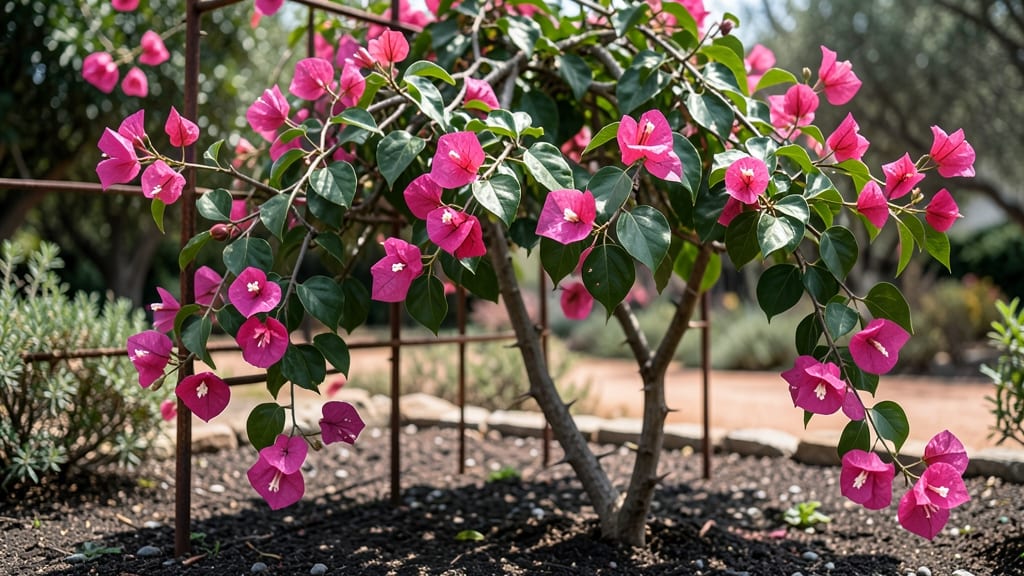
The Barbara Karst bougainvillea tree delivers electric blue spikes that turn heads in any landscape—but only if you prune it right. I learned this the hard way when my first attempt left me with a leggy, sparse mess instead of a blooming powerhouse.
This variety thrives in warm climates but needs strategic cuts to keep it compact and flowering.
Here’s the secret: prune twice a year—once after blooms fade and again in early spring—to encourage fresh growth. You’ll need sharp pruners, gloves, and a clear day to avoid stressing the plant.
The goal is to shape it like a rounded bush, cutting back one-third of the oldest stems each time while leaving younger branches to take over.
Within 6-8 weeks of proper pruning, you’ll see new shoots bursting with vibrant blue bracts, and the plant will stay dense and productive for years. Even in cooler zones, a container-grown Barbara Karst can bloom if you bring it indoors before frost.
The key is patience—this isn’t a quick fix, but the payoff is worth it.
For those in USDA Zones 9-11, this variety handles heat like a champ, but in colder areas, treat it as an annual or overwinter it carefully. Mistakes happen—like over-pruning or cutting too late—but I’ll show you how to recover. Let’s get those blue spikes blooming nonstop.
📚 In This Guide
- What you need
- Instructions
- Tips and common mistakes
- Wrapping up and next steps
What you need
- ○ Pruning shears: Bypass pruners (sharp, clean, and sterilized to prevent disease). Optional: Loppers for thicker stems (1–2 inches in diameter).
- ● Hand pruners: For delicate trimming (smaller stems). Pro tip:✨ Sharpen blades before starting!
- ● Disinfectant: 70% isopropyl alcohol or bleach solution (1 part bleach to 9 parts water) to sterilize tools between cuts.
- ● Gloves: Heavy-duty gardening gloves (thorn-proof! Barbara Karst has spiky stems—trust us on this!).
- ● Pruning saw: Only if dealing with stubborn, thick branches (3+ inches).
- ● Rake or broom: To clear fallen debris after pruning.
- ○ Pruning sealant: Optional but helpful for large cuts (e.g., tree wound pruning sealant) to prevent sap loss.
- ● Timing: Prune in early spring (before new growth) or late winter for best results. Avoid pruning during flowering season!
- ● Weather: Choose a dry, sunny day to reduce stress on the plant and minimize disease risk.
- ● Safety gear: Long sleeves/pants (bougainvillea thorns are no joke!) and safety glasses if working overhead.
- ● Water: A hose or bucket for post-pruning hydration (deep watering encourages recovery).
- ● ✨ Mark your cuts: Use chalk or tape to outline where you’ll prune before making the first snip—this keeps cuts clean and intentional.
- ● 🌡️ Work in layers: Start with dead or diseased wood, then shape the plant, and finally trim for airflow. Patience is key!
- ● 🎯 Disposal: Bag up pruned branches and dispose of them immediately to prevent pests or diseases from lingering.
How to prune a Barbara Karst bougainvillea for continuous blue bloom
This is the pruning method I’ve used to keep my Barbara Karst producing vibrant blue spikes year-round—no deadwood, no guesswork.
Time Your Pruning for Peak Growth
Prune your Barbara Karst bougainvillea right after the last frost date in spring, when new growth begins. This timing ensures you’re cutting back just as the plant wakes from dormancy, encouraging vigorous new shoots that will produce blooms. Avoid pruning in late summer or fall—you’ll risk stunting next year’s flowers.
Look for swollen buds along the stems; these signal the plant is ready. If your region has mild winters, you can do a light pruning in early spring and a heavier one in late winter. The key is to never prune when the plant is actively flowering—you’ll sacrifice those blooms.
Cut Back to Encourage Stronger Branches
Use clean, sharp pruning shears to make cuts at a 45-degree angle, about ¼ inch above a leaf node or bud. This angle helps water run off and prevents rot. For thicker stems, make the cut just outside the branch collar—the swollen area where the branch meets the trunk—to promote faster healing.
Remove dead, diseased, or crossing branches first. Then, cut back one-third of the plant’s oldest stems to the ground. This forces energy into younger, more flexible growth that will produce more abundant blooms. If your bougainvillea is leggy, prune the tips of the longest branches to encourage bushier growth.
Shape for Airflow and Sunlight
Bougainvilleas thrive on open, airy structure, so avoid dense, crowded growth. Step back and visualize the plant’s natural shape—aim for a rounded, open canopy that allows sunlight to reach the center. Prune inward-facing branches that block light from penetrating deeper into the plant.
If your Barbara Karst is growing against a wall or fence, prune the sides more heavily to prevent one-sided growth. You’ll know you’ve done it right when you can see light-colored new growth emerging within 2-3 weeks—this is the plant’s way of telling you it’s happy and ready to bloom.
Fertilize and Water After Pruning
Within 48 hours of pruning, apply a balanced, slow-release fertilizer (10-10-10 or similar) to support new growth. Bougainvilleas are heavy feeders, and pruning stresses the plant, so it needs nutrients to bounce back. Water deeply but infrequently—soak the root zone until water drains from the bottom of the pot or soil, then let it dry slightly before watering again.
Watch for new shoots emerging from the pruned areas within 3-4 weeks. These will eventually produce your blue spikes, so protect them from frost if your climate is unpredictable. A light layer of mulch around the base helps retain moisture and regulates soil temperature.
Maintain Year-Round with Light Pruning
After the initial spring pruning, do light maintenance trims every 6-8 weeks to encourage continuous blooming. Remove any spent blooms (deadheading) and overly long or leggy growth to keep the plant compact. Bougainvilleas bloom on new wood, so regular pruning keeps the plant producing fresh, vibrant spikes.
If your Barbara Karst stops blooming, it’s often a sign of over-pruning or lack of sunlight. Move the plant to a south-facing location with at least 6-8 hours of direct sun daily. With the right care, you’ll have nonstop blue blooms from early summer through fall—and sometimes even winter in warm climates.
Tips & tricks for pruning a Barbara Karst bougainvillea
Here’s what I’ve learned after years of perfecting this pruning method—these details make all the difference between a few sad blooms and a bush bursting with vibrant blue spikes.
Timing is Everything: The exact moment after last frost matters more than you’d think. If your region has unpredictable spring weather, set a reminder for the first warm day above 50°F—this is when new growth kicks in. I’ve seen bougainvilleas miss their entire blooming season simply because pruning was done too early. Look for those swollen buds as your green light—they’re the plant’s way of saying, "I’m ready!"
Pruning Angle Secrets: That 45-degree angle isn’t just aesthetic—it’s functional. The sloped cut prevents water from pooling at the wound, which drastically reduces rot risk. For thicker stems, find the branch collar (that swollen bump where the branch meets the trunk) and cut just outside it. This technique promotes faster healing and stronger regrowth, which is crucial for that one-third stem reduction in Step 2.
Sunlight Strategy: When shaping your bougainvillea, think of it like sculpting a sculpture—every cut should improve the overall structure. The goal is sunlight penetration, not just aesthetics. I’ve found that pruning inward-facing branches first creates instant improvement in airflow. Within 2-3 weeks, you’ll see those telltale light green shoots emerge where you made your cuts—proof the plant is redirecting its energy toward new growth.
Post-Pruning Recovery: The 48-hour window for fertilizing is non-negotiable. Bougainvilleas are heavy feeders, and pruning creates significant stress. I always use a 10-10-10 balanced fertilizer because it gives the plant equal parts nitrogen (for leaf growth), phosphorus (for root development), and potassium (for overall vigor). The deep watering technique—soaking until water drains—is equally important. Shallow watering stresses the plant further by encouraging shallow root growth.
Pro Tips for Barbara Karst Bougainvillea Tree
- Here’s what I’ve learned after years of perfecting this pruning method—these details make all the difference between a few sad blooms and a bush bursting with vibrant blue spikes.
- Timing is Everything: The exact moment after last frost matters more than you’d think.
- Pruning Angle Secrets: That 45-degree angle isn’t just aesthetic—it’s functional.
Frequently asked questions
Got questions about keeping your Barbara Karst Bougainvillea thriving with those stunning blue spikes? You’re not alone! Here are the most common queries—and clear answers—to help you prune like a pro.
When is the best time to prune my Barbara Karst Bougainvillea for blue blooms?
The ideal window is late winter to early spring (just before new growth starts) or right after flowering in fall. Avoid pruning during active blooming—this cuts off next season’s spikes! For tropical climates, prune after heavy rains to reduce stress.
How much can I cut back without harming the tree?
You can safely remove up to 1/3 of the plant’s total growth in one session. For Barbara Karst, focus on shaping (not drastic cuts) to encourage dense, blue-spiked branches. Avoid "topping" (cutting the very top)—this stunts growth and reduces blooms.
What if my bougainvillea isn’t blooming after pruning?
Blue spikes thrive on sunlight + stress—try these fixes:
- More sun: Ensure 6+ hours of direct light daily.
- Water wisely: Let soil dry between waterings (overwatering = fewer blooms).
- Fertilize lightly: Use a low-nitrogen bloom booster (like 5-10-10) every 6 weeks.
If it’s still bare, check for pests (like spider mites) or root-bound roots—repot if needed!
Can I grow Barbara Karst indoors or in containers?
Yes! But it’s challenging indoors—this variety loves heat and humidity. For containers:
- Use a fast-draining mix (cactus/succulent blend + perlite).
- Move outside in summer (10+ hours of sun) and bring indoors before frost.
- Watch for legginess: Prune aggressively in spring to compact growth.
Pro tip: Rotate the pot weekly for even sunlight!
Why are my bougainvillea leaves yellowing or dropping?
Yellow leaves usually signal overwatering, nutrient deficiency, or pests. Check these first:
Issue
Fix
Overwatering
Let soil dry completely between waterings; improve drainage.
Nutrient deficiency
Fertilize with iron chelate (for yellowing) or a balanced 10-10-10.
Pests (aphids, scale)
Spray with neem oil or wipe leaves with soapy water.
If it’s sudden, check for root rot—repot if soil smells sour.
Wrapping up and next steps
The Barbara Karst Bougainvillea is a stunning addition to any garden, and with the right pruning techniques, you can keep those vibrant blue spikes thriving year-round! 🌸 By mastering the art of selective trimming, shaping, and seasonal care, you’ll encourage lush growth, vibrant blooms, and a healthier tree.
Whether you’re a beginner or a seasoned gardener, these steps make pruning feel like a breeze.
Now that you’re armed with the knowledge, roll up your sleeves and give your bougainvillea the TLC it deserves! Start with a quick inspection of your tree, grab your tools, and begin pruning with confidence. Happy gardening—your blue paradise awaits! 🌿✨