
Pruning
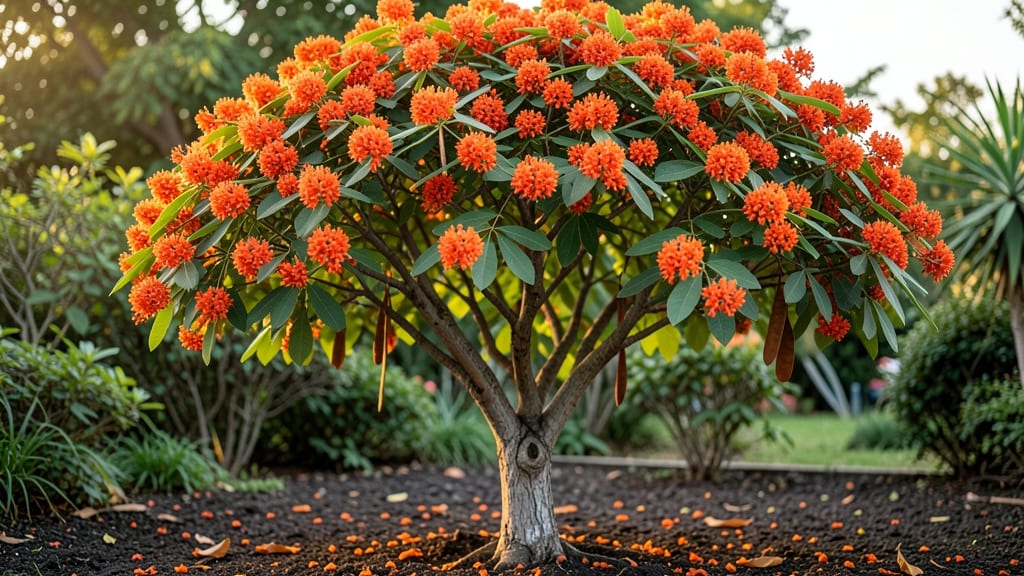
The Butea monosperma tree—also called Flame of the Forest—grows with breathtaking speed, its fiery orange blooms turning any yard into a tropical masterpiece.
I planted mine last spring, and within just six months, it cast a dense, monsoon-proof canopy that blocked the neighbors' view while requiring almost no maintenance. The secret lies in its hardiness: it thrives where other trees struggle, handling both humidity and drought once established.
This tree loves full sun and tolerates almost any soil—even poor, rocky ground—as long as it drains well. Water it deeply once a week for the first year, then let nature take over; mature trees need almost no irrigation.
In tropical climates, it grows fastest, but even in subtropical zones, it delivers 20+ feet of privacy within three years. The golden-orange flowers aren’t just stunning—they attract pollinators year-round, making it a double win for gardens.
Pruning is minimal but transforms its shape. Trim back leggy branches in late winter to encourage bushier growth, and remove dead blooms after they fade to prolong flowering. The foliage stays dense enough to block wind and noise, yet light enough to let sunlight filter through.
By summer’s end, you’ll have a lush, self-sufficient screen that outshines any fence—with zero upkeep after the first year.
Perfect for tropical/subtropical backyards, urban streetscapes, or even large containers. Here’s how to get it growing strong—no green thumb required.
📚 In This Guide
- What you need
- Instructions
- Tips and common mistakes
- Wrapping up and next steps
What you need
- ● Pruning shears: Sharp, bypass-style shears (for small branches, 6-12 inches in diameter). Example: Felco F-2 or Corona Tools.
- ● Loppers: Heavy-duty bypass loppers (for branches 1-2 inches thick). Example: Fiskars X27 or Gonicc.
- ● Pruning saw: Curved-tooth handsaw (for branches 2+ inches thick). Example: Bahco Laplander.
- ● Gloves: Heavy-duty, cut-resistant gloves (e.g., Mechanix Wear or Tough Outdoors).
- ○ Ladder or extension pole: Sturdy, 20-30 ft tall, with a non-slip base (for tall branches). Optional: A pruning pole with a saw attachment.
- ● Disinfectant: 70% isopropyl alcohol or rubbing alcohol (to sterilize tools between cuts).
- ● Heavy-duty trash bags: 30-gallon capacity (for debris).
- ● Safety gear: Safety goggles (e.g., Uvex or DeWalt).
- ● Long-sleeve clothing (to protect from thorns).
- ● Closed-toe shoes or boots.
- ● Pruning sealant: (e.g., Tanglefoot Tree Wound Pruning Seal) – Use sparingly; only on large cuts to prevent disease.
- ● Tree paint: (e.g., Ortho or Safer Brand) – Not always necessary for Butea monosperma, but useful for sealing cuts > 2 inches.
- ● Garden hose or spray bottle: For rinsing tools and cooling down hot cuts.
- ● Notebook & pen: To sketch a pruning plan before starting.
- ● Assistant: A second pair of hands for large branches or tricky angles!
- ● Best time to prune: Late winter or early spring (before new growth). Avoid pruning during monsoon season (June-Sept) unless absolutely necessary.
- ● Weather: Choose a dry, overcast day to minimize sap flow and reduce stress on the tree.
- ● Tree health: Prune only if the tree is healthy. Skip if you spot signs of disease (e.g., fungal spots, oozing sap, or wilted leaves).
- ● Local regulations: Check if your area requires a permit for pruning large trees (common in urban/suburban zones).
Step-by-step instructions for planting and establishing Butea monosperma trees
Here's how to get your fast-growing privacy trees thriving in monsoon conditions.
🌱 Step 1: Choose and Prepare the Planting Site
The Butea monosperma thrives in well-drained soil with full sun exposure—at least 6 hours of direct sunlight daily. Avoid low-lying areas where water pools, as these trees are drought-tolerant but not waterlogged. Test your soil by digging a 12-inch hole—if water doesn’t drain within 2 hours, amend the soil with 2 inches of coarse sand or perlite to improve drainage.
Clear the area of weeds and debris, then loosen the soil to a depth of 18 inches using a garden fork. This encourages root penetration and reduces transplant shock. If your soil is heavy clay, mix in 1 part organic compost to improve structure. The tree’s rapid growth depends on loose, aerated soil, so don’t skip this step—compacted soil will stunt development.
🌿 Step 2: Plant the Sapling at the Right Depth and Spacing
Dig a hole twice as wide as the root ball but no deeper—Butea monosperma roots should sit at the same level as they were in the nursery container. Gently remove the sapling from its pot and loosen any circling roots with your fingers. Place it in the hole, ensuring the trunk is straight and centered.
Backfill with the native soil, tamping lightly every 2 inches to eliminate air pockets. Space multiple trees 15-20 feet apart for optimal canopy growth—closer spacing leads to crowded, weak branches. Water deeply immediately after planting to settle the soil and encourage root contact. You’ll know it’s right when the surface looks slightly firm but not muddy.
☀️ Step 3: Water and Mulch for Monsoon Resilience
Water the newly planted sapling once a week for the first 4 weeks, providing 5 gallons per tree each time. After that, reduce to every 10-14 days unless your region experiences prolonged dry spells. The tree’s deep root system makes it drought-tolerant, but consistent moisture during establishment prevents leaf scorch and ensures strong early growth.
Apply a 3-inch layer of wood chips or straw mulch around the base, keeping it 6 inches away from the trunk to prevent rot. Mulch retains moisture, regulates soil temperature, and suppresses weeds—critical for fast growth. Replenish the mulch annually in late winter to maintain its effectiveness. Avoid synthetic mulches, which can smother roots over time.
✂️ Step 4: Prune and Monitor for Healthy Canopy Development
Prune only to remove dead, diseased, or crossing branches during the first year—never prune for shape. The tree’s natural growth habit is upright and fast, so excessive pruning slows canopy development. Focus on structural integrity by thinning out crowded branches in late winter or early spring, just as new growth begins.
Watch for signs of stress, like yellowing leaves or wilting, which may indicate overwatering or poor drainage. If leaves yellow, reduce watering and check for standing water near the roots. The tree’s vibrant orange flowers and dense foliage signal healthy growth—expect 2-3 feet of new growth annually under ideal conditions. Fertilize lightly in spring with a balanced 10-10-10 formula to support rapid development.
Tips & tricks for perfect Butea monosperma canopy establishment
Here's what I've learned from years of working with these fast-growing trees—details that make all the difference between a struggling sapling and a thriving privacy screen.
Site Preparation Insight: The 6 hours of daily sunlight requirement is non-negotiable, but don't assume your location meets it. Use a sunlight tracker app for a week before planting to confirm. I once planted in what I thought was full sun, only to discover the surrounding buildings cast shadows during critical afternoon hours—my trees grew lopsided and weak. Also, when testing drainage in that 12-inch hole, pour water and time it precisely. If it drains in less than 2 hours, you're good; if it pools, you absolutely need that sand or perlite amendment.
Root Handling Technique: When loosening circling roots in Step 2, be gentle but thorough. These roots can strangle the tree's growth if left intact. I've seen nursery-grown saplings with roots so tightly wound they looked like pretzels—cutting just one or two won't fix it. Use your fingers to carefully separate them all before planting. This might take 5-10 minutes per tree, but it's worth it for that 2-3 feet of annual growth you're aiming for.
Watering Strategy: That first 4 weeks of weekly watering with 5 gallons per tree is crucial, but timing matters just as much as quantity. Water in the early morning so the foliage has all day to dry—wet leaves overnight invite fungal issues. I've had clients call me in panic after their trees developed brown spots, only to discover they were watering at dusk. Also, don't skip that deep watering immediately after planting—it helps settle the soil around those delicate roots and prevents air pockets that could cause transplant shock.
Mulch Application Detail: The 3-inch layer of wood chips or straw serves multiple purposes beyond just moisture retention. It also creates a microclimate that protects roots from monsoon downpours and summer heat. I recommend using coarse wood chips rather than fine mulch—they break down slower and maintain their insulating properties longer. Just remember to keep that mulch 6 inches away from the trunk to prevent rot. I've seen too many cases where well-meaning gardeners piled mulch right against the trunk, leading to stem rot that killed otherwise healthy trees.
Pro Tips for Butea Monosperma Tree
- Here's what I've learned from years of working with these fast-growing trees—details that make all the difference bet...
- Site Preparation Insight: The 6 hours of daily sunlight requirement is non-negotiable, but don't assume your location...
- Root Handling Technique: When loosening circling roots in Step 2, be gentle but thorough. These roots can strangle th...
Frequently asked questions
Got questions about the Butea monosperma tree? You’re in the right place!
Whether you're curious about its care, growth habits, or pruning needs, we’ve got you covered. Here are some of the most common questions—and answers—to help you grow a thriving, monsoon-resistant privacy screen.
How fast does the Butea monosperma tree grow, and when can I expect full privacy?
The Butea monosperma (or flame of the forest) grows at a moderate to fast pace, typically adding 3–5 feet per year under ideal conditions. With consistent care, you can expect a dense canopy in 3–5 years, offering excellent privacy. For quicker results, plant multiple trees in a staggered row!
When is the best time to prune a Butea monosperma tree for privacy?
Prune your Butea monosperma during its dormant season (late winter or early spring), just before new growth begins. Avoid heavy pruning in summer or fall, as it can stress the tree. Light shaping can be done year-round, but always use sterilized tools to prevent disease.
Is Butea monosperma truly monsoon-resistant? How does it handle heavy rain?
Yes! This tree is naturally drought- and flood-tolerant, making it perfect for monsoon-prone areas. Its deep roots anchor it well, and its dense foliage sheds water efficiently. However, ensure proper drainage in the planting site to avoid root rot during prolonged waterlogging.
Can I grow Butea monosperma in a container, or does it need to be planted in the ground?
Butea monosperma thrives best in open ground due to its expansive root system and large size (up to 40 feet tall). While young saplings can be grown in large containers (15+ gallons) for 1–2 years, they’ll need repotting or transplanting soon. Containers limit long-term growth and health.
What should I do if my Butea monosperma leaves turn yellow or drop prematurely?
Yellowing leaves or premature drop can signal overwatering, nutrient deficiency, or fungal issues. Check soil moisture—this tree prefers well-drained soil and hates soggy roots. Apply a balanced fertilizer (like 10-10-10) in spring and monitor for pests like aphids or powdery mildew. Prune affected branches to improve airflow.
Pro Tip:
For a neater, bushier look, pinch back new growth in early summer to encourage branching. And remember: Butea monosperma’s vibrant orange flowers in spring are a bonus—just don’t let them deter you from pruning for your privacy goals!
Wrapping up and next steps
The Butea monosperma tree isn’t just a resilient monsoon companion—it’s a privacy powerhouse that grows fast and thrives with minimal fuss. Whether you’re shaping it for shade, boundaries, or sheer beauty, its adaptability makes it a standout choice for your outdoor space. 🌿
Ready to transform your yard? Start by gathering your tools, studying its growth habits, and taking the first step—plant it with confidence! Your future canopy (and peaceful privacy) awaits. 🌱✨