
Pruning
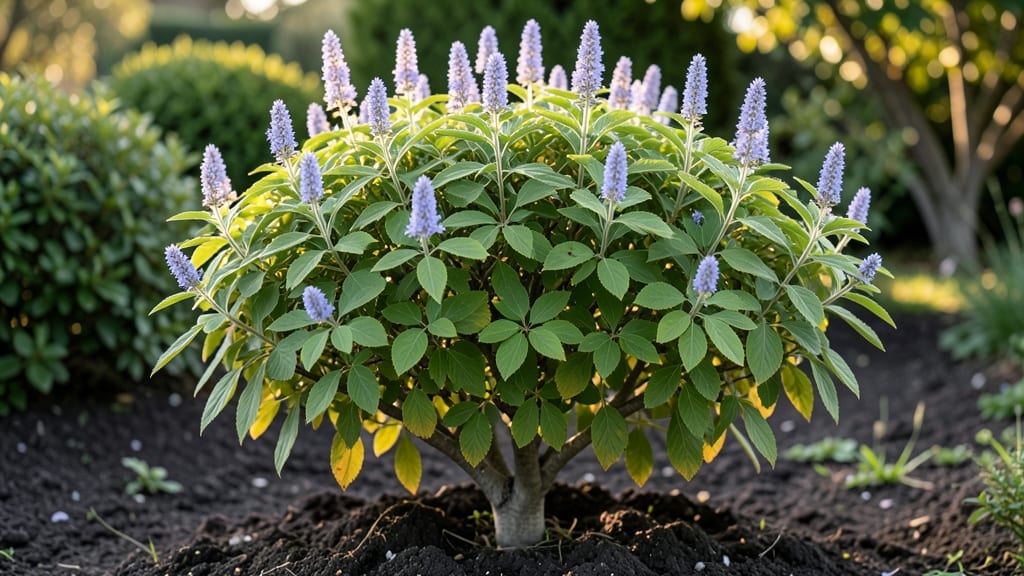
A full-grown chaste tree (Vitex agnus-castus) can reach 10-15 feet tall with a spread of 8-10 feet, making it a striking focal point in any landscape. I’ve watched mine transform from a scrappy sapling into a lush, fragrant powerhouse—its purple blooms attracting butterflies like a magnet in midsummer.
The key to keeping it thriving lies in understanding its growth rhythm and when to step in with pruners.
This hardy perennial (zones 5-9) needs minimal fuss but rewards smart pruning with dense foliage and prolific blooms. Start by removing dead or crossing branches in late winter, then shape it lightly after flowering to encourage next year’s growth.
Cold-hardy but not frost-proof, it may need winter protection in zone 5 gardens—just wrap the trunk or mulch heavily.
Beyond its beauty, chaste tree serves as a pollinator magnet and natural hedge. Mine doubles as a privacy screen while hosting monarchs and bees. The trade-off? Occasional powdery mildew in humid summers—just spray with neem oil if you spot white residue on leaves.
Whether you’re pruning for shape, health, or blooms, the calendar approach keeps your tree productive and picturesque year-round. Ready to unlock its full potential? Let’s get started.
📚 In This Guide
- What you need
- Instructions
- Tips and common mistakes
- Wrapping up and next steps
What you need
- ● Pruning shears: Bypass pruners (for clean cuts on small branches) – 1 pair (sharp, high-quality, like Felco or Fiskars).
- ● Loppers: For thicker branches (½"–1.5" diameter) – 1 pair (bypass or anvil type, with a long handle).
- ● Pruning saw: For larger branches (1.5"+ diameter) – 1 lightweight saw (bow or folding saw).
- ● Gloves: Heavy-duty, cut-resistant gloves – 1 pair (to protect against thorns and sap).
- ● Disinfectant: 70% isopropyl alcohol or pruning sealant – small bottle (to prevent disease spread).
- ○ Rake or leaf blower: For cleanup – 1 unit (optional but helpful for large trees).
- ○ Pruning paint/sealant: (Optional) – small container (for sealing large cuts).
- ● Safety gear: Safety glasses (to protect from debris) and long sleeves/pants (for thorn protection).
- ● Weather check: Prune on a dry, overcast day to reduce stress on the tree.
- ● Tree location: Ensure you have clear access to all branches (may require a ladder or step stool).
- ● Disposal plan: Have a bag or bin ready for pruned debris (compost or trash, depending on size).
- ● Seasonal prep: For winter pruning, check local frost dates to avoid late-season cuts.
Year-round pruning guide for a thriving mature chaste tree
Here’s how to maintain your chaste tree’s vigor through every season—no guesswork, just science-backed timing.
🌿 Step 1: Late Winter Pruning (February)
This is your most critical pruning window, when the tree is dormant but before new growth begins. Choose a dry, sunny day—never prune when frost is forecasted. Start by removing dead, diseased, or crossing branches first, using clean, sharp pruners to make cuts just outside the branch collar. You’ll see healthy tissue beneath the bark here; this prevents infections.
Next, thin out overcrowded branches to improve airflow. Aim to remove no more than 25% of the tree’s foliage—over-pruning stresses the tree and reduces flowering. Look for water sprouts (fast-growing, upright shoots) and cut them back to a lateral branch. These saplings steal energy from the main structure.
☀️ Step 2: Light Summer Maintenance (June-July)
Mid-summer isn’t for heavy pruning, but light shaping keeps your chaste tree looking its best. Wait until after flowering (typically late spring) to avoid removing next year’s blooms. Focus on trimming back any leggy growth—branches stretching too far from the center—by cutting just above a leaf bud facing outward.
Remove suckers (shoots growing from the base or roots) immediately. These compete with the main trunk for nutrients. Use sterilized pruners to prevent spreading fungal spores. If you notice yellowing leaves, it’s often a sign of overwatering—adjust your irrigation before pruning further.
✂️ Step 3: Fall Cleanup (October-November)
Autumn pruning is about preparation, not aggressive cutting. Remove any remaining dead wood from summer storms or pests. Cut back overly vigorous shoots that grew after the spring flush, but stop before hard frosts arrive—new growth needs time to harden off. Look for branches rubbing together; these should be pruned first to prevent bark damage.
Rake up and dispose of all pruned debris—don’t compost diseased branches. This prevents fungal spores from overwintering in your garden. If your tree has pests like scale or spider mites, prune infested branches last and bag them separately. A 50% vinegar spray on pruners between cuts helps reduce contamination.
⏰ Step 4: Winter Inspection (December-January)
While you’re not pruning in winter, monitor the tree’s structure. Check for ice damage or broken branches after storms—remove these immediately to prevent further injury. Look for dormant buds along branches; healthy ones will swell in early spring. If you notice peeling bark, it’s often harmless, but deep cracks may need sealing with pruning sealant (though many arborists argue this isn’t necessary for chaste trees).
This is also the time to plan next year’s pruning. Sketch a rough outline of the tree’s shape and note where branches need thinning. A well-structured chaste tree has an open center and balanced canopy—aim for that symmetry. If you’re unsure, take before-and-after photos to track progress.
Tips & tricks for perfect year-round chaste tree maintenance
Mastering seasonal pruning transforms your chaste tree from merely surviving to thriving. These insights will help you avoid common pitfalls and maximize your tree's natural beauty.
Seasonal Timing is Everything: The late winter pruning in February is non-negotiable for chaste trees. This dormant period allows you to see the tree's natural structure without the distraction of foliage. I've seen trees recover poorly from spring pruning because new growth was damaged before it could establish. The 25% foliage limit in Step 1 isn't arbitrary—it's based on how much a mature chaste tree can regenerate without stress. If you're unsure about which branches to remove, take reference photos before you start.
Tool Preparation Prevents Problems: Your pruners are the most important tool, but they're often overlooked. Clean them thoroughly between cuts, especially when dealing with diseased branches in Step 1. I keep a small bottle of rubbing alcohol and a clean rag in my pruning kit—wipe blades after every 3-4 cuts. For larger branches, use a pruning saw with a fine-toothed blade to avoid tearing the bark. The 50% vinegar spray mentioned in Step 3 isn't just for pests—it also helps remove sap residue that can harbor bacteria.
Visual Cues for Proper Cuts: When making cuts in Step 1, look for the branch collar—the swollen area where the branch meets the trunk. This should be your guide for where to cut. I train my eye to spot the "target zone" just outside this collar—this is where the tree's natural healing response is strongest. For water sprouts in Step 1 or leggy growth in Step 2, cut back to a lateral branch that's growing at a 45-degree angle or less from the main branch. This encourages outward growth rather than upward competition.
Winter Planning Pays Off: The winter inspection in Step 4 is where you'll notice subtle issues that would go unnoticed during active growth. Pay special attention to the bark—healthy bark should have a consistent texture without deep cracks. If you see peeling bark, gently scrape a small area to check for moisture underneath. While pruning sealant isn't always necessary for chaste trees, I've found that a thin layer on fresh cuts larger than 1 inch helps prevent moisture loss during winter's dry periods.
Pro Tips for Full Grown Chaste Tree
- Mastering seasonal pruning transforms your chaste tree from merely surviving to thriving.
- Seasonal Timing is Everything: The late winter pruning in February is non-negotiable for chaste trees.
- Tool Preparation Prevents Problems: Your pruners are the most important tool, but they're often overlooked.
Frequently asked questions
Got questions about keeping your full-grown chaste tree (Vitex agnus-castus) thriving with year-round pruning? Here are answers to the most common ones—so you can avoid guesswork and keep your tree looking its best!
When is the best time to prune a mature chaste tree?
The ideal window is late winter or early spring (before new growth starts), but light shaping can happen year-round. Avoid heavy pruning in fall—it stimulates tender growth that won’t survive winter. For flower promotion, prune right after blooming (summer) to encourage next year’s blooms!
How much can I trim back a full-grown chaste tree?
You can safely remove up to 1/3 of the plant’s height in one session, but avoid drastic cuts. For mature trees, focus on selective pruning: thin out crowded branches, remove deadwood, and shape for airflow. Over-pruning stresses the tree—go slow for long-term health!
What if my chaste tree isn’t blooming after pruning?
Lack of flowers often means too much pruning in fall/winter or insufficient sunlight. Check these fixes:
- Prune after blooming (summer) to encourage next year’s flowers.
- Ensure 6+ hours of sun daily—chaste trees need it!
- Fertilize lightly in spring with balanced 10-10-10 if soil is poor.
Can I grow chaste tree from cuttings after pruning?
Yes! Hardwood cuttings (taken in late winter) root best. Dip 4–6” stems in rooting hormone, plant in perlite/sand mix, and keep moist. Softwood cuttings (summer) also work but require more humidity. Pro tip: Label cuttings—chaste tree varieties vary!
What’s the difference between pruning for flowers vs. shape?
| Goal | When to Prune | What to Cut |
|---|---|---|
| Flowers | Right after blooming (summer) | Dead flower stems + 1–2” above a leaf node. |
| Shape/Health | Late winter/early spring | Crossing branches, inward growth, and 1/3 of oldest stems. |
Key: Never prune for both at once—prioritize one goal per season!
Wrapping up and next steps
A full-grown chaste tree thrives when you prune with intention—whether it’s shaping its branches, boosting blooms, or preventing disease. 🌿 By following this year-round calendar, you’ll ensure your tree stays lush, healthy, and vibrant for seasons to come. Remember, patience and consistency are key!
Ready to take the next step? Start small:
- 📅 Mark your pruning dates on a calendar to stay on track.
- 🛠️ Gather your tools and sharpen them before your first session.
- 🌱 Observe your tree weekly—adjust as needed based on its growth.