
Size
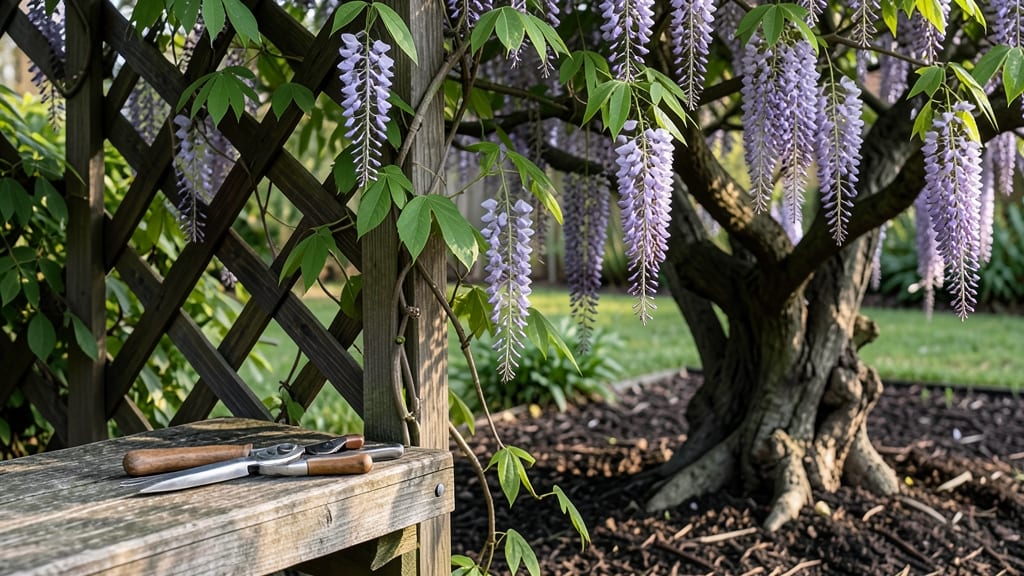
Learn how to grow wisteria into a tree with the right pruning strategy and patience—watch it transform from a tangled mess into a towering, structured canopy. The secret lies in guiding its growth early, before it gets too wild.
You’ll need a sturdy trellis or arbor, sharp pruning shears, and a clear vision for your tree’s shape. Most gardeners skip the initial pruning phase, but that’s when you set the foundation for a strong central leader and balanced branches.
With consistent care, you can achieve that classic tree form in just 3 years.
The payoff? A fragrant, flowering wonder that stands out in any landscape. Imagine climbing the steps to a canopy of purple blooms—it’s like having a living sculpture. The key is pruning at the right times (late winter and right after flowering) to encourage upward growth while keeping the structure neat.
This method works for both Chinese and Japanese wisteria, though Japanese varieties grow slightly slower. Whether you’re working with a young vine or reshaping an established one, these steps will give you control. Let’s get your wisteria on the right path!
📚 In This Guide
- What you need
- Instructions
- Tips and common mistakes
- Wrapping up and next steps
What you need
- ● Wisteria plant: Choose a healthy, established vine (at least 2–3 years old) with strong roots. Varieties like Wisteria sinensis or Wisteria floribunda work best.
- ● Support structure: 1 sturdy tree trunk or post (4–6 inches in diameter, 8–10 feet tall). Cedar or redwood is ideal for longevity.
- ○ Metal or wooden trellis (optional but helpful for initial training—6–8 feet tall, with horizontal bars spaced 12–18 inches apart).
- ● Pruning tools: 1 pair of bypass pruners (for small branches).
- ● 1 pair of loppers (for thicker branches, up to 1.5 inches).
- ● 1 pruning saw (for stubborn, woody stems).
- ● Garden ties or twine: Soft, flexible jute or rubber-coated ties (avoid wire—it can damage bark).
- ● Mulch: 2–3 inches of organic mulch (wood chips, shredded bark, or compost) to retain moisture and suppress weeds.
- ● Fertilizer: A balanced, slow-release fertilizer (10-10-10 or 20-20-20) or a wisteria-specific formula (follow package instructions).
- ● Watering can or hose: With a gentle spray nozzle for deep watering.
- ● Root stimulator: A mycorrhizal fungus powder to boost root growth and health.
- ● Plant food: A high-phosphorus fertilizer (like 5-10-10) to encourage flowering.
- ● Pruning sealant: For large cuts (to prevent disease), but not necessary for small prunes.
- ● Gloves: Heavy-duty gardening gloves to protect your hands from thorns.
- ● Sunlight meter: To ensure your chosen spot gets 6+ hours of direct sun daily.
Step-by-Step instructions for training wisteria into a tree form
Transform sprawling vines into a majestic, tree-like structure with this strategic pruning approach.
Select and Prepare the Right Vines
Start with a healthy, established wisteria vine that's at least 3-4 years old and has a strong central leader—this will become your trunk. Look for a main stem that's 2-3 inches in diameter with multiple sturdy branches radiating from it. These lateral branches will form your future canopy.
Remove any weak or diseased growth immediately. Use clean, sharp pruners to make 45-degree cuts just above a leaf node or bud. This encourages vigorous regrowth from the right spots. Here's the thing—wisteria grows aggressively, so you're not just pruning; you're sculpting the foundation of your tree.
Establish the Trunk Structure
In early spring, before new growth begins, identify the primary trunk you want to develop. Tie this central stem to a strong support stake using flexible garden twine—this prevents it from bending under the vine's weight as it grows. The goal is to keep the trunk vertical while allowing lateral branches to spread naturally.
Remove all competing vertical growth below your chosen trunk height—typically 4-6 feet from the ground. This forces energy into the main leader. You'll see new shoots emerge from the lateral branches you leave behind. These will become your future canopy branches. Prune back any remaining side branches by one-third to encourage bushier growth.
Develop the Canopy Framework
By year two, your wisteria will have established a trunk. Now focus on shaping the canopy. Select 4-6 strong lateral branches spaced evenly around the trunk—these will be your primary scaffold branches. Prune these back to 12-18 inches from the trunk to stimulate branching.
For each scaffold branch, choose 2-3 of the strongest secondary branches and prune them back by half. This creates a tiered structure where smaller branches emerge from larger ones. Watch for new growth at the base of each pruned cut—these will form your future flowering clusters. Real talk: Wisteria flowers on old wood, so preserve these new cuts carefully.
Refine and Maintain the Tree Form
Each subsequent spring, refine your tree by removing any suckers growing from the base or trunk. These divert energy from your desired structure. Thin out 20-30% of the oldest wood annually to maintain airflow and light penetration—this prevents disease and encourages new growth.
By year three, your wisteria should resemble a true tree with a single trunk and spreading canopy. Continue pruning in late winter to remove dead, crossing, or weak branches. Leave flower buds intact—they'll bloom in early spring, creating your stunning vertical display. The key is patience; wisteria grows 12-24 inches per year when properly trained.
Tips & tricks for perfect wisteria tree pruning
Transforming wisteria into a tree-like structure takes patience and precision—here's how to avoid common pitfalls and maximize your success.
Timing is Everything: Early spring is critical for Step 2 when establishing your trunk, as this is when wisteria's dormant buds begin to swell. I've learned the hard way that pruning too late in spring can stimulate unwanted growth that competes with your trunk development. Aim for late winter to early spring when the plant is still dormant but just before new growth emerges. This timing ensures you're working with the plant's natural growth cycle rather than against it.
Support System Matters: When securing your primary trunk in Step 2, use two support stakes positioned diagonally from each other rather than just one. This creates a more stable triangle structure that prevents the trunk from leaning or bending as it grows. I recommend using bamboo stakes for flexibility and durability—they won't crack under the vine's weight like wooden stakes might. The flexible garden twine should be tight enough to hold the vine but loose enough to allow some movement as the plant grows.
Canopy Development Strategy: In Step 3, when selecting your 4-6 scaffold branches, look for ones that are evenly spaced around the trunk and have a slight upward angle. These branches will naturally form your canopy's framework. The 12-18 inch pruning length might seem arbitrary, but it's based on the average growth rate of wisteria—this length gives you room for new growth while maintaining structural integrity. Remember that wisteria flowers on old wood, so preserving these pruned cuts is essential for future blooms.
Annual Maintenance Insight: The 20-30% thinning recommendation in Step 4 might seem drastic, but it's crucial for your wisteria's long-term health. This percentage accounts for the plant's vigorous growth and ensures proper airflow. I've found that removing the oldest wood first prevents disease buildup while encouraging new growth from the younger branches. This annual pruning session is your chance to shape the tree's final form and maintain its health for decades to come.
Pro Tips for Grow Wisteria Into A Tree
- Transforming wisteria into a tree-like structure takes patience and precision—here's how to avoid common pitfalls and maximize your success.
- Timing is Everything: Early spring is critical for Step 2 when establishing your trunk, as this is when wisteria's dormant buds begin to swell.
- Support System Matters: When securing your primary trunk in Step 2, use two support stakes positioned diagonally from each other rather than just one.
Frequently asked questions
Got questions about transforming wisteria into a stunning tree? Here are some of the most common ones—and their answers!
How long does it take for wisteria to grow into a tree?
With proper care, wisteria can grow into a tree-like structure in 3–5 years. If you’re pruning aggressively (like removing lower branches and training the main trunk), you’ll see faster vertical growth. Patience is key—wisteria grows fast but needs consistent training to stay upright!
Can I grow wisteria from a cutting instead of buying a tree?
Wisteria roots easily from hardwood cuttings (taken in late winter). Dip the cut end in rooting hormone, plant in moist soil, and keep it shaded until roots form (4–6 weeks). Once established, treat it like a sapling—train it early to avoid woody, tangled growth.
What’s the best time of year to prune wisteria for tree growth?
Prune wisteria twice a year for best results:
- Late winter (before buds swell): Remove dead wood and shape the trunk.
- Right after flowering (summer): Trim back ⅓ of new growth to encourage thicker branches.
Why is my wisteria growing wild and not forming a tree shape?
Wisteria’s natural habit is vining, so it needs guided pruning to stay upright. If it’s sprawling:
- Remove lower branches to encourage upward growth.
- Use stakes or a trellis to train the main trunk vertically.
- Prune inside the plant to improve airflow and reduce congestion.
Are there dwarf or slow-growing wisteria varieties for smaller spaces?
Yes! If space is limited, try:
- ‘Amethyst Falls’ (compact, 10–15 ft tall)
- ‘Black Dragon’ (slower growth, deep purple blooms)
- ‘Prolific’ (more manageable than ‘Amethyst’)
Wrapping up and next steps
Growing wisteria into a stunning tree-like canopy is totally achievable with patience, the right techniques, and a little love! 🌿 By mastering pruning, training, and support systems, you’ll transform those sprawling vines into a dramatic, fragrant vertical masterpiece in just three years.
Remember, consistency is key—regular pruning and proper care will reward you with a breathtaking, long-lasting display.
Ready to take the next step? Start small:
- Pick a healthy vine or young plant to begin training.
- Gather your pruning tools and support structure.
- Set a schedule and stick with it—your future tree will thank you!
Now, roll up your sleeves and get growing—your dream wisteria tree awaits! 🌳✨