
How To
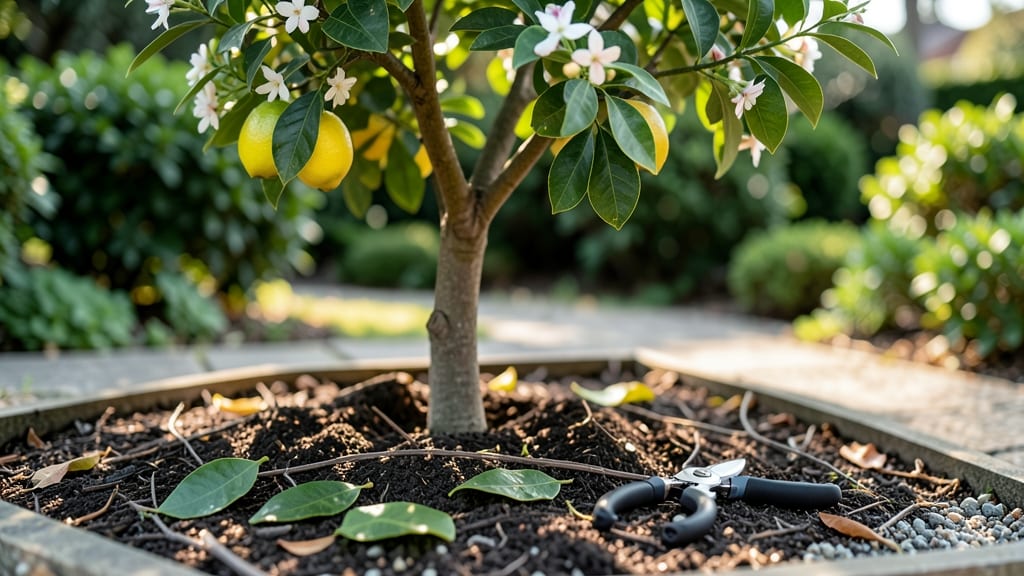
Pruning your lemon tree in spring and fall isn’t just about shaping—it’s about unlocking healthier, more productive growth. 🌿 I’ve learned that timing matters more than technique, and skipping this step means missing out on sweeter fruit and stronger branches.
The key is cutting at the right moments to encourage flowering while keeping the tree balanced.
Start with clean, sharp pruners and focus on removing dead wood first. Then, thin out crowded branches to improve airflow, which prevents fungal diseases that can ruin your harvest.
For indoor trees, prune lightly in spring to maintain shape, while outdoor trees can handle more aggressive cuts in late winter before new growth begins.
📚 In This Guide
- What you need
- Instructions
- Tips and common mistakes
- Wrapping up and next steps
What you need
- ● Sharp bypass pruners: Choose high-quality, bypass-style pruners (not anvil pruners) to make clean cuts without crushing the branches. Size: 6-8 inches for most lemon trees.
- ● Loppers: For thicker branches (½ inch or larger), use bypass loppers with a 20-24 inch handle for leverage.
- ● Pruning saw: A curved-tooth pruning saw (8-10 inches) for branches thicker than 1 inch.
- ● Gloves: Wear cut-resistant, gardening gloves (size medium or large) to protect your hands.
- ● Disinfectant (70% rubbing alcohol or bleach solution): Clean tools between cuts to prevent disease spread.
- ● Hand pruners with a ratchet mechanism for extra leverage on stubborn branches.
- ● Pole pruner (if your tree is tall—6+ feet—to reach higher branches safely).
- ○ Tree wound dressing (optional; only use for large cuts—modern research suggests leaving small cuts open to heal naturally).
- ● Ladder or step stool (if pruning above 5 feet—ensure it’s stable and non-slip).
- ● Trash bags or bucket for collecting pruned branches.
- ● Weather: Prune on a dry, overcast day or in the early morning to avoid stressing the tree.
- ● Safety first: Wear closed-toe shoes and avoid pruning near power lines.
- ● Tree health check: Inspect for pests/diseases before pruning—wait until issues are resolved.
Step-by-step guide for pruning a lemon tree
Here's how I keep my lemon tree healthy and productive with seasonal trims.
✂️ Step 1: Assess the Tree and Identify Growth Priorities
Start by examining your lemon tree for dead, diseased, or crossing branches. These take priority—they'll drain energy if left unattended. I like to use a small flashlight to peek into dense areas where branches might be rubbing together or shading out the center. Healthy branches have smooth bark and green leaves, while dead wood feels brittle and snaps easily.
Look for suckers—those vigorous shoots growing from the base or along the trunk. These compete with fruit production and should be removed completely at the base. Mark these with a piece of twine or a spray of water if you need to step away before cutting. This ensures you don't accidentally prune the wrong branches later.
✂️ Step 2: Remove Dead and Crossing Branches First
Use clean, sharp pruning shears to make 45-degree cuts just outside the branch collar—the swollen area where the branch meets the trunk. Cutting too close can damage the tree, while leaving a stub invites disease. I always sterilize my tools with rubbing alcohol between cuts to prevent spreading any pathogens.
For crossing branches, remove the one growing less vertically. This opens up the canopy and improves airflow, which is crucial for preventing fungal issues. If a branch is too thick for shears, use a pruning saw—but only if the branch is at least ¼ inch thick. Never leave behind a stub; a clean cut heals faster.
✂️ Step 3: Thin Out the Canopy for Light and Airflow
Step back and visualize the tree's shape. Aim for an open vase or modified central leader form—this lets sunlight reach the center where fruit develops. Remove branches that grow inward or downward, focusing on the outer third of the tree first. You're not trying to drastically reduce size; think of this as sculpting, not hacking.
Watch for water sprouts—fast-growing, vertical shoots that steal energy. These often appear along the trunk or main branches. Snip them off at the base, but don't worry if you miss a few; they're easy to spot later. The goal is to keep 20-30% of the foliage—enough to maintain photosynthesis but not so much that the center stays shaded.
⏰ Step 4: Time Your Pruning for Seasonal Growth
For spring pruning, wait until after the last frost but before new growth flushes—typically late February to early March in most climates. This gives the tree time to heal before summer heat stress. In fall, prune 6-8 weeks before your first frost, around October to November, to avoid encouraging tender new growth that won't harden off in time.
If you're in a warmer zone with no frost, prune lightly in summer after harvest to shape the tree, but avoid heavy cuts. Heavy summer pruning can stress the tree and reduce next year's fruit set. Always prune on a dry, overcast day—wet conditions spread disease, and bright sun can shock the tree.
🌿 Step 5: Clean Up and Monitor for Recovery
After pruning, sterilize your tools again and dispose of clippings in the trash—not the compost—since diseased branches can spread pathogens. Rake up any fallen leaves or debris around the base to keep the area clean. I like to apply a layer of mulch (2-3 inches) around the drip line to retain moisture and suppress weeds.
Watch the tree closely for the next 2-3 weeks. New growth should appear within 3-4 weeks if pruned correctly. If you see yellowing leaves or oozing sap at pruning cuts, that means you cut too close or into the trunk. Don't panic—just keep an eye on it, and the tree will usually recover as long as the cut wasn't severe.
Tips & tricks for pruning a lemon tree
Real talk: Pruning a lemon tree isn't just about cutting branches—it's about sculpting its future. Here's what I've learned the hard way after seeing too many trees struggle from poor trimming.
Tool Preparation: Sterilizing your tools between cuts is non-negotiable. I keep rubbing alcohol in a small spray bottle right next to my pruning station—just a quick spray before each cut prevents spreading disease between branches. Also, make sure your shears are sharp; dull blades tear wood instead of making clean cuts, which stresses the tree.
Visualizing the Shape: Before making any cuts, step back and imagine your tree's ideal shape. Aim for an open vase form where sunlight can reach the center—this is where most fruit develops. I like to sketch a rough outline on paper first to visualize where branches need to go. This prevents that "hacking" look and keeps the tree balanced.
Seasonal Timing: The late February to early March window for spring pruning is critical because it gives your tree time to heal before summer heat stress. If you're in a frost-free zone, avoid heavy summer pruning—it stresses the tree and can reduce next year's harvest. I've seen trees recover beautifully from fall pruning when done 6-8 weeks before frost, but summer cuts often backfire.
Recovery Monitoring: After pruning, keep an eye on your tree for the next 2-3 weeks. New growth should appear within 3-4 weeks if everything went well. If you notice yellowing leaves or oozing sap at cut points, you likely cut too close to the trunk. This is fixable—just monitor it closely, and the tree will usually recover as long as the cut wasn't severe.
Pro Tips for Prune Lemon Tree
- Real talk: Pruning a lemon tree isn't just about cutting branches—it's about sculpting its future.
- Tool Preparation: Sterilizing your tools between cuts is non-negotiable.
- Visualizing the Shape: Before making any cuts, step back and imagine your tree's ideal shape.
Frequently asked questions
Got questions about pruning your lemon tree? You’re not alone! Here are some of the most common concerns—and straightforward answers—to help you trim with confidence.
When is the best time to prune a lemon tree?
Prune your lemon tree in late winter or early spring (just before new growth starts) and again in late summer or early fall. Avoid heavy pruning in fall if your region has harsh winters—it can stress the tree. Light shaping in mild winters is fine, but never prune during frost or extreme heat.
Can I prune a lemon tree in summer?
Yes, but lightly! Summer pruning is best for removing only dead, diseased, or crossing branches to improve airflow. Heavy summer pruning can stress the tree and reduce fruit production. If you must shape, do it in early summer and avoid cutting back more than 25% of the canopy at once.
Will pruning my lemon tree reduce fruit?
Not if done correctly! Pruning encourages more fruit by improving sunlight and air circulation. However, over-pruning (cutting too much at once) can temporarily reduce yield. Focus on removing suckers, dead wood, and crowded branches—this redirects energy to healthy growth and blossoms.
What if I see bleeding sap after pruning?
Don’t panic—it’s normal! Lemon trees (and many citrus varieties) ooze sap when cut, especially in warm weather. The tree seals the wound naturally in a few weeks. To minimize sap, prune on a cool, cloudy day and use sharp, clean tools. Avoid sealing wounds with paint or pruning sealant—it traps moisture and invites disease.
How do I prune a young lemon tree vs. a mature one?
| Young Tree (1–3 years) | Mature Tree (4+ years) |
|---|---|
|
|
Pro tip: Young trees recover faster, so don’t hesitate to shape them early!
Wrapping up and next steps
Pruning your lemon tree is a rewarding way to keep it healthy, productive, and beautiful—whether you’re shaping it for abundant fruit or just tidying up its branches.
Remember, timing (spring and fall), the right tools, and a gentle touch make all the difference! 🌿 With patience and practice, you’ll master this skill and enjoy a thriving tree year after year.
Ready to take the next step? Grab your pruners and schedule that first session—your lemon tree (and future harvest!) will thank you. 🍋✨