
Pruning
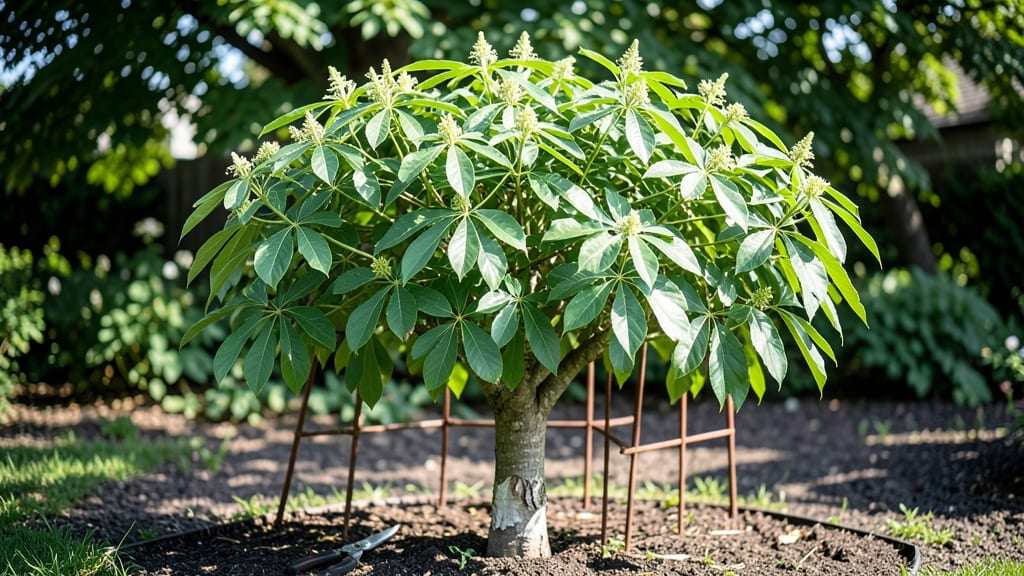
Taming a large tree of heaven in your yard begins with recognizing how its rapid growth and invasive roots demand careful planning.
I’ve wrestled with this tree’s rapid growth—it can shoot up 12 feet in a single season—but three strategic pruning sessions each year keep it under control while encouraging lush, healthy foliage.
The key isn’t just cutting branches; it’s timing those cuts to redirect energy and prevent the tree from becoming an unruly giant.
You’ll need sharp pruning shears, heavy-duty gloves (this tree’s sap can irritate skin), and a ladder if the branches are high. Spring, summer, and late fall are the best times to prune, each serving a different purpose: shaping in spring, controlling growth mid-season, and cleaning up before winter.
The goal isn’t to stunt the tree but to guide its energy toward stronger structure and fuller branches. Think of it as training a fast runner to move smoothly instead of wildly.
What you’ll end up with is a Tree of Heaven that stays within your yard’s boundaries, produces abundant foliage, and even develops those distinctive, fragrant flowers in late spring. The tree’s natural resilience means it recovers quickly from cuts, so you won’t sacrifice its health—just its wild tendencies.
Plus, with the right technique, you’ll reduce the risk of it spreading unwanted seeds or outcompeting other plants.
This approach works for both young trees and established ones, though larger specimens may require more effort. If you’re in a region where Tree of Heaven is considered invasive, these pruning strategies help contain it without harming the tree’s ecosystem benefits, like providing shelter for birds.
Ready to take control of this powerhouse plant?
📚 In This Guide
- What you need
- Instructions
- Tips and common mistakes
- Wrapping up and next steps
What you need
- ● Pruning shears: Sharp, bypass-style shears (for cuts under ½ inch thick). Example: Felco F-2 or Corona CS5500.
- ● Loppers: 1 pair (for branches ½ to 2 inches thick). Look for ratcheting or bypass models for precision.
- ● Pruning saw: 1 bow saw or pruning saw (for branches 2+ inches thick). Example: Fiskars X27.
- ● Extension pole saw: 1 (for high branches; 10–15 ft reach). Example: Telescopic pole saw with a curved blade.
- ● Safety gear: Work gloves (cut-resistant, e.g., Mechanix or Wellington)
- ● Safety goggles (ANSI Z87.1 rated)
- ● Ear protection (if using a chainsaw for large limbs)
- ● Non-slip boots or steel-toe shoes
- ● Cleaning supplies: Rubbing alcohol (70%+) or isopropyl wipes (to sterilize tools)
- ● Rag or paper towels
- ○ Sealing wax or pruning sealant: 1 small tub (optional for large cuts to prevent disease). Example: Tanglefoot Tree Wound Pruning Seal.
- ● Chainsaw: 1 (for branches 4+ inches thick; only if experienced). Example: Husqvarna 450.
- ● Ladder or lift: Sturdy extension ladder (20–30 ft) or cherry picker (for very tall trees).
- ● Branch bag or tarp: To collect debris easily.
- ● First-aid kit: For minor cuts or scrapes.
- ● Weather check: Clear, dry day (avoid pruning in wind or rain).
How to prune a tree of Heaven for healthy year-round growth
This approach keeps your tree strong while controlling its aggressive spread.
Assess the Tree’s Structure and Identify Key Branches
Start by examining the tree from all sides, looking for branches that cross or rub against each other. These are your first targets—they compete for energy and can create weak points where disease enters. Use a pair of gloves and safety glasses to protect yourself, as the bark and sap can irritate skin.
Next, spot branches growing straight upward or inward toward the trunk. These "water sprouts" or "suckers" drain energy from the tree’s main structure. Mark them with a small piece of twine or tape if you’re unsure which to remove first. The goal is to open up the canopy so light and air circulate freely to the center.
Perform the Late Winter Pruning (Dormant Season)
Schedule your first trim in late winter or early spring, just as buds begin to swell but before new growth starts. This timing minimizes stress on the tree and prevents sap bleeding. Use clean, sharp pruning shears to make cuts at a 45-degree angle, about ¼ inch above a outward-facing bud or branch collar.
Remove dead, diseased, or broken branches first—they’re easy to spot and should go completely. Then tackle the crossing branches, cutting one entirely if they’re similar in size. Avoid leaving stubs; a clean cut heals faster and reduces the risk of infection. If a branch is thicker than 2 inches, use a pruning saw instead of shears.
Light Summer Pruning to Control Growth
About 6-8 weeks after the late winter trim, do a second, lighter pruning in early summer. Focus on water sprouts—those fast-growing vertical shoots that pop up along the trunk and branches. These shoots steal nutrients from the tree’s main structure and make it look leggy.
Snip these sprouts back to a leaf bud or side branch using hand pruners. Avoid over-pruning now; the tree is actively growing, and removing too much foliage can stress it. Watch for new growth after this trim—if you see a surge of vigorous shoots, you may have cut back too much. Adjust next time by leaving slightly more foliage intact.
Final Trim in Early Fall for Shape and Health
Your last pruning of the year should happen in early fall, just before the tree enters dormancy. This is when you refine the tree’s shape, removing any branches that detract from its form or block sunlight to lower limbs. Cut back any overly long or weak branches to a strong lateral branch or bud.
Also, check for diseased or pest-damaged foliage—remove it immediately to prevent spread. Disinfect your tools with rubbing alcohol between cuts if you notice signs of infection like blackened bark or oozing sap. Finish by cleaning up all debris from the ground to keep pests away over winter.
Tips & tricks for pruning a large tree of Heaven
These practical strategies will help you prune your Tree of Heaven like a pro while keeping the tree healthy and strong.
Timing is Everything: The late winter or early spring timing in Step 2 is crucial because the tree is still dormant but about to wake up. This prevents sap bleeding and gives the tree time to heal before new growth begins. If you miss this window, you risk stressing the tree or encouraging disease entry through fresh cuts.
Precision Cuts Matter: When making those 45-degree angle cuts in Step 2, aim for just above the outward-facing bud or branch collar. This ensures new growth emerges in the right direction and the wound heals properly. I've seen too many pruning jobs where people left stubs—those never heal cleanly and become entry points for pests and diseases.
Watch for Water Sprouts: During the summer pruning in Step 3, those fast-growing water sprouts can be sneaky. They often appear right after your winter trim, so check the tree every few weeks. Cut them back to a leaf bud or side branch—this redirects the tree's energy to stronger growth rather than these vertical nuisances.
Safety First: Always wear gloves and safety glasses when pruning, especially with Tree of Heaven. The sap can cause skin irritation, and the branches can be heavy. I learned this the hard way after dealing with a rash from neglecting my gloves—trust me, it's not worth the discomfort.
Pro Tips for Large Tree Of Heaven
- These practical strategies will help you prune your Tree of Heaven like a pro while keeping the tree healthy and strong.
- Timing is Everything: The late winter or early spring timing in Step 2 is crucial because the tree is still dormant but about to wake up.
- Precision Cuts Matter: When making those 45-degree angle cuts in Step 2, aim for just above the outward-facing bud or branch collar.
Frequently asked questions
Got questions about pruning your Tree of Heaven (Ailanthus altissima)? You’re not alone!
This fast-growing tree thrives on attention, but its aggressive nature can leave even green thumbs scratching their heads. Below, we tackle the most common concerns—from timing to troubleshooting—so you can keep your Tree of Heaven lush and manageable.
When is the best time to prune a Tree of Heaven?
The ideal window is late winter or early spring (just before new growth sprouts), but you can also trim lightly in summer to control shape. Avoid heavy pruning in fall—it stimulates weak, late-season growth that may not harden off before winter. For year-round growth, stick to 3 strategic trims: dormant season (cleanup), spring (structural shaping), and mid-summer (maintenance).
Can I prune a Tree of Heaven in any season?
While you can prune anytime, timing matters! Heavy pruning in fall or winter risks dieback or pest attraction (like scale insects). Summer trims should be light to avoid stressing the tree. Pro tip: If you must prune outside the ideal window, sterilize tools and focus on dead or diseased branches first. Always prioritize the tree’s health over convenience!
How do I handle aggressive regrowth after pruning?
Tree of Heaven is a sucker magnet—literally! If you see wild new shoots popping up post-prune, cut them back to the ground (they won’t regrow from the base). For stubborn sprouts, apply dormant oil or a copper-based fungicide to prevent resurgence. Warning: Wear gloves—its sap can irritate skin! For large branches, use three-cut technique to avoid bark tearing.
Are there alternatives to pruning for controlling size?
Pruning is the most effective way to manage Tree of Heaven, but you can supplement with these strategies:
- Root pruning: Dig a trench 1–2 feet from the trunk to limit root spread (best in dormant season).
- Mulch rings: Apply 3–4 inches of mulch (wood chips or straw) to reduce water/nutrient access to roots.
- Container growth: If planting young, use a large pot (20+ gallons) with drainage holes to stunt root expansion.
Note: These methods slow growth but won’t replace pruning for structural control.
Why does my Tree of Heaven have so many pests after pruning?
Pruning stresses trees, and Tree of Heaven’s sap-rich wood attracts pests like spotted lanternflies or scale insects. Preventative steps:
- Prune during cooler hours (early morning) to reduce stress.
- Clean up all clippings (don’t compost them—they can harbor pests).
- Apply neem oil or insecticidal soap to fresh cuts.
- Inspect the tree weekly for early signs of infestation.
If pests strike, act fast—Tree of Heaven recovers quickly but can become a magnet for more if neglected.
Wrapping up and next steps
The Large Tree of Heaven thrives with just three strategic trims—spring, summer, and winter—keeping it lush and under control year-round. 🌿 By mastering the right tools, timing, and techniques, you’ll encourage healthy growth while preventing overcrowding or invasive spread. Ready to take action?
🌱 Your Next Step: Schedule Your First Trim
Start with a spring pruning to shape the tree and remove dead branches. Mark your calendar for summer (to control growth) and winter (for structural cleanup). With patience and care, your Tree of Heaven will reward you with vibrant foliage and year-round beauty!