
Pruning
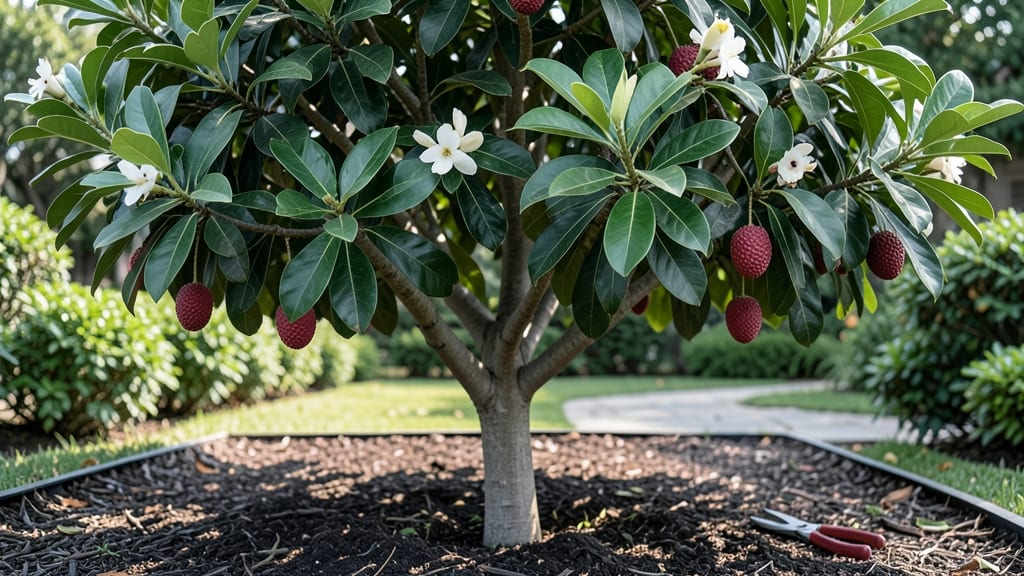
Caring for a litchi tree transforms your yard into a tropical oasis with sweet, fragrant fruit year after year. 🌿 I’ve watched mine go from a bare-bones sapling to a heavy-branched producer—it’s all about understanding the science behind pruning, watering, and when to let nature take over.
The key isn’t just cutting branches; it’s shaping the tree to maximize airflow, sunlight, and fruit production while avoiding common mistakes that stunt growth.
You’ll need well-draining soil, full sun exposure, and a patient approach to pruning—especially in the first few years.
Litchi trees thrive in warm climates but can handle cooler zones if protected, and they reward careful care with vibrant green foliage and clusters of juicy, aromatic fruit that taste like a vacation.
The pruning schedule alone determines whether you get a sparse harvest or buckets of ripe litchis by summer.
By the end of the season, your tree will stand taller, fuller, and more productive than ever. You’ll spot fewer pests, stronger branches, and fruit that ripens evenly—no more bitter surprises or half-empty clusters.
The real magic happens when you combine proper pruning with seasonal adjustments, turning a delicate tropical plant into a reliable, high-yielding staple in your landscape.
Whether you’re starting from seed or pruning an established tree, the principles stay the same. This guide covers everything from first-year shaping to winter prep, so you can enjoy litchis for decades—not just one disappointing harvest. Let’s get your tree thriving.
📚 In This Guide
- What you need
- Instructions
- Tips and common mistakes
- Wrapping up and next steps
What you need
- ● Pruning shears: Sharp, bypass-style shears (4–6 inches) for clean cuts on small branches.
- ● Loppers: Heavy-duty loppers (8–12 inches) for thicker branches (½–1½ inches in diameter).
- ● Pruning saw: A curved-tooth saw for branches thicker than 1½ inches.
- ● Disinfectant (70% isopropyl alcohol or bleach solution): 1 part bleach to 9 parts water to sterilize tools between cuts.
- ● Gloves: Heavy-duty gardening gloves (waterproof, cut-resistant) to protect your hands.
- ○ Pruning sealant (optional but helpful): Tree wound sealant (like Tanglefoot) for large cuts to prevent disease.
- ● Ladder or step stool: Sturdy and tall enough to reach the tree’s canopy safely.
- ● Trash bags or bucket: For collecting pruned branches and debris.
- ● Hand pruners with ratchet mechanism: For effortless cutting of medium branches.
- ● Extension pole pruners: For high branches without climbing.
- ● Tree bandage or tape: For wrapping larger wounds (e.g., Tanglefoot Tree Wound Pruning Seal).
- ● Pole saw: For hard-to-reach, thick branches.
- ● Notebook or app: To track pruning dates, branch notes, and growth patterns.
Step-by-Step pruning guide for litchi tree fruit production
Mastering litchi tree pruning transforms wild growth into a structured, high-yielding fruit machine.
🌿 Step 1: Assess the Tree's Structural Framework
Begin by identifying the tree's central leader—the main vertical trunk that should dominate the canopy. Look for any competing leaders that could create weak branch unions. These structural flaws often appear as multiple equal-sized stems emerging at the same height, which will split under fruit weight.
Use a sharp pruning saw to remove any competing leaders while they're still young and thin. I always make cuts just outside the branch collar—the swollen area where the branch meets the trunk—to prevent tearing. This ensures clean wounds that heal faster and reduces disease entry points.
Next, scan for dead, diseased, or crossing branches. Crossing branches rub together during wind or fruit growth, creating open wounds. Remove one of the crossing branches completely at its base, leaving the stronger, more vertical branch. Never leave stubs—always cut back to the branch collar.
✂️ Step 2: Implement the Three-Cut Pruning Method
For larger branches over ½ inch thick, use the three-cut method to prevent bark tearing. First, make an undercut about 6 inches out from the branch collar on the underside of the branch. This creates a hinge that will break cleanly when you make the final cut.
Next, make your main cut about 12 inches out from the collar on the top side of the branch. Stop cutting when you feel resistance—the hinge you created will now break cleanly when you apply gentle pressure. Finish by making a small cut just outside the branch collar to smooth the wound edge.
This method prevents the branch from tearing the trunk bark, which would create a massive wound that takes years to heal. I've seen litchi trees with bark stripped completely off from improper pruning—it's a heartbreaking sight that drastically reduces fruit production.
☀️ Step 3: Thin the Canopy for Light Penetration
Litchi trees need full sun exposure for fruit development, so aim to create an open, airy canopy. Remove any branches growing inward toward the center of the tree. These shaded branches rarely produce fruit and compete with the outer branches for sunlight and nutrients.
Look for branches that are growing at sharp angles (less than 45 degrees) from the trunk. These are more prone to breaking under fruit weight. Instead, encourage branches that grow at 45-60 degree angles—they provide better structural support. If you find a strong branch growing in the wrong direction, you can redirect its growth by tying it to a stake in the desired position.
For young trees, I typically remove about 20-30% of the total foliage during the first pruning. For mature trees, you can be more aggressive and remove up to 30-40% of the canopy. This dramatic thinning forces the tree to redirect its energy into producing larger, higher-quality fruit rather than maintaining excessive foliage.
⏰ Step 4: Time Pruning for Optimal Fruit Production
The best time to prune litchi trees is during their dormant season, typically late winter to early spring before new growth begins. This timing allows the tree to heal wounds before the stress of new growth and fruit production begins.
If you must prune during the growing season, do so immediately after harvest when the tree has finished fruiting. Never prune during flowering or when fruit is developing—this removes the energy source for next year's crop. I've seen growers prune at the wrong time and end up with virtually no fruit the following season.
For tropical climates where seasons are less distinct, prune during the coolest, driest period of the year. Avoid pruning during heavy rain or high humidity, as these conditions slow wound healing and increase disease risk. Always sterilize your pruning tools with 70% rubbing alcohol between cuts to prevent spreading pathogens.
Tips & tricks for perfect litchi tree pruning
Transforming your litchi tree into a fruit-producing powerhouse starts with these precise pruning techniques that I've refined over years of hands-on experience.
Branch Angle Intelligence: Pay close attention to branch angles during Step 3 when thinning the canopy. Branches growing at 45-60 degree angles provide optimal structural support and fruit-bearing capacity. I've noticed that branches growing at sharper angles (less than 45 degrees) often break under fruit weight, while those at wider angles (over 60 degrees) tend to produce smaller fruit. This angle awareness helps you make strategic cuts that maximize both tree stability and fruit quality.
Seasonal Pruning Strategy: The dormant season timing in Step 4 is absolutely critical. I've seen litchi trees completely fail to fruit the following season when pruned at the wrong time. For tropical climates, focus on the coolest, driest period—typically late winter to early spring—when the tree's energy is naturally conserved. This timing allows wounds to heal properly before the tree needs to redirect energy to new growth and fruit production.
Wound Care Essentials: After implementing the three-cut method in Step 2, don't overlook the importance of wound care. Sterilize your tools with 70% rubbing alcohol between cuts to prevent pathogen spread, and always make clean cuts just outside the branch collar. I've found that properly healed wounds can produce callus tissue within weeks, while improper cuts create entry points for diseases that can devastate your tree's productivity over time.
Light Penetration Test: When thinning the canopy in Step 3, conduct a simple light penetration test. Stand under the tree during midday and look for areas where sunlight doesn't reach the lower branches. These shaded areas are prime candidates for removal. I've seen litchi trees produce 30% more fruit after aggressive canopy thinning because the remaining branches receive optimal sunlight exposure for photosynthesis and fruit development.
Pro Tips for Litchi Tree Care
- Transforming your litchi tree into a fruit-producing powerhouse starts with these precise pruning techniques that I've refined over years of hands-on experience.
- Branch Angle Intelligence: Pay close attention to branch angles during Step 3 when thinning the canopy.
- Seasonal Pruning Strategy: The dormant season timing in Step 4 is absolutely critical.
Frequently asked questions
How often should I prune my litchi tree?
Prune your litchi tree twice a year: once in late winter (before new growth) to shape the canopy and remove dead wood, and again in early summer after fruiting to encourage airflow. Avoid heavy pruning during flowering or fruiting seasons—this can stress the tree and reduce yield.
When is the best time to harvest litchi fruit?
Harvest litchis when they’re fully colored but still slightly firm—usually between late spring and early summer, depending on your climate. Gently twist the fruit to check for readiness; if it detaches easily, it’s ripe! Overripe litchis bruise easily, so act fast.
What are the most common pests for litchi trees, and how do I treat them?
Watch for fruit borers, aphids, and scale insects. For borers, remove infested branches and apply Bacillus thuringiensis (Bt) spray. Aphids? Blast them off with water or use neem oil. Scale insects respond well to horticultural oil sprays. Prevention is key: keep your tree healthy with proper pruning and fertilization!
Can litchi trees survive cold weather? What’s the ideal temperature range?
Litchi trees thrive in tropical to subtropical climates (70–85°F) but can tolerate brief dips to 30°F if mature. Young trees or sudden freezes (<25°F) may suffer damage. Protect your tree with burlap wraps or row covers during cold snaps. In colder zones, grow it in containers for winter indoor care!
What if my litchi tree isn’t fruiting? How can I encourage more flowers?
Non-fruiting litchi trees often need better light, balanced fertilization, or proper pruning. Ensure full sun (6+ hours daily) and use a citrus/litchi-specific fertilizer high in potassium and phosphorus. Prune to open the canopy for airflow, and avoid overwatering—stress reduces flowering. Patience helps too; young trees may take 3–5 years to bear fruit!
Wrapping up and next steps
Caring for your litchi tree doesn’t have to be overwhelming—just a little pruning science and consistency go a long way! 🌱 By mastering seasonal trims, managing pests, and keeping an eye on soil health, you’ll unlock a year-round harvest of sweet, juicy fruit.
Remember, patience and observation are your best tools.
Now that you’re armed with the know-how, roll up your sleeves and give your tree the attention it deserves! Start by scheduling your next pruning session—whether it’s shaping for summer blooms or cleaning up after harvest. Your future litchi feast starts with today’s care! 🍈✨