
Pruning
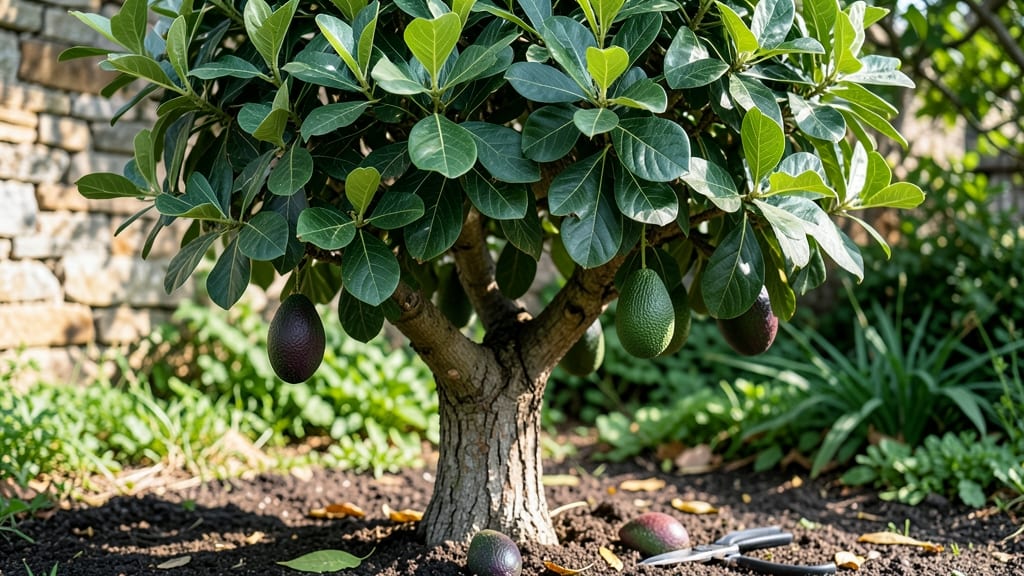
Growing a Nabal avocado tree means harvesting buttery, creamy fruit year after year—but only if you prune like a pro. 🌿 I learned the hard way that this variety’s cold tolerance and compact shape demand a different approach than Hass trees, and mastering the cuts is what separates a bush with a handful of fruits from one loaded with them.
The Nabal’s secret lies in its dwarfing rootstock, which keeps the tree small (12–15 feet tall) while still producing heavy crops. You’ll need well-draining soil, full sun, and a pruning schedule that opens the canopy for airflow—critical for preventing fungal rot in humid climates.
The real magic happens in late winter when you shape the tree to encourage basal branching, where the most productive fruit forms.
By summer, you’ll see the payoff: glossy, dark-green leaves and clusters of pearl-shaped fruit ripening steadily. The Nabal’s thin skin and rich flavor make it a favorite for slicing, but only if you’ve pruned to balance growth and fruit load.
Skip this step, and you’ll end up with small, bitter avocados—or worse, a tree that struggles to bear at all.
This method works in USDA Zones 8–11, though younger trees need winter protection in colder areas. Whether you’re starting from a nursery tree or grafting your own, the pruning blueprint below will keep your Nabal productive for decades. Let’s get those branches in shape!
📚 In This Guide
- What you need
- Instructions
- Tips and common mistakes
- Wrapping up and next steps
What you need
- ● Pruning shears: Bypass pruners (sharp, 7-9 inch blades) for small branches.
- ● Loppers: 1-2 pair (10-12 inch blades) for medium-sized branches (up to 1.5 inches thick).
- ● Pruning saw: 1 (for thick branches 2+ inches in diameter).
- ● Disinfectant: 70% isopropyl alcohol or a 10% bleach solution (1 part bleach to 9 parts water) to sterilize tools between cuts.
- ○ Pruning sealant: Optional but helpful (e.g., tree wound paint) for large cuts to prevent disease.
- ● Garden gloves: 1 pair (cut-resistant for safety).
- ● Ladder or step stool: Sturdy and tall enough to reach the tree’s canopy safely.
- ● Trash bags or bucket: For collecting pruned branches and debris.
- ● Sharpie or marker: To label branches if you’re doing structured pruning (e.g., marking for future cuts).
- ● Extension pole pruners: For high branches without a ladder.
- ● Hand saw: For precision cuts on stubborn branches.
- ● Compost bin: To recycle pruned branches as mulch.
- ● Notebook or app: To track pruning dates, branch notes, or tree growth progress.
Step-by-step pruning blueprint for your Nabal avocado tree
Transform your avocado tree into a fruit-bearing powerhouse with these precision pruning techniques.
✂️ Step 1: Assess the Tree Structure and Identify Key Branches
Start by examining your Nabal avocado tree's framework during its dormant season—typically late winter or early spring before new growth begins. Look for the central leader (main vertical stem) and primary scaffold branches that form the tree's skeleton. These branches should originate within 12-18 inches of the ground and spread evenly at 45-degree angles to create an open canopy.
Here's the thing—avocado trees naturally grow with a single dominant trunk. If you see competing vertical leaders, you'll need to remove all but one to prevent structural weakness. Use sharp pruning shears to make clean cuts just above outward-facing buds. These buds will become your new growth points, ensuring the tree develops a strong, balanced form.
Real talk: Don't skip this step. Weak branch angles or multiple leaders lead to heavy fruit loads that break limbs later. Your goal is to create a vase-like shape with 3-5 main branches evenly spaced around the trunk.
✂️ Step 2: Remove Dead, Diseased, or Weak Growth
Scan the entire tree for branches that show signs of stress—yellowing leaves, blackened stems, or dieback. These are your first targets for removal. Avocado trees are particularly susceptible to fungal diseases like root rot and anthracnose, so eliminating infected material prevents spread. Cut back to healthy tissue, making your cuts at a 45-degree angle about ¼ inch above an outward-facing bud or branch collar.
Thin out crowded branches to improve air circulation, which reduces humidity levels in the canopy. Aim for 6-8 inches of space between branches. You'll notice the tree's natural growth pattern emerges more clearly once you remove competing growth. This isn't just about aesthetics—proper spacing ensures sunlight penetrates to the inner branches where fruit develops.
I always work from the bottom up. Start with the lowest branches and move upward. This prevents you from standing on ladders with heavy tools and makes it easier to spot hidden problems in the lower canopy.
☀️ Step 3: Shape for Optimal Light Penetration and Fruit Production
Avocados produce fruit on new growth, so your pruning should encourage vigorous, outward growth. Remove any branches growing inward or crossing others—these create shaded areas where fruit won't develop properly. Use your shears to make clean cuts at the branch collar, avoiding any tearing of the bark. The goal is to create an open center that allows sunlight to reach 80% of the canopy.
For horizontal branches, shorten them by one-third to stimulate new growth. Look for lateral branches that form at 45-degree angles—these will produce your next year's fruit. Avoid heavy pruning of fruiting wood in the current season, as this reduces the tree's ability to support existing fruit loads. Instead, focus on structural shaping that maintains the tree's natural form while improving fruit accessibility.
Here's where it gets fun: Watch how the tree responds. Within 4-6 weeks, you'll see new growth emerge from the buds you preserved. These new shoots will bear next year's fruit, so protect them from frost and pests during their vulnerable early stages.
⏰ Step 4: Maintain Year-Round with Seasonal Adjustments
Avocado trees produce fruit continuously, so your pruning strategy should adapt to the tree's growth cycles. After the main harvest season (typically late fall to winter), perform a light pruning to remove any dead wood and shape new growth. This keeps the tree productive without overwhelming it. During the growing season, you might only need to remove water sprouts—fast-growing vertical shoots that appear along branches.
Real talk: Don't over-prune. Avocados are sensitive to heavy cuts, especially during active growth periods. If you see excessive leaf drop or weak new growth after pruning, you've removed too much. The tree should always retain at least 60% of its foliage to maintain energy production through photosynthesis.
I schedule my maintenance pruning for early morning when the tree is well-hydrated. This timing reduces stress on the plant and gives you better visibility to assess the tree's condition. Keep your tools clean and sharp to make precise cuts that heal quickly.
Tips & tricks for perfect Nabal avocado tree pruning
Here's what nobody tells you about transforming your avocado tree into a fruit-bearing machine.
Timing is Everything: The dormant season—late winter to early spring—is your golden window for major structural pruning. This is when the tree's energy is conserved, making it less stressed to handle cuts. If you prune during active growth, you risk stunting new fruit production. I've seen trees recover from winter pruning within 4-6 weeks, but spring pruning often leads to weaker regrowth. Mark your calendar for that critical window after harvest but before new buds form.
Tool Precision Matters: Never use dull shears—they tear bark instead of making clean cuts. Invest in high-quality bypass pruners for branches under ½-inch thick and loppers for thicker branches. Always cut at the branch collar (the swollen area where the branch meets the trunk) to prevent unsightly stubs and promote faster healing. I sterilize my tools with rubbing alcohol between cuts to prevent spreading fungal spores, especially important when dealing with avocado's susceptibility to diseases like anthracnose.
Branch Angle Science: Those 45-degree angles aren't arbitrary—they create the perfect balance between structural strength and sunlight exposure. When shortening branches in Step 3, make your cuts just above a lateral bud that's growing at a similar angle. This ensures the new growth continues the tree's natural vase shape. I've found that branches pruned at wider angles (60°+) often grow too upright, creating future shading problems in the canopy.
Visual Growth Check: After pruning, monitor your tree's response by looking for new growth within 4-6 weeks. Healthy new shoots should appear from the buds you preserved, growing outward at those crucial 45-degree angles. If you see mostly vertical growth, you've likely pruned too aggressively—avocados respond best to moderate cuts that stimulate lateral branching. This visual check helps you adjust your approach for next year's pruning.
Pro Tips for Nabal Avocado Tree
- Here's what nobody tells you about transforming your avocado tree into a fruit-bearing machine.
- Timing is Everything: The dormant season—late winter to early spring—is your golden window for major structural pruning.
- Tool Precision Matters: Never use dull shears—they tear bark instead of making clean cuts.
Frequently asked questions
Got questions about growing and pruning your Nabal avocado tree? You’re not alone! Here are some of the most common concerns—plus quick, actionable answers to keep your tree thriving and productive.
How often should I prune my Nabal avocado tree?
Prune your Nabal tree lightly every 3–4 months to encourage air circulation and fruit production. Focus on shaping in late winter/early spring (before new growth) and minimal trimming after harvest to redirect energy. Avoid heavy pruning—avocados are sensitive to stress! Pro tip: Use sharp, sterilized tools to prevent disease.
When is the best time to harvest Nabal avocados?
Nabal avocados typically ripen in late summer to fall (August–October in most regions). Harvest when the fruit yields slightly to gentle pressure and the stem detaches easily. Never pick unripe avocados—they won’t improve off the tree! For indoor ripening, place them in a paper bag with a banana or apple to speed up the process.
What if my Nabal tree isn’t fruiting? How can I fix it?
Common culprits include over-pruning, nutrient deficiencies (especially zinc or nitrogen), or lack of pollination. Try these fixes:
- Apply a balanced citrus/avocado fertilizer (high in nitrogen early in the season).
- Thin dense foliage to improve sunlight exposure.
- Hand-pollinate with a small brush if bees are scarce.
- Ensure consistent watering (deep but infrequent—avocados hate soggy roots!).
Can I grow a Nabal avocado tree in a container?
Yes! Nabal trees thrive in large containers (15+ gallons) with drainage holes. Use a well-draining potting mix (cactus/succulent blend works well) and repot every 2–3 years. Place in full sun (6+ hours daily) and move indoors if temps drop below 25°F (-4°C). Containers limit root growth, so expect smaller yields than in-ground trees.
Why are my Nabal avocado leaves turning yellow?
Yellow leaves often signal overwatering, root rot, or nutrient deficiencies. Check these first:
- Soil moisture: Stick your finger 2 inches deep—if damp, reduce watering.
- Drainage: Ensure pots/soil aren’t waterlogged (avocados hate “wet feet”).
- Fertilizer: Test soil for zinc, iron, or nitrogen—common deficiencies.
- Pests: Inspect for avocado lace bugs or scale insects on undersides.
Adjust care and monitor for 2–3 weeks—improvement should follow!
Wrapping up and next steps
Growing a thriving Nabal avocado tree is all about patience, precision, and a little green thumb love!
With the right pruning techniques—like shaping for airflow, removing dead branches, and encouraging fruit-bearing zones—you’ll unlock a bountiful harvest year after year. Remember, every trim is a step toward a healthier, more productive tree!
Ready to take the next step? Start small:
- 📅 Schedule your first prune during the tree’s dormant season (late winter).
- 🔍 Inspect your tree regularly to spot early signs of stress or disease.
- 🌱 Celebrate progress! Even small adjustments add up to big rewards.