
Pruning
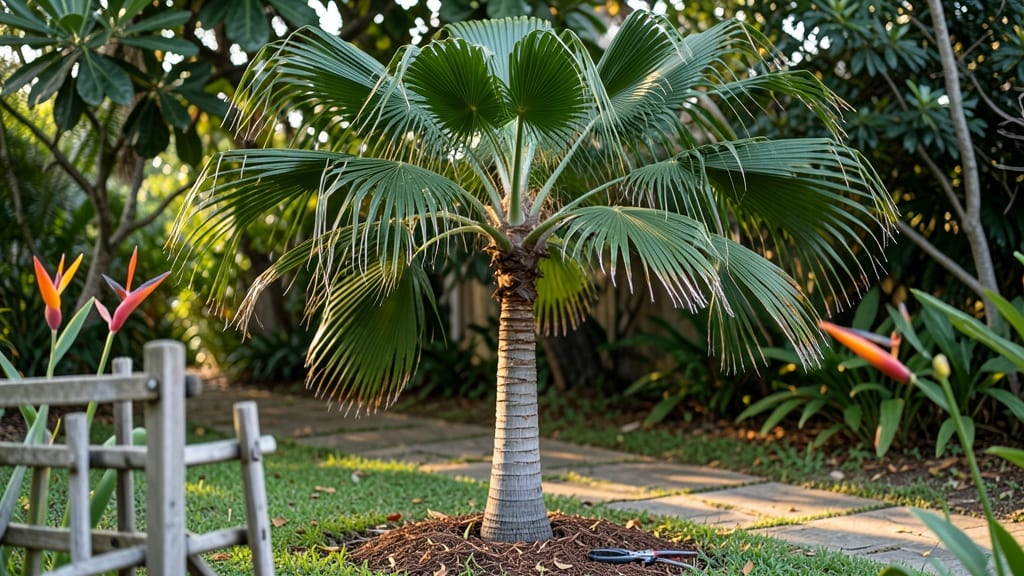
Pruning your palm royal tree isn’t just about shaping—it’s about keeping it alive and thriving for decades. I’ve learned the hard way that skipping those strategic cuts leads to weak fronds, pest problems, and even structural collapse.
The key is timing: three targeted trims a year make all the difference between a struggling palm and one that stands tall and proud.
This isn’t some complicated horticultural puzzle—just three simple cuts, timed to match the tree’s natural growth cycle. You’ll need sharp pruners, a ladder (for taller palms), and about an hour’s work per session.
The real magic happens when you remove dead fronds before they become a breeding ground for fungus, thin out crowded growth to improve airflow, and shape the crown to prevent storm damage. It’s foolproof once you know the signs of what to cut.
What you end up with is a palm that looks stunning year-round, with vibrant green fronds and a strong, upright form. No more brown, sagging leaves or that “neglected” look—just a tree that seems to effortlessly stay healthy.
The best part? These same techniques work whether you’re dealing with a young sapling or a mature 50-footer. Let’s get those pruners ready.
Fair warning: palm royal trees don’t like being over-pruned. We’ll cover exactly how much to remove—never more than a third of the fronds at once—and when to stop before you accidentally stress the tree.
This method has kept my palms lush for over a decade, and it can work for yours too.
📚 In This Guide
- What you need
- Instructions
- Tips and common mistakes
- Wrapping up and next steps
What you need
- ● Pruning shears: Bypass pruners (4–6" blade) for small fronds—sharpness is key!
- ● Loppers: 10–12" bypass loppers for thicker fronds or branches (test for clean cuts first!)
- ● Pole saw: Extendable (10–15 ft) for high fronds—safety first, reach second!
- ● Disposable gloves: Heavy-duty, cut-resistant (2–3 pairs) to protect hands from jagged edges.
- ● Pruning sealant: 1 small bottle (e.g., Tanglefoot Tree Wound Pruning Seal) for large cuts.
- ● Heavy-duty trash bags: 3–4 gallon-sized bags for debris cleanup.
- ● Ladder: Sturdy, 36" or taller (with non-slip feet) for hard-to-reach areas.
- ● Safety gear: Eye protection (goggles) and closed-toe shoes—no shortcuts here!
- ● Hose or spray bottle: For rinsing sap off tools post-prune.
- ● Disinfectant wipes: 70% isopropyl alcohol to sterilize tools between cuts (prevents disease spread).
- ● Extension cord + string trimmer: For stubborn, overgrown fronds (use caution near the trunk!).
- ● Camera or phone: To document "before" shots—progress tracking is satisfying!
- ● Compost bin: For repurposing healthy frond debris into mulch.
How to prune a palm royal tree for year-round vitality
Three well-timed cuts keep your palm healthy and thriving—here's how to do it right.
Assess and Plan Your First Trim in Early Spring
Begin by examining the palm's fronds for signs of damage or disease. Look for brown, crispy fronds that are completely dead or those with yellowing tips that haven't recovered from winter. These are your targets—never remove healthy green fronds, as they provide the palm with vital energy.
Use clean, sharp pruning shears to make your cuts. I always disinfect my tools with rubbing alcohol first to prevent spreading any potential pathogens. Mark the fronds you'll remove with a piece of tape or string to visualize the final look before you start cutting. This helps maintain balance in the palm's appearance.
For your first trim, focus on removing only the most damaged fronds. You'll likely only need to remove 10-20% of the palm's total fronds at this stage. The goal is to encourage new growth without stressing the plant. Watch for fresh green buds emerging from the trunk after pruning—this is your sign that the palm is responding well.
Perform Mid-Summer Maintenance Pruning
About six weeks after your spring trim, conduct a lighter maintenance pruning. This time, focus on removing any fronds that have developed brown tips or edges during the summer heat. You'll also want to trim any fronds that are growing at odd angles or rubbing against each other, as these can create entry points for pests.
I recommend using a pair of long-handled pruners for this job, especially if you're working with a tall palm. Always make your cuts about 6 inches below the point where the frond attaches to the trunk. This prevents water from pooling at the attachment point, which can lead to rot. The cut should be clean and at a slight angle to allow water to run off.
After trimming, step back and assess the palm's silhouette. You're aiming for a natural, balanced look rather than a perfectly symmetrical one. Healthy palms have a mix of mature and emerging fronds, so don't be tempted to remove too many at once. If you notice new fronds growing but not unfurling properly, this could indicate a nutrient deficiency that you'll want to address separately.
Conduct a Light Winter Pruning Before Dormancy
In late fall, perform your final trim of the year. This is a gentle process focused on removing only the most obviously dead or damaged fronds. The palm's growth naturally slows during winter, so you want to avoid any aggressive pruning that could stress the plant before it enters dormancy.
Look for fronds that are completely brown and dry, with no green tissue remaining. These can be safely removed at the base. For fronds that are partially brown but still have some green, leave them be—they may recover with spring's warmer temperatures. Use your pruners to make clean cuts about 4-6 inches below the attachment point, just as you did in summer.
After your winter trim, give the palm's base a good cleaning. Remove any debris, dead fronds, or palm fruit that has accumulated around the trunk. This prevents pests from overwintering near your palm. You might also want to apply a slow-release palm fertilizer at this time to provide nutrients for the upcoming growing season. The palm's crown should look tidy and open, allowing for good air circulation.
Monitor and Adjust Throughout the Year
Between your scheduled trims, keep an eye on your palm royal tree for any signs of stress or disease. Yellowing fronds that don't improve after a few weeks may indicate an underlying issue like nutrient deficiency or pest infestation. If you notice fronds developing black spots or sticky residue, this could be a sign of scale insects or other pests.
I always carry a small pair of pruners with me when I'm checking on my palms. If I spot a single damaged frond that's not part of a larger pattern, I'll remove it immediately. This prevents the problem from spreading to other parts of the palm. The key is to act quickly—palms are generally resilient, but they can't recover from severe damage overnight.
Throughout the year, pay attention to how your palm responds to each trim. If you notice new fronds emerging slowly or not at all after pruning, you may need to adjust your approach. Sometimes a palm needs less aggressive pruning, or it might benefit from additional nutrients or a change in growing conditions. Trust your observations—they're the best guide to what your specific palm needs.
Tips & tricks for perfect palm royal tree pruning
These simple strategies will help you maintain a healthy, vibrant palm royal tree throughout the year.
Timing is Everything: The six-week interval between your spring trim and mid-summer maintenance is crucial. This timing allows your palm to recover and grow new fronds between pruning sessions. If you notice new growth emerging but not unfurling properly after your spring trim, this could be a sign to delay your summer maintenance by a couple of weeks. The goal is to never remove more than 20% of the fronds in any single session—this keeps your palm from getting stressed.
Cutting Technique Matters: When making your cuts about 6 inches below the frond attachment point, use a clean, sharp pruner and make the cut at a slight angle. This prevents water from pooling at the base, which could lead to rot. I've found that using a long-handled pruner not only makes the job easier but also helps you maintain better control, especially with taller palms. Always disinfect your tools between cuts to prevent spreading disease.
Seasonal Adjustments: In winter, be extra gentle with your pruning. Since the palm's growth slows during this season, focus only on completely dead fronds—those that are brown and dry with no green tissue. Leaving partially brown fronds can give them a chance to recover when spring arrives. After your winter trim, take the time to clean up any debris around the base, as this helps prevent pests from overwintering near your palm.
Monitoring for Problems: Keep an eye on your palm between scheduled trims. Yellowing fronds that don't improve after a few weeks could indicate a nutrient deficiency, while black spots or sticky residue often signal pest problems. If you notice these signs, address them immediately—palms are resilient, but they can't recover from severe damage quickly. I always carry a small pair of pruners with me when checking on my palms so I can remove any damaged fronds right away.
Pro Tips for Palm Royal Tree
- These simple strategies will help you maintain a healthy, vibrant palm royal tree throughout the year.
- Timing is Everything: The six-week interval between your spring trim and mid-summer maintenance is crucial. This timi...
- Cutting Technique Matters: When making your cuts about 6 inches below the frond attachment point, use a clean, sharp ...
Frequently asked questions
Got questions about keeping your Palm Royal Tree healthy with strategic pruning? You’re not alone! Here are answers to the most common concerns—from timing to troubleshooting—so you can prune like a pro.
When is the best time to prune a Palm Royal Tree?
Prune your Palm Royal Tree three times a year: early spring (to encourage new growth), late summer (to remove dead fronds), and winter (for light shaping). Avoid heavy pruning in fall, as it stresses the tree before dormancy. Pro tip: Always prune when fronds are dry to reduce disease risk!
How do I tell if a frond is dead vs. just brown?
Dead fronds are crispy, brittle, and easily pull away from the trunk. Brown but pliable fronds are still alive—they just need time to dry out. Never remove green fronds, even if they’re yellowing, as they’re still photosynthesizing. Snip only what’s fully brown and papery.
Can I prune too much? What are the signs?
Yes! Over-pruning causes stress, stunted growth, or even death. Watch for yellowing fronds, sparse new growth, or a bare trunk. Rule of thumb: Never remove more than 1/3 of the fronds at once. If you’ve already overdone it, skip a pruning cycle and focus on watering/fertilizing.
Do I need special tools for Palm Royal Tree pruning?
Basic tools suffice! Use bypass pruners for small fronds, a pruning saw for thick stems, and gloves (sharp fronds can cut!). A ladder or extension pole helps with tall trees. Disinfect tools with rubbing alcohol between cuts to prevent fungal spread. Pro tip: Wear long sleeves—fronds can be abrasive!
What if my Palm Royal Tree isn’t growing after pruning?
Slow growth could mean nutrient deficiency, poor drainage, or pests. Check soil moisture, fertilize with a palm-specific blend (high in potassium/magnesium), and inspect for spider mites or scale insects. If the trunk is soft or oozing, it may be root rot—reduce watering and consult a local arborist.
Still unsure? Bookmark this guide and revisit it before your next pruning session. Happy trimming!
Wrapping up and next steps
The Palm Royal Tree thrives on balance—just like you! With three strategic trims a year, you’ll keep it lush, healthy, and resilient while avoiding stress. Remember, timing, tools, and technique are your best friends—cut with confidence, and your palm will reward you with stunning growth for years.
Ready to give your Royal Palm the TLC it deserves? Grab your pruners, mark your calendar, and start small—your first trim could be just weeks away! 🌿✨