
Pruning
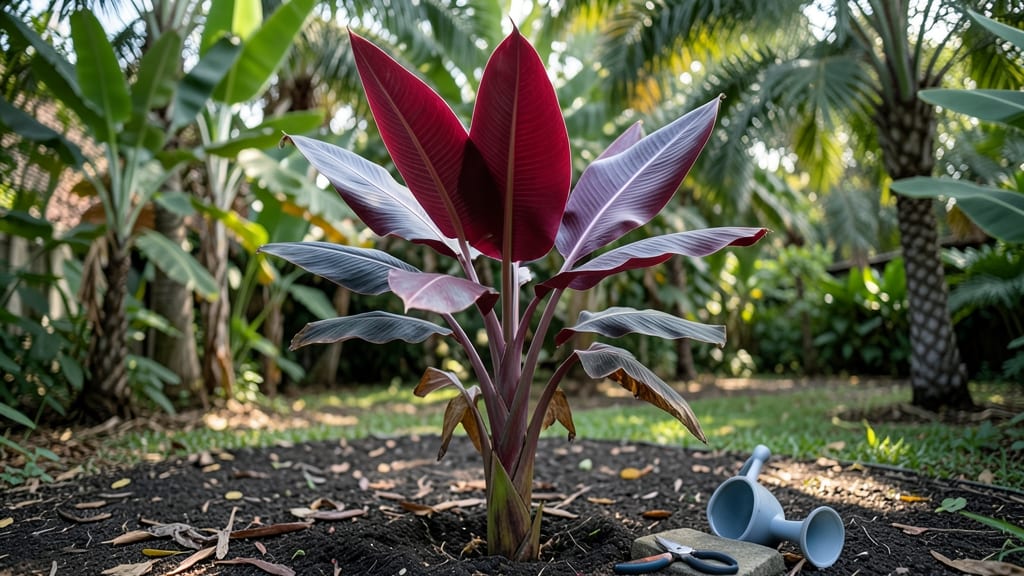
Pruning your red banana leaf tree isn’t just about keeping it tidy—it’s the secret to those velvety burgundy leaves staying vibrant all year. I’ve learned the hard way that skipping regular trims leads to leggy growth and fewer striking foliage colors.
The good news? Four simple cuts a year transform this tropical stunner from "meh" to "showstopper" in any garden or patio pot.
This tree thrives in zones 10-12, but even in cooler climates, you can keep it alive indoors with bright light. The key is matching your pruning to its natural rhythm: a light trim after spring flush, a mid-summer shape-up, and two more strategic cuts in fall and winter.
Each one removes dead growth while encouraging fresh, deep red foliage that turns heads. No fancy tools needed—just sharp shears and a little patience.
What you’ll end up with is a tree that looks like it belongs in a botanical garden, not your backyard. The leaves stay lush and glossy, the branches fill out evenly, and you avoid the sad, sparse look that comes from neglect.
Plus, pruned branches root easily if you want to propagate new plants—free extra trees for friends or your own collection.
Works just as well in 15-gallon containers as in-ground plantings, making it perfect for small spaces. Here’s how to make those four trims work magic without stressing the plant—or your schedule.
📚 In This Guide
- What you need
- Instructions
- Tips and common mistakes
- Wrapping up and next steps
What you need
- ● Pruning shears: Sharp, bypass-style shears (for clean cuts) – 1 pair (or 2 pairs if working on a large tree).
- ○ Hand pruners: For smaller branches – 1 pair (optional but handy).
- ○ Loppers: For thicker branches (½”–1.5” diameter) – 1 pair (optional).
- ● Disinfectant: 70% isopropyl alcohol or rubbing alcohol (to sterilize tools between cuts).
- ● Garden gloves: Heavy-duty, cut-resistant (to protect your hands from thorns or sap).
- ○ Pruning sealant: (Optional) For larger cuts to prevent disease – 1 small tube.
- ● Trash bags: For collecting pruned leaves/branches – 2–3 large bags.
- ● Ladder: Extendable or step ladder (if tree is over 6–8 feet tall).
- ● Safety glasses: To shield eyes from debris.
- ● Notebook & pen: To jot down notes on cuts (e.g., “trimmed 3 lower fronds in March”).
- ● Hose or spray bottle: To clean tools and rinse sap off leaves.
- ○ Compost bin: (Optional) For repurposing healthy prunings.
How to prune a red banana leaf tree for year-round growth
Here's my straightforward approach to keeping your red banana tree thriving with minimal effort.
✂️ Step 1: Early Spring Cleanup Trim (Late February)
Start by removing any dead or yellowed leaves using clean, sharp pruning shears. These leaves won't recover and only drain energy from your tree. I always begin at the bottom and work upward—this makes it easier to see what's left to prune.
Look for branches that grew at odd angles or are crossing each other. These compete for sunlight and nutrients. Cut them back to the nearest outward-facing bud or leaf node. The goal is to open up the center of the tree so light reaches all leaves evenly. You'll see new growth emerge within 2-3 weeks if you've pruned correctly.
Don't remove more than 20% of the foliage in this first trim. Your red banana tree stores energy in its leaves, and drastic pruning can stress it. If you're unsure, err on the side of caution—you can always prune more later.
✂️ Step 2: Mid-Summer Growth Control (July-August)
This is when your tree grows most aggressively, so focus on shaping rather than heavy cutting. Remove any leggy growth—those long, bare stems that stretch toward light. Cut these back to just above a leaf node or side branch.
Pay special attention to the top of the tree. If it's growing too tall for your space, make a final cut just above a strong lateral branch. This encourages bushier growth rather than a single tall stem. Water deeply after pruning to help the tree recover.
Here's the thing—red banana trees respond well to pruning, but they don't like being cut back too severely. If you see sap oozing after a cut, it's a sign you've made a clean cut through the stem. This is normal and nothing to worry about.
✂️ Step 3: Fall Preparation Trim (October-November)
As temperatures drop, your tree will slow its growth. Use this trim to remove any remaining dead leaves and any branches that grew in the summer but didn't produce new leaves. These are called "water sprouts" and don't contribute to the tree's health.
Look for any branches that are rubbing against each other. These will eventually cause wounds that can invite pests or disease. Cut one of the branches back to the trunk or a side branch to eliminate the contact. This is also a good time to thin out the tree slightly if it's looking too dense.
After this trim, reduce watering slightly. Your tree will be entering a semi-dormant state, and too much moisture can lead to root rot. Keep the soil slightly moist but not soggy until spring.
✂️ Step 4: Light Winter Prune (December-January)
This is the gentlest trim of the year. Simply remove any dead or damaged leaves and branches. Focus on tidying up the tree rather than making major cuts. The goal is to keep it looking neat without stressing it during the colder months.
If you notice any branches that are growing in an unappealing direction, you can make small adjustments now. However, avoid heavy pruning during winter. Your tree is already conserving energy, and major cuts can delay spring growth.
This is also a great time to check your tree's structure. If you've been pruning regularly, you should see a strong, well-shaped tree ready to burst into new growth when spring arrives. If not, don't worry—every tree takes time to develop its ideal form.
Tips & tricks for perfect red banana leaf tree pruning
Here's what nobody tells you about keeping your red banana tree looking its best year-round.
Timing is Everything: The 2-3 week window mentioned for new growth after your early spring trim is your best indicator of success. If you don't see fresh leaves emerging within that time, check your pruning cuts - they should be clean and made just above a leaf node or bud. I've seen trees that looked perfectly pruned but failed to regrow because the cuts were too close to the trunk or made at awkward angles.
Tool Prep Matters: Before you even start pruning, take 5 minutes to clean and sharpen your pruning shears. Dull blades create jagged cuts that heal poorly and invite disease. I like to wipe down the blades with rubbing alcohol between cuts, especially when dealing with sap-heavy branches. This simple step can make all the difference in your tree's recovery.
Seasonal Adjustments: The fall preparation trim is where you'll notice the biggest difference in your tree's structure. This is when you should really focus on thinning out the center - aim to create a sort of "open vase" shape that allows light to reach all leaves. I've seen red banana trees that looked full but had bare spots in the middle because they weren't getting proper light penetration.
Watering Wisdom: After your mid-summer growth control trim, the deep watering is crucial. I recommend watering to a depth of about 12 inches - this encourages deeper root growth. You'll know you've watered enough when the soil feels moist all the way down. During winter, that slight moisture adjustment (not soggy) is key - I've seen many trees suffer from overwatering during their dormant period.
Pro Tips for Red Banana Leaf Tree
- Here's what nobody tells you about keeping your red banana tree looking its best year-round.
- Timing is Everything: The 2-3 week window mentioned for new growth after your early spring trim is your best indicator of success.
- Tool Prep Matters: Before you even start pruning, take 5 minutes to clean and sharpen your pruning shears.
Frequently asked questions
When is the best time to prune a red banana leaf tree?
The ideal time is early spring (just before new growth starts) or late fall to avoid stressing the plant during active growth. Light trimming can happen year-round to remove dead or damaged leaves, but avoid heavy pruning in winter when the tree is dormant.
How do I prune without harming the tree?
Use sterilized pruners to cut just above a leaf node (where leaves grow) at a 45-degree angle. Avoid cutting into the pseudostem (the "trunk"), as it won’t regrow. Remove only 10-20% of the foliage at a time to prevent shock.
What if my red banana leaf tree isn’t growing after pruning?
If growth stalls, check for underwatering (they love moisture!) or nutrient deficiencies (use banana leaf-specific fertilizer). Over-pruning or poor timing can slow growth—stick to light, strategic cuts and monitor for new shoots within 4-6 weeks.
Can I use red banana leaves for cooking after pruning?
Harvest large, healthy leaves by cutting the stalk near the base (not the center). Let them dry for 1-2 days to toughen, then use them as edible wraps or compost. Just avoid leaves from recently pruned branches—they may be less sturdy.
What’s a good alternative if my red banana leaf tree isn’t thriving?
If your tree struggles with pruning or climate, try plantain leaves (similar texture) or abaca (Musa textilis) for cooking. For ornamental use, bird-of-paradise or elephant ear plants offer tropical vibes with easier care.
Wrapping up and next steps
The red banana leaf tree thrives with just a little care—your four seasonal trims will keep it lush, healthy, and full of vibrant foliage all year. Remember, consistency is key: sharp tools, proper timing, and patience will reward you with a stunning tropical centerpiece. 🌿
Ready to transform your space? Start with the next trim on your calendar—whether it’s shaping those bold leaves or encouraging new growth. Grab your pruners, and let’s make your red banana leaf tree the star of your garden! 🌟