
Pruning
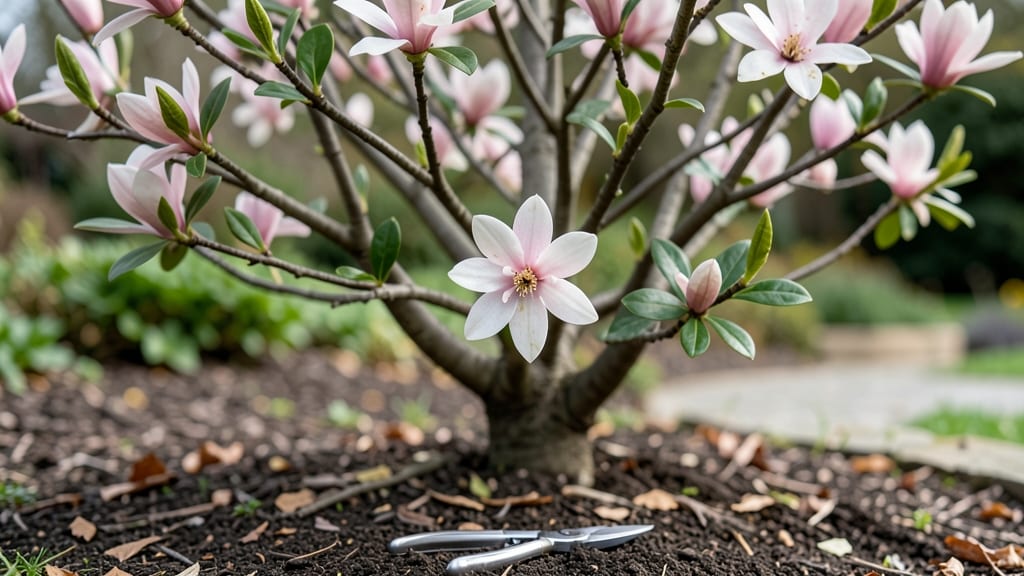
Before you plant a star magnolia tree, weigh its pros and cons—stunning winter blooms and glossy foliage, but also its slow growth and stubborn quirks. 🌟 I planted mine five years ago, and while it’s finally reaching that showstopper height, the wait made me question whether the trade-offs were worth it.
The pros? Stunning white star-shaped flowers in late winter, when most gardens are still asleep. The cons? It grows slower than a teenager on a Saturday morning, and pruning those thick branches takes elbow grease.
What you’ll love is how this tree thrives in full sun or partial shade, handles cold down to zone 4, and stays compact enough for small yards.
But here’s the catch: those thick branches mean pruning isn’t just a suggestion—it’s a necessity if you want sunlight to reach the ground below. And while deer usually leave it alone, aphids sometimes throw a party on new growth, requiring a quick spray of soapy water.
By spring, your yard will be the envy of the neighborhood with fragrant blooms that last weeks, and the tree’s glossy green leaves add summer texture. The trade-off? It takes time to fill out as a privacy screen—expect 3-5 years before it blocks views effectively.
But once established, it’s practically maintenance-free, with minimal watering needs once roots are deep.
Perfect for gardeners who value beauty over speed, but not ideal if you want instant impact. The key is patience—and a good pair of loppers for those inevitable pruning days. Ready to commit to the long game?
📚 In This Guide
- What you need
- Instructions
- Tips and common mistakes
- Wrapping up and next steps
What you need
- ● Star magnolia tree: Choose a healthy, disease-free sapling (3-5 gallons in size for best results). Opt for Magnolia stellata for classic star-shaped blooms or Magnolia 'Royal Star' for larger flowers.
- ● Shovel: A round-point shovel (18-24 inches wide) for digging holes efficiently.
- ● Garden gloves: A pair of durable, breathable gloves (e.g., Frostproof or Workrite) to protect your hands from thorns and rough bark.
- ● Soil amendments: Compost: 2-3 gallons of well-aged compost (e.g., Miracle-Gro or homemade) to enrich the soil.
- ● Peat moss or pine bark fines: 1-2 bags (2-3 cubic feet) for improving drainage and aeration.
- ● Slow-release fertilizer: A balanced 10-10-10 or acid-loving plant fertilizer (e.g., Espoma or Jobe’s) to kickstart growth.
- ● Mulch: 2-3 bags of organic mulch (e.g., pine straw or shredded bark) to retain moisture and suppress weeds.
- ● Watering can or hose: A garden hose with a spray nozzle or a 5-gallon watering can for gentle hydration.
- ● Pruning shears: Bypass pruners (e.g., Felco or Fiskars) for clean cuts on small branches.
- ● Loppers: A pair of long-handled loppers (for branches ½–2 inches thick).
- ● Pruning saw: A curved-tooth pruning saw (e.g., Bahco) for thicker branches (2+ inches).
- ● Disinfectant: A 70% isopropyl alcohol or bleach solution (1 part bleach to 9 parts water) to sterilize tools and prevent disease.
- ● Rubbing alcohol or hand sanitizer: For cleaning hands after pruning.
- ○ Pruning sealant (optional): A tree wound sealant (e.g., Tanglefoot Tree Wound Pruning Seal) for large cuts, though many experts recommend leaving cuts unsealed for natural healing.
- ● Soil pH test kit: To ensure your soil is acidic (pH 5.0–6.5), ideal for magnolias.
- ● Tree stakes and ties: For young saplings in windy areas (e.g., 3-foot bamboo stakes and soft tree ties).
- ● Drip irrigation system: For consistent watering, especially in hot climates.
- ● Bird netting: To protect new blooms from hungry birds (if desired).
- ● Wheelbarrow: For hauling soil, mulch, or tools.
How to evaluate the star magnolia tree for your landscape
Here's what I've learned after growing these stunning trees for years.
🌱 Step 1: Assess Your Space and Climate Needs
The star magnolia (Magnolia stellata) thrives in USDA zones 4-8 and needs full sun to partial shade—at least 6 hours of direct sunlight daily. Check your microclimate first: these trees hate soggy roots, so avoid low spots where water pools after rain. I always verify drainage by digging a 12-inch hole—if water doesn't drain within 30 minutes, amend the soil with 2-3 inches of compost before planting.
Measure your space too. Mature star magnolias reach 15-20 feet tall and wide, so plant them 15-20 feet apart if using multiple trees for a privacy screen. If your yard is smaller, consider the dwarf variety Magnolia stellata 'Royal Star', which tops out at 10 feet. Real talk: these trees grow 12-24 inches per year, so patience pays off for that dramatic winter display.
☀️ Step 2: Weigh the Seasonal Pros and Cons
Winter is when star magnolias shine—fragrant white flowers burst open in late winter to early spring (often February-March) before leaves appear. That's the big pro: stunning winter interest when most gardens are dormant. But here's the catch: they're deciduous, so summer shade is minimal. If you need year-round privacy, pair them with evergreens like arborvitae or boxwood on the sides.
Spring brings glossy dark green leaves, but these trees are not drought-tolerant. Once established (after 3-4 years), they need deep watering every 1-2 weeks in dry spells. The trade-off? Their fast growth means you'll see height gains quickly compared to slower-maturing trees. I've seen neighbors skip mulching, but 3 inches of mulch (like shredded bark) retains moisture and protects roots—don't skip this step.
✂️ Step 3: Plan for Low-Maintenance Care
Star magnolias are disease-resistant and pest-free most years, which is a huge plus. Prune only to remove dead branches or shape in late spring after flowering. Never prune in fall—you'll cut off next year's blooms. I like to thin out crowded branches to improve airflow, but avoid heavy pruning. These trees respond poorly to drastic cuts and may take years to recover their natural shape.
The cons? Messy fruit (aggregate cones) forms after flowering and can be unsightly. Rake them up in early spring before they split open. Also, young trees are sensitive to transplant shock, so water deeply 2-3 times per week for the first month after planting. Here's the thing—if you plant in fall (September-October), roots establish before winter, but spring planting gives them a full growing season to adjust.
🪴 Step 4: Compare Costs and Longevity
Young star magnolias cost $50-$150 at nurseries, but their 30-50 year lifespan makes them a smart investment. Compare that to fast-growing (but short-lived) trees like leucothoe or pieris, which may need replacing in 10-15 years. The star magnolia's slow-to-mature but long-lasting nature is its hidden advantage—once established, they require minimal care beyond occasional watering.
For privacy screens, calculate $100-$300 per tree for a 15-foot-tall barrier (3 trees spaced 15 feet apart). The upfront cost is higher than bamboo screens, but magnolias add value to your property. Here's my tip: plant 3 trees in a row for a natural, wind-resistant screen—single trees look sparse until fully mature.
Tips & tricks for perfect star magnolia planting
These simple tricks will help you get the most out of your star magnolia investment.
Sunlight Secret: While the instructions mention "full sun to partial shade," I've found that morning sun plus afternoon shade works best in hotter climates. The delicate winter blooms appreciate that gentle balance—too much afternoon sun can stress the tree during flowering season.
Planting Depth Matters: When planting, make sure the root flare (where roots meet the trunk) sits just above soil level. I've seen neighbors bury the flare too deep, which can cause poor growth. Dig a hole twice as wide as the root ball but only as deep—this gives roots room to spread without suffocating.
Watering Wisdom: The first month is critical—water deeply 2-3 times per week (as mentioned), but check soil moisture first. Stick your finger 2 inches down: if it's dry, water; if damp, wait. Overwatering is just as bad as underwatering for these trees. After establishment, let the 3 inches of mulch do its job by retaining moisture.
Seasonal Timing Tip: Fall planting (September-October) gives roots time to establish before winter, but spring planting gives them a full growing season to adjust. I've had success with both, but if you're in a colder zone (like 4-5), fall planting gives that extra buffer for root development.
Pro Tips for Star Magnolia Tree Pros And Cons
- These simple tricks will help you get the most out of your star magnolia investment.
- Sunlight Secret: While the instructions mention "full sun to partial shade," I've found that morning sun plus afterno...
- Planting Depth Matters: When planting, make sure the root flare (where roots meet the trunk) sits just above soil lev...
Frequently asked questions
about the star magnolia tree—because every gardener deserves clarity before planting!How fast does a star magnolia grow, and when can I expect privacy?
A star magnolia grows at a moderate pace of 12–24 inches per year, reaching 20–30 feet tall and wide at maturity (10–15 years). For a dense privacy screen, plant 3–5 trees in a row, spaced 8–10 feet apart. Expect noticeable growth in 3–5 years, but full privacy may take a decade or more.
Are star magnolias cold-hardy, and do they lose leaves in winter?
Yes! Star magnolias thrive in USDA Zones 4–9 and boast evergreen-like foliage that stays on branches year-round (though it may brown in harsh winters). Their stunning winter blooms (Dec–Feb) appear before leaves sprout, making them a standout in dormancy. Mulch helps protect roots in extreme cold.
What are the biggest challenges with growing star magnolias?
The main hurdles include:
- Slow early growth: Patience is key—young trees gain height gradually.
- Susceptibility to scale insects: Monitor for white, cottony pests on bark and treat with horticultural oil if spotted.
- Limited sun tolerance: While they adapt to partial shade, full sun (6+ hours/day) yields the most blooms.
- Large size: Plan for mature width—these aren’t small shrubs!
Pro tip: Prune in late winter (after blooming) to shape the tree without sacrificing flowers.
Can I grow a star magnolia in a container, or is it strictly a landscape tree?
While possible, star magnolias are not ideal for containers due to their size and deep root systems. However, you can try a large (20+ gallon) pot for young trees (3–5 years old) in full sun with well-draining soil. Expect slower growth and limited blooms. For best results, plant in the ground!
How do I encourage more flowers on my star magnolia?
To maximize blooms:
- Provide full sun (6+ hours daily) for optimal flowering.
- Fertilize lightly in early spring with a balanced, slow-release fertilizer (10-10-10).
- Water deeply but infrequently—overwatering stresses roots.
- Avoid heavy pruning—only remove dead or crossing branches after flowering.
Wrapping up and next steps
The star magnolia tree is a stunning choice for year-round beauty, offering fragrant winter blooms, fast growth, and natural privacy—though it does require patience and proper care. Whether you love its showy flowers or its disease resistance, this tree delivers big rewards for the right gardener.
Ready to transform your landscape? Start planning your planting today! 🌟