
Pruning
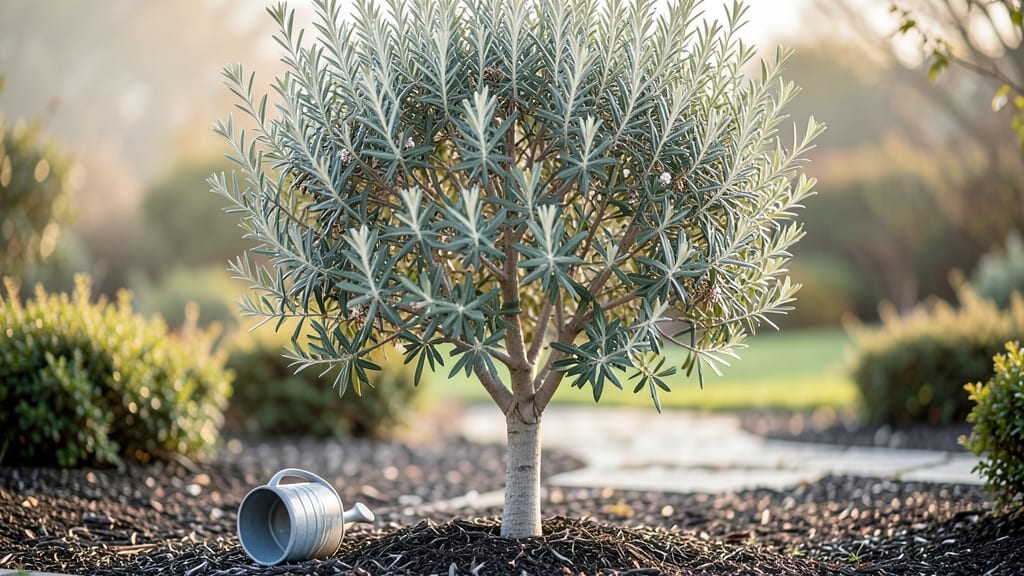
Your Swan Hill olive tree can thrive in Arizona’s brutal summers with the right pruning strategy—it’s the secret weapon against heat stress and drought. I’ve watched mine go from struggling to producing silver-dollar-sized olives every fall after mastering this desert-specific approach.
The key isn’t just cutting back; it’s shaping the tree to maximize shade and air flow while preserving its drought-resistant structure.
Start by pruning in late winter or early spring before new growth begins, when temperatures stay below 75°F. Use sharp bypass pruners to make clean cuts just above outward-facing buds—this encourages bushier growth that handles Arizona’s intense sunlight better.
Most homeowners over-prune, so aim to remove only 10-20% of the canopy each year to avoid stressing the tree during our long, dry season.
What you’ll end up with is a tree that stays compact yet productive, with fewer heat-scorched leaves and more consistent olive production. The right pruning also makes harvesting easier—no more wrestling with tangled branches during our 100°F+ harvest months.
Plus, properly pruned trees resist the fungal issues that plague overcrowded olives in Phoenix’s humidity valleys.
For container-grown Swan Hills, prune 20% more aggressively to control size, and always choose pots with drainage holes to prevent root rot—a common killer in our heavy clay soils.
Local nurseries like Desert Botanical Garden’s plant sales carry disease-resistant varieties perfect for Arizona’s microclimates. Let’s get those branches shaped for desert survival!
📚 In This Guide
- What you need
- Instructions
- Tips and common mistakes
- Wrapping up and next steps
What you need
- ● Pruning shears: Bypass pruners (sharp, clean, and rated for branches up to ½ inch thick). Pro tip: 💡 Sanitize blades with rubbing alcohol before and after use to prevent disease spread!
- ● Loppers: Heavy-duty bypass loppers (for branches ¾–2 inches thick). Look for ergonomic handles to reduce strain.
- ● Pruning saw: A curved-tooth pruning saw for thicker branches (2+ inches). Avoid cheap saws—they can tear wood.
- ● Gloves: Leather or heavy-duty gardening gloves (protect against thorns and blisters). Opt for cut-resistant if needed.
- ● Disinfectant: 70% isopropyl alcohol or a pruning sealant (like Tanglefoot) to coat cuts and prevent infection.
- ● Ladder or step stool: A stable, extendable ladder (or a 3-step stool for shorter trees). Safety first! 🔥
- ● Heavy-duty trash bags: For collecting pruned branches (Arizona’s desert winds can spread debris fast!).
- ● Watering can or hose: To rehydrate the tree post-pruning (olives hate stress!).
- ● Pole pruner: For high branches (extends your reach safely).
- ● Sharpening stone: To keep blades razor-sharp mid-session.
- ● Tree wound dressing: Controversial but useful for large cuts (e.g., Ortho Fruit Tree Sealant).
- ● Sunscreen & hat: Arizona sun is no joke—protect yourself while working!
- ● Camera: Snap progress pics to track growth over time.
How to prune a Swan Hill olive tree for Arizona’s harsh climate
Pruning this drought-tolerant variety correctly means the difference between a thriving tree and one struggling against Arizona’s relentless sun.
Choose the Right Time for Pruning
Timing matters most in the desert—prune your Swan Hill olive tree in late winter or early spring, just as new growth begins. This ensures you remove dead wood without triggering water stress during summer’s peak heat. Avoid pruning in fall, as new growth won’t harden off before winter’s chill.
Look for dormant buds swelling along branches—this is your signal that the tree is preparing to grow. If you prune too early, you risk exposing tender new shoots to freezing nights. In Arizona’s low deserts, aim for February to early March when daytime temperatures hover around 60-70°F.
Real talk: If you missed the window, prune in early summer (June) instead of fall. Just water deeply before and after to compensate for the heat stress.
Remove Dead, Diseased, or Weak Branches First
Start by cutting out dead, crossing, or diseased branches—these compete with healthy growth for water and nutrients. Use clean, sharp pruners to make 1/4-inch cuts just outside the branch collar (the swollen area where the branch meets the trunk). Never leave stubs; they invite rot.
Inspect for signs of verticillium wilt (common in olives)—look for yellowing leaves, wilting, or black streaks in the wood. If you spot these, prune infected branches 6 inches below the visible damage and sterilize your tools with rubbing alcohol between cuts.
I always work from the inside out, removing branches that block sunlight from reaching the center. Olives need full sun exposure to thrive, so don’t hesitate to thin out crowded areas. Aim for an open canopy that allows air circulation.
Shape for Sun Exposure and Airflow
Olives in Arizona need unobstructed sunlight—prune to create a rounded, vase-like shape that lets light penetrate to the lower branches. Start by removing upward-growing branches that create a dense, shaded interior. These branches rarely produce fruit and compete for water.
Use hand pruners for branches under 1/2 inch thick and loppers for thicker branches. For larger limbs, opt for three-cut pruning to avoid tearing the bark. Make the first cut 6-12 inches out from the branch, then the second cut just outside the branch collar, and finally remove the remaining stub.
Here’s the thing—olives respond well to light pruning. Never remove more than 25% of the tree’s foliage in one session. If you’re unsure, err on the side of caution and prune less. You can always do more next year.
Encourage Fruit Production with Strategic Cuts
To maximize fruit yield, focus on mature wood—branches that are at least 2 years old. Prune back last year’s growth by one-third to stimulate new flowering shoots. Olives produce fruit on older wood, so avoid heavy pruning of established branches.
Look for fruit-bearing spurs (short, stubby branches) and protect them. These are your tree’s future harvest. If a branch is overloaded with fruit, thin it out by removing every other cluster to reduce stress on the tree.
I like to step back and visualize the tree’s structure after pruning. The goal is a balanced shape with no bare spots and even sunlight distribution. If the tree looks lopsided, adjust by pruning more from the heavier side.
Post-Pruning Care for Desert Conditions
After pruning, water deeply to help the tree recover. In Arizona’s heat, apply 1-2 inches of water over the root zone, focusing on the drip line (the area directly under the canopy). Avoid wetting the leaves to prevent fungal diseases.
Apply a 2-3 inch layer of mulch (like bark or gravel) around the base to retain moisture and regulate soil temperature. Keep mulch 6 inches away from the trunk to prevent rot. This is especially critical in the first 4-6 weeks after pruning.
Monitor the tree for new growth—you’ll see soft, green shoots emerging within 2-3 weeks. If growth stalls, check for pests like scale or spider mites, which thrive in dry conditions. Treat with neem oil if needed, but avoid harsh chemicals that stress the tree further.
Tips & tricks for pruning Swan Hill olive trees in Arizona
Mastering the art of pruning your Swan Hill olive tree in Arizona’s unforgiving climate takes more than just a pair of shears—it’s about understanding how these drought-tolerant trees respond to desert conditions. Here’s what I’ve learned after working with these trees through multiple Arizona summers.
Timing is Everything: The late winter to early spring window (February to early March) is non-negotiable for Arizona’s low deserts. This period ensures your tree isn’t stressed by summer heat or winter chills. I’ve seen trees pruned in fall struggle with new growth that doesn’t harden off before our cold snaps—don’t make that mistake. If you absolutely must prune outside this window, early summer (June) is the next best option, but be prepared to give your tree extra water before and after.
Disease Detection is Critical: Verticillium wilt is the silent killer of olive trees in Arizona. When inspecting branches in Step 2, look beyond just dead wood—watch for subtle yellowing leaves or black streaks in the wood that might indicate this fungal disease. If you spot these signs, prune infected branches 6 inches below the visible damage and sterilize your tools between cuts with rubbing alcohol. This aggressive approach prevents the disease from spreading through your entire tree.
Shape Matters More Than You Think: The vase-like shape isn’t just aesthetic—it’s about survival in Arizona’s intense sun. When shaping in Step 3, focus on removing upward-growing branches that create dense shade in the center. These branches might look healthy, but they’re actually competing with your tree’s core for precious water. Remember, olives need unobstructed sunlight to thrive, so think of your pruning as creating a sun-catching sculpture rather than just trimming excess growth.
Post-Pruning Recovery is Non-Negotiable: The first 4-6 weeks after pruning are critical. Apply that 2-3 inch layer of mulch immediately to regulate soil temperature and retain moisture. I’ve seen trees recover beautifully when given this extra care, but I’ve also seen them struggle when homeowners skip this step. Water deeply—1-2 inches over the root zone—and avoid wetting the leaves to prevent fungal diseases. This attention to detail makes all the difference in Arizona’s extreme climate.
Pro Tips for Swan Hill Olive Tree Arizona
- Mastering the art of pruning your Swan Hill olive tree in Arizona’s unforgiving climate takes more than just a pair of shears—it’s about understanding how these drought-tolerant trees respond to desert conditions.
- Timing is Everything: The late winter to early spring window (February to early March) is non-negotiable for Arizona’s low deserts.
- Disease Detection is Critical: Verticillium wilt is the silent killer of olive trees in Arizona.
Frequently asked questions
When is the best time to prune my Swan Hill Olive Tree in Arizona?
The ideal window is late winter to early spring (February–March), just before new growth begins. Avoid pruning during extreme heat (summer) or cold snaps (winter), as the tree struggles to heal wounds in harsh conditions. Pro tip: If you must prune in summer, do it early morning or late evening to minimize stress.
How much can I trim without harming the tree?
For healthy Swan Hill Olive Trees, never remove more than 25% of the canopy in a single session. Focus on dead, diseased, or crossing branches first, then lightly shape for airflow. Over-pruning weakens the tree and invites pests—think of it as a haircut, not a buzz cut!
Why are my leaves turning yellow/brown after pruning?
Yellowing leaves often signal over-pruning, underwatering, or fungal stress. Check for:
- Too many cuts? Scale back and water deeply.
- Powdery spots? Trim infected branches and apply copper fungicide.
- Dry soil? Olive trees hate soggy roots—adjust to desert watering (deep, infrequent).
Can I prune my Swan Hill Olive Tree in summer to control shade?
While possible, summer pruning is risky—Arizona’s heat accelerates sap flow, increasing disease risk. If you must, lightly thin the canopy (not heavy cuts) and water thoroughly before/after. For long-term shade control, prune in spring and use drip irrigation to offset stress.
Are there alternatives to traditional pruning for shaping?
Yes! Try these low-stress methods:
- Topiary: Use hand pruners to sculpt into shapes (e.g., spirals) over time.
- Espalier: Train branches along a trellis for vertical growth—great for small spaces!
- Selective thinning: Remove only the innermost branches to open the canopy without drastic cuts.
Wrapping up and next steps
Pruning your Swan Hill Olive Tree in Arizona isn’t just about shaping—it’s about nurturing resilience in the desert’s dry embrace. 🌵 By mastering the right techniques, timing, and tools, you’ll ensure your tree thrives for years to come. Remember, patience and precision are key, especially when dealing with drought-prone conditions.
Ready to give your olive tree the care it deserves? Start small: pick one season (like late winter) to practice your cuts, and gradually expand your skills. Before you know it, you’ll be a desert-pruning pro! 🌟
- Next step: Mark your calendar for February 2025—your tree’s next pruning window!