
Pruning
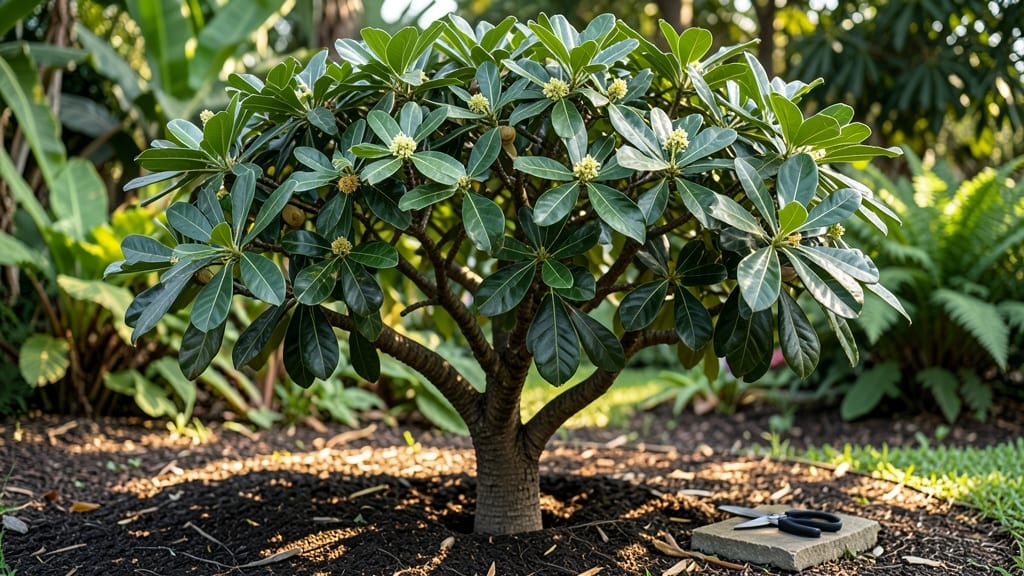
Pruning a Terminalia catappa tree transforms its wild, leggy growth into a shockingly lush canopy that provides shade, beauty, and even edible almonds. I’ve pruned mine every spring for five years, and the difference is night-and-day—dense foliage, stronger branches, and fewer pests.
The key isn’t just cutting back; it’s understanding when and how to shape the tree so it heals properly and keeps producing those signature umbrella-shaped leaves.
You’ll need sharp pruners, a ladder (for taller trees), and a clear day to work—Terminalia catappa bleeds sap when cut, so timing matters. Start by removing dead or crossing branches first; these are the low-hanging fruit (literally, since the tree bears them).
Then, thin out the canopy by cutting back branches to their outer growth points, which encourages fuller regrowth. Think of it like giving the tree a haircut—you want volume, not just length.
What you’ll end up with is a tree that casts deep, even shade while looking like a tropical masterpiece. The leaves turn a fiery red in fall, and the fruit—those hard-shelled almonds—ripen in late summer.
Pruned right, your Terminalia catappa will outshine any neighbor’s landscape tree. Ready to turn that wild growth into a showstopper? Let’s get started.
This method works for both young trees and mature specimens, though older trees need more aggressive pruning. If you’re in a hot climate, prune in early spring before the heat sets in; cooler regions can wait until late winter.
The goal is always the same: a stronger structure and more of those stunning, glossy leaves. Your tree will thank you.
📚 In This Guide
- What you need
- Instructions
- Tips and common mistakes
- Wrapping up and next steps
What you need
- ● Pruning shears: Bypass pruners (sharp, 6–8" blades) for small branches (1/4" thick).
- ● Loppers: 1 pair (for branches 1–2" thick), with a 20–24" reach.
- ● Pruning saw: Curved-tooth saw for thick branches (2" or larger).
- ● Disinfectant: 70% isopropyl alcohol or a 10% bleach solution (to sterilize tools between cuts).
- ● Gloves: Heavy-duty work gloves (cut-resistant, nitrile-coated for grip).
- ● Safety gear: Safety glasses and long sleeves (to protect from sap and debris).
- ○ Pruning sealant: Optional but helpful (e.g., Tanglefoot Tree Wound Pruning Seal) for large cuts.
- ● Extension pole: 6–10 ft telescoping pole (for high branches).
- ● Trash bags: Heavy-duty contractor bags (for debris disposal).
- ● Ladder: Sturdy, non-slip ladder (if tree exceeds 10 ft).
- ● Handheld chainsaw: For very thick branches (>3" diameter) – use with caution!
- ● Tree bag: Mesh bag to collect fallen leaves/nuts (eco-friendly cleanup).
- ● Marking spray: Fluorescent paint to mark branches for removal (great for large trees).
- ● First-aid kit: Just in case (sap can irritate skin!).
How to prune a Terminalia catappa tree for healthy, dense canopy
This is the method I’ve used to keep my tropical shade tree thriving for years—simple cuts that encourage fuller growth.
Time Your Pruning for Optimal Growth
Prune your Terminalia catappa tree in late winter or early spring, just as new growth begins. This timing ensures you remove unwanted branches before the tree puts energy into leaf production. Avoid pruning during extreme heat or drought—stress from cuts combined with dry conditions can weaken the tree.
Look for fresh, green buds along the branches. These signal the tree’s readiness to grow. If you see brown, brittle twigs, wait until spring. Pruning too late in the season may stimulate tender new growth that won’t harden off before winter.
Remove Dead, Diseased, or Crossing Branches First
Start by identifying branches that are dead, diseased, or rubbing against others. Use sharp, clean pruning shears to make cuts just outside the branch collar—the swollen area where the branch meets the trunk. This prevents unsightly stubs and promotes faster healing.
If a branch is larger than 1 inch in diameter, use a pruning saw. Cut on the outside of the branch bark ridge to avoid tearing. Remove any branches growing straight upward or inward—they compete for sunlight and air circulation, weakening the canopy.
Thin Out Overcrowded Areas for Better Airflow
Step back and assess the tree’s shape. Terminalia catappa trees naturally grow with a broad, rounded canopy, but overcrowding can lead to weak branches. Selectively remove 20-30% of the inner branches to improve airflow and sunlight penetration.
Focus on branches that are too close together or growing toward the center. Cut them back to a lateral branch or bud facing outward. Avoid heavy pruning in one area—this can create an uneven silhouette. The goal is to maintain balance while encouraging outward growth.
Shape the Canopy for Fullness and Balance
To encourage a lush, dense canopy, lightly trim the outer edges of the tree. Reduce the length of branches by one-third at most—never remove more than that in a single season. Prune just above a leaf node or bud to stimulate new growth in the right direction.
Pay attention to the tree’s natural shape. If one side is sparser, focus pruning there to promote even growth. Avoid cutting into the main trunk or large limbs unless absolutely necessary—these cuts take much longer to heal and can invite pests.
Clean Up and Monitor for Recovery
After pruning, collect and dispose of all debris to prevent disease. Sterilize your tools with rubbing alcohol to avoid spreading pathogens. Water the base of the tree deeply to help it recover, but avoid overwatering—the roots need time to adjust.
Watch for new growth within 4-6 weeks. If you see vigorous shoots emerging from the cuts, the tree is responding well. If growth is slow or branches die back, you may have pruned too aggressively. Next time, make smaller cuts and space them out over multiple seasons.
Tips & tricks for pruning a Terminalia catappa tree
Real talk: Pruning this tree isn't just about cutting branches—it's about shaping its future. These details make all the difference between a healthy canopy and one that struggles to recover.
Timing is Everything: That late winter/early spring window is non-negotiable for Terminalia catappa. The tree's sap flow is minimal then, so cuts heal faster. I've seen trees stressed from summer pruning take months to recover—don't make that mistake. If you must prune outside this window, limit yourself to removing only dead or diseased branches.
The 20-30% Rule: When thinning overcrowded areas in Step 3, resist the urge to go heavier. That 20-30% guideline isn't arbitrary—it maintains the tree's energy balance. I learned this the hard way after removing too many branches at once, which left my tree looking sparse for two full growing seasons.
Cutting Technique Matters: Always cut just outside the branch collar, never flush with the trunk. This small detail prevents water from pooling at the cut site, which can lead to rot. For branches over 1 inch thick, use a pruning saw and cut on the outside of the branch bark ridge—this creates a smoother healing surface and reduces the risk of tearing.
Recovery Monitoring: Those 4-6 weeks in Step 5 are critical. Pay attention to the color of new growth—healthy shoots should be vibrant green, not yellowish. If you see wilting or browning within 2 weeks, you may have pruned too aggressively. Next time, make smaller cuts and space them out over multiple seasons.
Pro Tips for Terminalia Catappa Tree
- Real talk: Pruning this tree isn't just about cutting branches—it's about shaping its future.
- Timing is Everything: That late winter/early spring window is non-negotiable for Terminalia catappa.
- The 20-30% Rule: When thinning overcrowded areas in Step 3, resist the urge to go heavier.
Frequently asked questions
When is the best time to prune a Terminalia catappa tree?
The ideal time to prune is late winter or early spring, just before new growth begins. Avoid pruning during heavy fruit production (fall/winter) to prevent stress. Pro tip: If you must prune outside this window, do it during dry spells to reduce disease risk.
How much can I trim without harming the tree?
Remove no more than 25-30% of the canopy in a single session. Heavy pruning can shock the tree, especially young specimens. Focus on thinning out dense branches to improve airflow—this encourages stronger regrowth and a fuller shape.
Why is my Terminalia catappa bleeding sap after pruning?
Sap bleeding is normal for Terminalia catappa trees and won’t harm them. Seal larger cuts (over 2 inches) with pruning sealant to prevent pests or disease. Smaller cuts will naturally callous over time. Warning: Avoid over-sealing—let the tree breathe!
Can I prune a Terminalia catappa tree to control its size?
Regular pruning keeps this fast-growing tree manageable. Use heading cuts (trimming just above a leaf node) to encourage bushier growth. For height control, prioritize removing upward-growing branches. Remember: It won’t stay dwarf—expect gradual growth even with pruning.
Should I prune dead branches immediately or wait?
Remove dead, diseased, or broken branches as soon as you spot them—they drain energy from the tree. Use sterilized tools to avoid spreading pathogens. Healthy branches can wait for your seasonal pruning session, but deadwood poses a safety risk.
What if my tree isn’t responding to pruning?
If growth stalls or yellowing leaves persist, check for root stress, pests, or nutrient deficiencies. Adjust your approach: reduce pruning intensity, improve soil drainage, or fertilize with slow-release organic matter. Terminalia catappa is resilient, but over-pruning or poor care can weaken it.
Wrapping up and next steps
The Terminalia catappa tree is a stunning addition to any landscape, and with the right pruning techniques, you can encourage a healthy, lush canopy that thrives for years.
From understanding seasonal timing to mastering the tools of the trade, this guide has equipped you with everything you need to shape your tree with confidence—whether you're trimming for aesthetics, safety, or growth. 🌿
Ready to transform your tree? Grab your pruners, roll up your sleeves, and start with small, mindful cuts. Watch your Terminalia catappa flourish as you nurture it into a thriving centerpiece of your outdoor space!