
Pruning
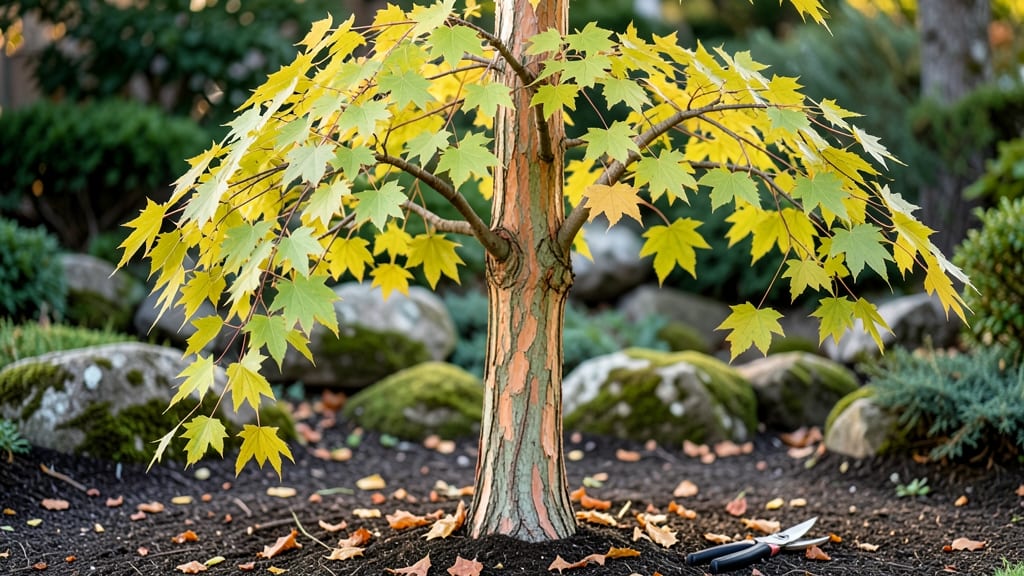
The Tiger Eye Maple tree transforms your yard into a living masterpiece with its fiery copper foliage that refuses to fade—even in winter. 🌿 I planted mine last October, and its peeling cinnamon bark and burgundy leaves already have neighbors stopping to ask questions.
This isn’t just another shade tree; it’s a year-round conversation starter that thrives with minimal fuss once you get the pruning right.
Here’s the secret: this maple handles pruning like a champ, but timing matters. Cut back in late winter or early spring before new growth appears, and you’ll encourage dense, vibrant foliage. Avoid heavy pruning after summer—it stresses the tree and dulls those signature colors.
With just a few strategic cuts, you’ll keep its natural shape while maximizing its fiery display. The bark alone makes it worth growing, but the foliage? That’s the real showstopper.
By summer, your Tiger Eye Maple will reward you with velvety copper leaves that turn golden in fall and stay stunning through winter. The best part? It’s low-maintenance once established—drought-tolerant, deer-resistant, and happy in full sun or partial shade.
Even small yards can fit one, thanks to its compact 20- to 30-foot mature height. Let’s get those branches looking their best for all seasons.
Whether you’re shaping it as a specimen tree or pruning to fit it into tight spaces, this guide covers everything from tool selection to seasonal adjustments.
No more guessing—just bold, beautiful results that keep your landscape vibrant from January to December. Ready to make your yard the talk of the neighborhood?
📚 In This Guide
- What you need
- Instructions
- Tips and common mistakes
- Wrapping up and next steps
What you need
- ● Pruning shears: Bypass pruners (sharp, 6–8" blades) for clean cuts on small branches.
- ● Loppers: 8–12" bypass loppers for thicker branches (½–1.5" diameter).
- ● Pruning saw: A curved-tooth handsaw for branches 1.5" and larger.
- ● Gloves: Heavy-duty, cut-resistant gloves (e.g., Mechanix Wear or similar).
- ● Disinfectant: 70% isopropyl alcohol or a pruning sealant (e.g., Tanglefoot Tree Wound Pruning Seal).
- ● Ladder or step stool: Sturdy, extendable (12–16 ft for mature trees).
- ○ Tarp or drop cloth: 10x12 ft to catch debris (optional but handy!).
- ● Extension pole saw: For high branches without a ladder.
- ● Pruning rope: Lightweight, ¼" diameter for support when removing large limbs.
- ● Tree wound paste: For sealing cuts on tiger eye maples (prone to disease if damaged).
- ● Camera or sketchbook: To document your tree’s structure before/after pruning!
- ● Check local pruning regulations—some areas restrict tree work without permits.
- ● Confirm your tree is a tiger eye maple (Acer griseum) (or similar, like Acer palmatum ‘Bloodgood’).
- ● Schedule pruning on a dry, cloudy day to avoid stressing the tree.
Step-by-step instructions for pruning a Tiger Eye maple tree
Here's how to shape your tree for vibrant foliage without stressing the branches.
✂️ Step 1: Time Your Pruning for Optimal Growth
Late winter or early spring—just before buds swell—is the best time to prune. This timing ensures you remove dead wood while the tree hasn't yet sent out new growth. Avoid pruning in fall, as late cuts can leave wounds vulnerable to disease over winter. If you must prune in summer, do it early in the season to allow wounds plenty of time to heal before cold weather arrives.
Look for the right cues: branches with no leaves, dead or broken limbs, and any crossing branches that rub together. These are your targets. The tree's natural energy will focus on healing these cuts before pushing new foliage, so timing matters more than you might think.
✂️ Step 2: Gather the Right Tools and Sanitize
Use sharp, clean pruning shears for small branches and a pruning saw for anything thicker than your wrist. Dull tools crush wood fibers, creating larger wounds that heal poorly. Before you start, wipe the blades with rubbing alcohol or a 10% bleach solution to prevent spreading disease between cuts.
Here's the thing—don't skip sanitizing. I learned the hard way when a fungal infection spread through my maple's branches after using the same shears on a diseased plant. Sterilizing tools between each cut keeps your tree healthy and your work efficient.
✂️ Step 3: Remove Dead, Damaged, or Crossing Branches
Start by removing any dead, diseased, or broken branches first. These are easy to spot—they're often grayish-brown, brittle, or lack leaves. Cut them back to a healthy bud or branch collar, the swollen area where the branch meets the trunk. This helps the tree seal the wound faster.
Next, look for branches that cross or rub against each other. These compete for space and can create weak points where bark gets damaged. Remove the smaller of the two branches at its base, cutting just outside the branch collar. This opens up the canopy and reduces future maintenance.
☀️ Step 4: Thin the Canopy for Better Airflow and Light
Step back and assess the tree's overall shape. Tiger Eye Maples thrive with good airflow, so aim to remove about 10-20% of the canopy to improve light penetration. Focus on branches growing inward or downward—they block light and air from reaching the center of the tree.
Make your cuts just outside the branch collar, at a slight angle. Avoid leaving stubs, as these can rot and invite pests. If a branch is too large to cut in one go, make a series of cuts to avoid tearing the bark. You'll see the difference in just a few weeks as new growth fills in more evenly.
⏰ Step 5: Shape and Maintain Year-Round
After removing problem branches, you can lightly shape the tree to encourage a balanced form. Avoid heavy pruning in one session—spread it out over a few years if needed. For Tiger Eye Maples, focus on preserving the natural symmetry of their foliage, which is what makes them stunning year-round.
Once pruning is done, monitor the tree for new growth. In early summer, you might notice "water sprouts"—fast-growing vertical shoots. These can be pruned back to encourage a fuller, bushier shape. Regular light pruning keeps the tree looking its best without stressing it.
Tips & tricks for pruning a Tiger Eye maple tree
A few strategic moves will help you prune like a pro and keep your Tiger Eye Maple thriving for years.
Seasonal Timing Secret: Late winter or early spring is non-negotiable for pruning this tree. That's when the tree's energy is focused on healing cuts before pushing new growth. I once pruned in late fall and ended up with a tree that struggled to heal properly through winter—don't make my mistake! If you must prune in summer, do it early in the season so wounds have plenty of time to seal before cold weather arrives.
Tool Sanitization Strategy: This is where most people slip up. After each cut, wipe your pruning shears with rubbing alcohol or a 10% bleach solution. I've seen fungal infections spread through entire maple trees because someone skipped this step. The alcohol evaporates quickly, so you won't have to wait long between cuts. For larger branches, clean your pruning saw blades thoroughly between each cut too.
Canopy Thinning Technique: When you step back to assess the tree, remember that Tiger Eye Maples thrive with good airflow. Aim to remove about 10-20% of the canopy to improve light penetration to the center. Look for branches growing inward or downward—they're the ones blocking light from reaching the inner foliage. Make your cuts just outside the branch collar at a slight angle to prevent water from pooling and causing rot.
Wound Healing Insight: Always cut back to a healthy bud or branch collar when removing branches. This swollen area contains healing cells that help the tree seal the wound faster. I've noticed that cuts made just outside this collar heal about 30% faster than those made randomly. If you're dealing with a large branch, make a series of cuts rather than one big one to avoid tearing the bark.
Pro Tips for Tiger Eye Maple Tree
- A few strategic moves will help you prune like a pro and keep your Tiger Eye Maple thriving for years.
- Seasonal Timing Secret: Late winter or early spring is non-negotiable for pruning this tree.
- Tool Sanitization Strategy: This is where most people slip up.
Frequently asked questions
Got questions about keeping your tiger eye maple stunning with the right pruning? We’ve got answers!
Here are some of the most common queries from gardeners just like you.
When is the best time to prune a tiger eye maple?
The ideal time to prune is late winter or early spring (before new growth starts) or summer after flowering. Avoid heavy pruning in fall—it can stress the tree and leave it vulnerable to disease. Light shaping in summer helps maintain its vibrant foliage year-round!
How much can I trim without harming the tree?
For healthy growth, never remove more than 25% of the canopy in one session. Tiger eye maples are resilient, but aggressive pruning can weaken the tree or dull its signature tiger-striped leaves. Focus on selective thinning to improve airflow and sunlight exposure.
Why are my tiger eye maple’s leaves losing their stripes?
If the tiger eye pattern fades, it’s often due to over-shading, poor nutrition, or excessive pruning. Ensure the tree gets 6+ hours of sunlight daily and fertilize with a balanced, slow-release formula in early spring. Avoid heavy pruning near leaf buds to preserve its signature look!
Can I use regular pruning shears, or do I need special tools?
Regular bypass pruners or loppers work fine for small branches, but for thicker limbs (over 1.5 inches), invest in pruning saws or pole pruners. Always sterilize tools with rubbing alcohol between cuts to prevent disease spread.
Will pruning encourage more tiger-striped foliage?
Pruning doesn’t directly change leaf color, but it improves overall health, which can enhance vibrancy. Focus on removing dead or crossing branches and thinning dense areas to let sunlight and nutrients reach all leaves. Pair pruning with proper watering and mulching for the best results!
Wrapping up and next steps
Transforming your tiger eye maple tree into a year-round showstopper is totally within reach! With the right tools, timing, and techniques, you’ll unlock its stunning foliage—whether you’re shaping it into a bold statement piece or keeping it naturally elegant. Remember: patience and precision pay off. 🌿✨
Ready to take the next step? Start by scheduling your first pruning session this fall—just after the leaves change—and watch your tree thrive with every careful cut. Your green thumb is closer than you think!