
Pruning
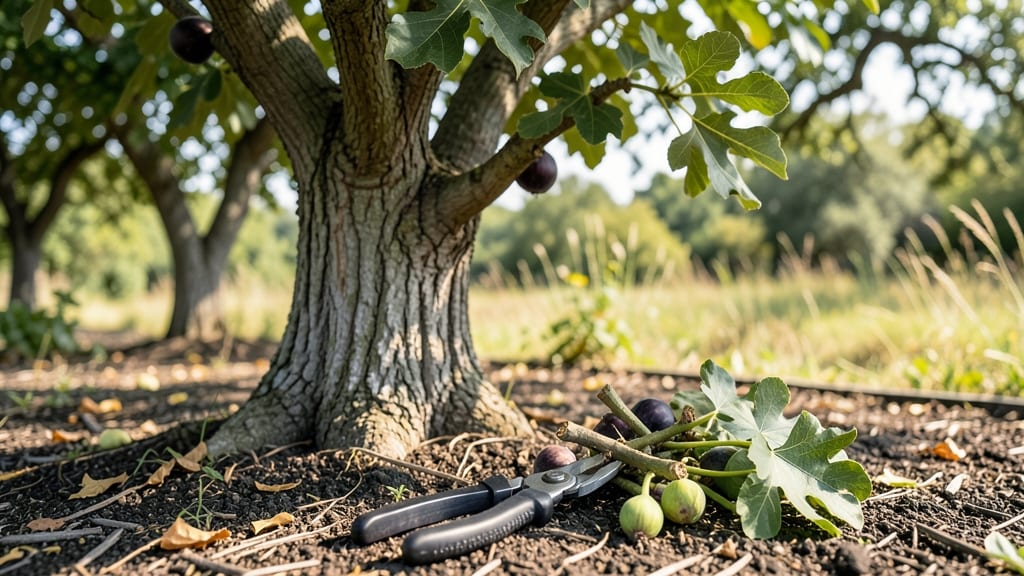
Trimming fig trees for winter isn’t just about tidying up—it’s your best shot at saving your tree from frost damage and keeping it productive for years. I’ve watched figs go from scraggly, frost-bitten messes to sturdy, fruit-bearing giants after mastering this one seasonal cut.
The key is timing: prune after the first hard frost when leaves have dropped, but before the ground freezes solid. That window is tight, but it makes all the difference.
You’ll need sharp pruning shears, a saw for thicker branches, and a clear day to see what you’re doing. Start by cutting out any dead, diseased, or crossing branches—these are the weak points that invite rot and pests.
Then shape the tree by thinning out crowded growth to improve air circulation, which helps prevent fungal diseases that thrive in damp winter conditions. Think of it like giving your fig a winter coat: snug but not suffocating.
What you’re left with is a tree that looks like it belongs in a sun-drenched Mediterranean garden, not your frost-prone backyard. The branches will be stronger, the fruit production will rebound faster in spring, and you’ll avoid the heartbreak of losing a tree to winter neglect.
Plus, a well-pruned fig is easier to cover with frost cloth or mulch if you’re in a high-risk zone.
This method works for both container figs and in-ground trees, whether you’re in Zone 7 with mild winters or Zone 5 where frost is a real threat. The principles stay the same—just adjust your timing based on your first frost date. Here’s how to do it right the first time.
📚 In This Guide
- What you need
- Instructions
- Tips and common mistakes
- Wrapping up and next steps
What you need
- ● Bypass pruning shears: Sharp, high-quality shears (e.g., Felco F-2 or Bypass Pruners) for clean cuts on small branches (1/4"–3/4" diameter). Quantity: 1 pair.
- ● Loppers: For medium branches (3/4"–2" diameter). Opt for bypass loppers (e.g., Fiskars X7) to avoid crushing. Quantity: 1 pair.
- ● Pruning saw: A curved-tooth pruning saw (e.g., Fiskars X27) for thick branches (>2" diameter). Quantity: 1.
- ● Gloves: Heavy-duty, cut-resistant gloves (e.g., Wolverine WaffleGrip) to protect hands from thorns and sap. Quantity: 1 pair.
- ● Disinfectant: 70% isopropyl alcohol or rubbing alcohol to sterilize tools between cuts (prevents disease spread). Quantity: Small bottle.
- ● Rubbing alcohol wipes: For quick tool sanitization. Quantity: 5–10 wipes.
- ● Extension pole saw: For high branches (e.g., Fiskars X21). Quantity: 1.
- ● Tree wound dressing: Pruning sealant (controversial but useful for large cuts >2" diameter). Quantity: Small tube.
- ● Ladder: Sturdy, non-slip ladder (e.g., Werner 20-ft. ladder) for tall trees. Quantity: 1.
- ● Trash bags: For collecting pruned branches. Quantity: 2–3 large bags.
- ● Safety glasses: Protects eyes from debris. Quantity: 1 pair.
- ● Check the weather forecast—prune on a dry, overcast day (avoid pruning when figs are wet or frozen).
- ● Wear long sleeves and pants to protect against thorns and sap.
- ● Have a clear workspace: Remove obstacles and lay down a tarp if needed.
- ● Review your fig tree’s growth habit: Deciduous vs. evergreen varieties may need different approaches.
Step-by-Step guide to pruning fig trees for winter survival
Here's how I prep figs for cold weather—keeping them healthy and productive for years.
Time Your Pruning for Late Winter Dormancy
Prune fig trees in late winter when they're fully dormant but before new growth begins. For most cold-hardy varieties, this means February or early March in temperate climates. You'll know it's the right time when branches are bare and no buds have swollen yet. Pruning too early risks encouraging early growth that can't survive late frosts.
If you live in a warmer region where figs grow year-round, wait until late winter just before spring rains begin. The goal is to remove dead wood while leaving the tree with enough energy reserves to recover from winter stress. I always check the forecast for a stretch of dry, mild weather—wet conditions make cuts slower to heal.
Identify and Remove Dead or Damaged Wood
Start by examining each branch for dead wood—it'll be brittle, grayish-brown, and won't snap when bent. Use clean, sharp pruners to make 45-degree cuts just outside the branch collar (the swollen area where the branch meets the trunk). Never leave stubs, as they invite disease. For larger branches, I use a pruning saw and make the cut slightly above a bud or lateral branch.
Next, look for crossing branches that rub together or grow inward toward the center. These compete for sunlight and nutrients, weakening the tree. Remove the smaller of the two branches at its base. You'll also want to trim any branches that are broken, diseased, or showing signs of pest damage. Healthy wood should be greenish-brown inside when cut fresh.
Thin the Canopy for Better Air Circulation
Fig trees grow vigorously, and dense canopies trap moisture, leading to fungal issues. Step back and look for areas where branches grow too close together. Aim to create an open vase shape that allows sunlight to reach the center. Remove one-third of the oldest, thickest branches first—they've done their job and are less productive than younger growth.
Focus on branches that grow inward or downward. These rarely produce fruit and create shade that stresses the tree. Make cuts just above an outward-facing bud to encourage new growth in the right direction. I like to leave 3-5 main scaffold branches for young trees and 5-7 for mature trees, spaced evenly around the trunk.
Shape for Cold-Hardy Growth and Fruit Production
Cold-hardy fig varieties benefit from a lower, more compact shape that protects the trunk from winter winds. Prune to keep the tree's height manageable—6-8 feet tall for most varieties. For semi-dwarf types, aim for 4-5 feet. Remove any suckers (shoots growing from the base) unless you're propagating new trees.
Look for water sprouts—fast-growing, vertical shoots that appear after pruning. These drain the tree's energy and should be removed at the base. For fruit production, focus on keeping 3-4 strong, outward-facing branches per main scaffold. These will bear the most fruit and are easier to protect with mulch in winter.
Tips & tricks for pruning winter-ready fig trees
Fig trees need careful attention to survive winter—and these tricks will help you avoid common mistakes while maximizing fruit production next season.
Timing is Everything: The late winter window (February or early March) is non-negotiable for cold-hardy varieties. I learned this the hard way—pruning too early can trigger premature growth that gets killed by late frosts. Check for bare branches and no swollen buds as your confirmation. For warmer climates, wait until just before spring rains to prevent fungal issues from wet conditions.
Tool Prep Prevents Problems: Clean, sharp pruners are your best defense against disease. I sterilize my tools with rubbing alcohol between cuts, especially when removing diseased wood. For branches thicker than a pencil, use a pruning saw—dull tools tear wood, inviting infections. Always make cuts at a 45-degree angle just outside the branch collar to promote proper healing.
Canopy Strategy for Cold Resistance: That one-third removal of oldest branches in Step 3 isn't arbitrary—it creates an open vase shape that improves air circulation and sunlight penetration. I focus on removing inward-growing branches first, as they rarely fruit and create shade that stresses the tree. For young trees, leaving 3-5 scaffold branches gives them the perfect framework for future growth.
Shape Matters for Winter Survival: The compact shape we aim for in Step 4 isn't just about aesthetics—it protects the trunk from winter winds that can damage bark. I always check for suckers and water sprouts after pruning, as these energy vampires can weaken the tree. For semi-dwarf types, keeping them at 4-5 feet makes them easier to protect with mulch during cold snaps.
Pro Tips for Trimming Fig Trees For Winter
- Fig trees need careful attention to survive winter—and these tricks will help you avoid common mistakes while maximizing fruit production next season.
- Timing is Everything: The late winter window (February or early March) is non-negotiable for cold-hardy varieties.
- Tool Prep Prevents Problems: Clean, sharp pruners are your best defense against disease.
Frequently asked questions
Got questions about prepping your fig trees for winter? Here are some of the most common ones—plus expert answers to keep your trees thriving!
When is the best time to trim fig trees for winter?
Trim fig trees after the first hard frost (typically late fall) but before new growth starts in early spring. This timing prevents frost damage to fresh cuts and promotes healthy regrowth. For cold-hardy varieties, a light prune in late winter (just before buds swell) can also help.
Do I need to cover my fig tree for winter?
Yes, if you live in a zone with harsh winters (below 10°F/-12°C). Wrap the trunk with burlap or tree wrap, mound mulch around the base (6–8 inches deep), and cover the canopy with frost cloth or a breathable tarp. Remove covers in early spring to avoid mold and encourage airflow.
How much should I trim off a fig tree?
Remove 1/3 of the tree’s growth max—focus on:
- Dead, diseased, or crossing branches
- Suckers at the base (non-fruiting growth)
- Overcrowded stems to improve airflow
Will trimming fig trees reduce next year’s harvest?
Not if done correctly! Pruning after harvest (late fall/winter) ensures you’re not cutting off next year’s fruit-bearing branches. Light trimming actually improves fruit quality by reducing overcrowding and increasing sunlight exposure. Just avoid pruning in early spring when buds are forming.
What if my fig tree looks sad after trimming?
Don’t panic! Fig trees are resilient. If leaves yellow or branches die back:
- Check for root rot (soggy soil = bad)
- Ensure proper water drainage (figs hate wet feet)
- Apply a balanced fertilizer in early spring
Wrapping up and next steps
Trimming your fig trees for winter isn’t just about survival—it’s about setting the stage for a bountiful, healthier harvest next season. 🌱 By following these steps, you’ll protect your trees from harsh weather, encourage stronger growth, and keep pests at bay.
Now that you’re armed with the right tools and techniques, there’s only one thing left to do: roll up your sleeves and get pruning!
Ready to tackle your fig trees? Start by marking your calendar—early winter is the perfect time to act. And if you’re new to pruning, don’t hesitate to watch a quick tutorial or join a local gardening group for hands-on tips. Your future fig feast starts with this simple step!