
Pruning
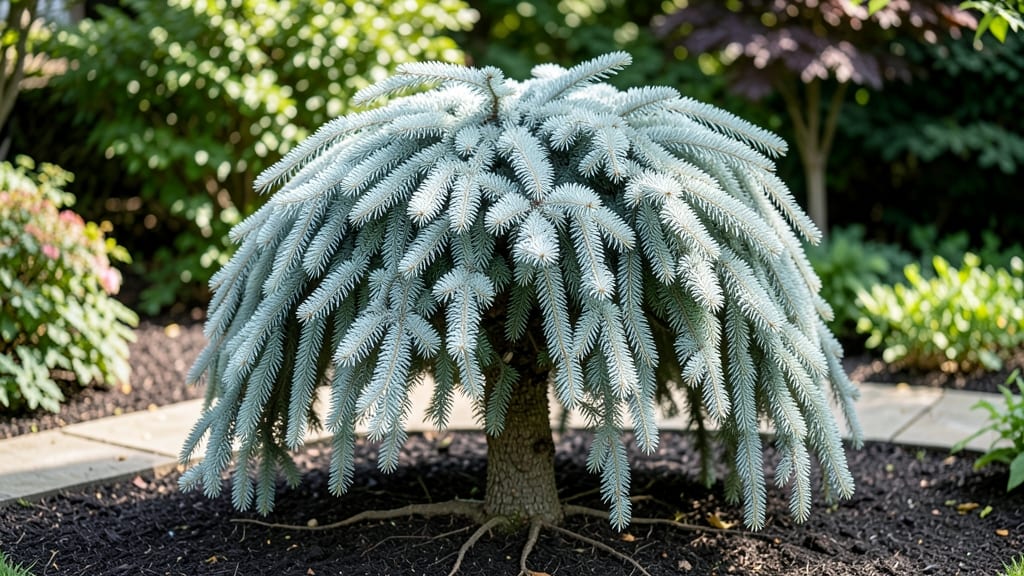
The weeping blue spruce tree transforms any yard into a serene winter wonderland with its cascading branches and silvery-blue needles. I planted mine last spring, and its graceful shape immediately became the focal point of our garden—especially when dusted with snow.
The secret to keeping it looking its best lies in strategic pruning that enhances its natural elegance without sacrificing its health.
Pruning isn’t about cutting back harshly; it’s about guiding growth to maintain that dramatic, weeping silhouette while encouraging dense foliage along the branches. You’ll need sharp pruning shears, a ladder (for higher branches), and a clear morning to work—avoid pruning when the tree is stressed from drought or extreme heat.
Most pruning happens in late winter or early spring, just as new growth begins, but light shaping can happen year-round.
What you’ll end up with is a tree that looks like it belongs in a landscape painting—soft, layered branches that catch the light just right, and a canopy that invites you to sit beneath it.
Pair it with low-growing perennials like creeping phlox or ornamental grasses to highlight its height, and place it where it can frame a view or anchor a corner of your yard. The result? A year-round conversation piece that’s as functional as it is beautiful.
This approach works for both small urban yards and spacious rural properties—just adjust the scale of nearby plants accordingly. Whether you’re pruning for the first time or refining your technique, the goal is the same: preserve that effortless elegance that makes weeping blue spruces so special.
Let’s get started with the steps that’ll keep yours looking its absolute best.
📚 In This Guide
- What you need
- Instructions
- Tips and common mistakes
- Wrapping up and next steps
What you need
- ● Pruning shears (bypass or anvil type) – Choose sharp, clean shears (10-12" blades) for precision cuts on small branches.
- ● Loppers (for thicker branches) – 18-24" bypass loppers with ergonomic handles for branches up to 2" in diameter.
- ● Pruning saw (if needed) – A curved-tooth saw for branches thicker than 2.5".
- ● Gloves (cut-resistant) – Heavy-duty leather or synthetic gloves to protect hands from sharp needles and sap.
- ● Disinfectant (70% isopropyl alcohol or bleach solution) – 1 part bleach to 9 parts water to sterilize tools between cuts and prevent disease.
- ○ Tree wound sealant (optional but helpful) – A high-quality, breathable sealant (like Tanglefoot Tree Wound Pruning Sealer) for cuts larger than ½".
- ● Ladder or step stool – A stable, extendable ladder (20-30 ft max) if your tree is tall. Never stand on wobbly surfaces!
- ● Heavy-duty trash bags or bucket – For collecting pruned debris (spruce needles are needle-y—literally!).
- ● Safety goggles – Protects eyes from sap splatters and flying debris.
- ● Long sleeves and pants – Thick, breathable fabric to shield skin from sap and needles.
- ● Work boots or closed-toe shoes – Non-slip soles for stability on uneven ground.
- ● Weather check – Plan for overcast or calm days to avoid stressing the tree.
- ○ Notebook & pen (optional) – To sketch pruning plans or mark branches for removal.
Instructions for pruning a weeping blue spruce tree
Here's how to shape your weeping blue spruce into a stunning, natural masterpiece.
Assess the Tree's Current Structure
Start by examining your weeping blue spruce from all sides, looking for the natural flow of its branches. Weeping varieties grow downward in graceful arcs, so your goal is to enhance—not fight—that natural shape. Look for areas where branches cross or rub against each other, as these are prime candidates for removal to improve airflow and prevent disease.
Pay special attention to the tree's central leader—the main vertical trunk. In weeping spruces, this is often less prominent, but you'll still want to identify it to guide your pruning decisions. If the tree has developed multiple leaders, you may need to thin out all but one to maintain a strong structure. Use a pair of sharp pruning shears to make clean cuts just above a healthy bud or lateral branch.
Remove Dead, Diseased, or Damaged Branches
Begin pruning by removing any branches that are dead, diseased, or physically damaged. These branches often appear brown, brittle, or discolored and may have missing bark or signs of pest activity. Cut these branches back to the collar—the swollen area where the branch meets the trunk—to prevent decay from spreading into the healthy wood.
Next, look for branches that are growing inward toward the center of the tree. These can create dense areas that block sunlight and air circulation, which can lead to fungal issues. Use your pruning shears to make a clean cut at the branch collar, making sure to avoid leaving stubs. If a branch is larger than 2 inches in diameter, use a pruning saw for a smoother cut. Always cut just outside the branch collar to encourage proper healing.
Thin Out Crowded Branches for Airflow
Weeping blue spruces naturally grow with a cascading habit, but over time, branches can become too dense. Your goal is to open up the canopy so light and air can move freely through the tree. Focus on thinning out branches that are growing too close together, particularly in the lower and middle sections of the tree where airflow is often restricted.
When thinning, remove about one-third of the branches in the densest areas. Start from the outside of the tree and work your way inward, cutting branches back to their point of origin. Avoid "lion's tailing," which is the practice of cutting branches back to a stub—this can leave the tree vulnerable to disease. Instead, make your cuts just above a healthy bud or lateral branch to encourage new growth in the right direction.
Shape the Canopy for a Graceful Appearance
Now it's time to refine the tree's natural weeping shape. Weeping blue spruces are known for their elegant, drooping branches, so your pruning should enhance this characteristic rather than fight it. Look for branches that are growing upward or outward and gently guide them downward by cutting them back to a lateral branch that grows in the desired direction.
For a more refined look, you can also lightly trim the tips of the longest branches to encourage bushier growth. However, avoid heavy pruning at the tips, as this can disrupt the tree's natural form. Instead, focus on selective pruning to maintain the tree's graceful silhouette. Step back frequently to assess your progress and ensure the tree maintains its weeping habit.
Clean Up and Monitor the Tree
After pruning, remove all cut branches and debris from the area around the tree to prevent the spread of disease. Sterilize your pruning tools with rubbing alcohol or a 10% bleach solution to kill any pathogens that may be present. This is especially important if you've made cuts on diseased branches.
Monitor the tree over the next few weeks to ensure it's recovering well. New growth should emerge from the areas where you made cuts, and the tree should begin to fill out more evenly. If you notice any signs of stress, such as yellowing needles or wilting branches, adjust your watering or provide additional care as needed. Regular pruning every 2-3 years will help maintain the tree's health and shape for decades to come.
Tips & tricks for pruning a weeping blue spruce tree
These practical pointers will help you transform your weeping blue spruce into a showstopping landscape feature without stressing the tree.
Timing is Everything: The best time to prune your weeping blue spruce is during late winter or early spring, just before new growth begins. This timing allows the tree to heal quickly and minimizes stress. Avoid pruning during hot summer months or when the tree is under drought conditions, as this can lead to sunburn and dehydration. If you must prune in summer, do it on a cloudy day or provide shade for the tree afterward.
Tool Selection Matters: Invest in high-quality pruning tools designed for larger branches. For branches under 2 inches in diameter, sharp bypass pruners are ideal—they make clean cuts that heal faster. For thicker branches, use a pruning saw with a fine-toothed blade to prevent tearing the bark. Always sterilize your tools with rubbing alcohol between cuts to prevent spreading disease from one branch to another.
Visualize the Final Shape: Before making any cuts, step back and visualize the tree's final shape. Weeping blue spruces thrive when their natural cascading form is preserved. Focus on maintaining the graceful arcs of the branches rather than trying to create a rigid geometric shape. When in doubt, err on the side of caution—you can always remove more later if needed, but you can't put back what's already cut.
Post-Pruning Care: After finishing your pruning, give the tree a thorough watering to help it recover. Mulch around the base (keeping it 3-4 inches away from the trunk) to retain moisture and protect roots. Avoid heavy mulching, as this can suffocate the tree. Monitor the pruned areas for new growth within 4-6 weeks—healthy buds should appear where you made clean cuts just above lateral branches.
Pro Tips for Weeping Blue Spruce Tree
- These practical pointers will help you transform your weeping blue spruce into a showstopping landscape feature without stressing the tree.
- Timing is Everything: The best time to prune your weeping blue spruce is during late winter or early spring, just before new growth begins.
- Tool Selection Matters: Invest in high-quality pruning tools designed for larger branches.
Frequently asked questions
Got questions about your weeping blue spruce? We’ve got answers! Whether you’re troubleshooting drooping branches, curious about pruning timing, or wondering about alternatives, here’s what you need to know.
Why is my weeping blue spruce tree "weeping"?
A weeping blue spruce has naturally pendulous (drooping) branches due to its unique growth habit. Unlike upright varieties, its branches grow downward, creating that graceful, cascading look. If yours isn’t drooping, check for over-pruning or disease—healthy weepers should flow elegantly!
When is the best time to prune a weeping blue spruce?
Prune your weeping blue spruce in late winter or early spring (before new growth starts). Avoid heavy pruning in fall—it can stress the tree and leave it vulnerable to winter damage. Light shaping in summer is fine, but never prune in extreme heat or drought.
Can I prune too much? What are the signs?
Yes! Over-pruning weakens the tree, causing sparse foliage, bare branches, or stunted growth. Signs include yellowing needles or excessive water sprouts (fast-growing, thin branches). Stick to removing no more than 25% of the canopy per year—focus on shaping, not thinning.
What if my weeping blue spruce isn’t growing well?
Poor growth could stem from disease, pests, or improper care. Check for spider mites, bagworms, or fungal spots (like needle cast). Ensure it’s planted in well-draining soil and gets full sun (6+ hours/day). If soil is compacted, aerate or mulch to improve root health.
Are there alternatives to weeping blue spruce?
If you love the weeping look but want faster growth or disease resistance, consider:
- Weeping Norway Spruce (Picea abies ‘Pendula’) – Hardier, but less color.
- Weeping White Pine (Pinus strobus ‘Pendula’) – Softer needles, faster growth.
- Dwarf Alberta Spruce (Picea glauca ‘Conica’) – Compact, but not weeping.
Wrapping up and next steps
Transforming your weeping blue spruce tree into a stunning, graceful centerpiece is totally within reach—you’ve got this! 🌲 With the right tools, timing, and techniques, you’ll nurture a canopy that’s both healthy and breathtaking. Start small, stay patient, and celebrate each step of progress.
Ready to take action? Grab your pruners and schedule your first session this season! Whether you’re trimming for shape or health, every cut brings you closer to that dreamy, weeping silhouette. Happy pruning! ✂️✨