
Pruning
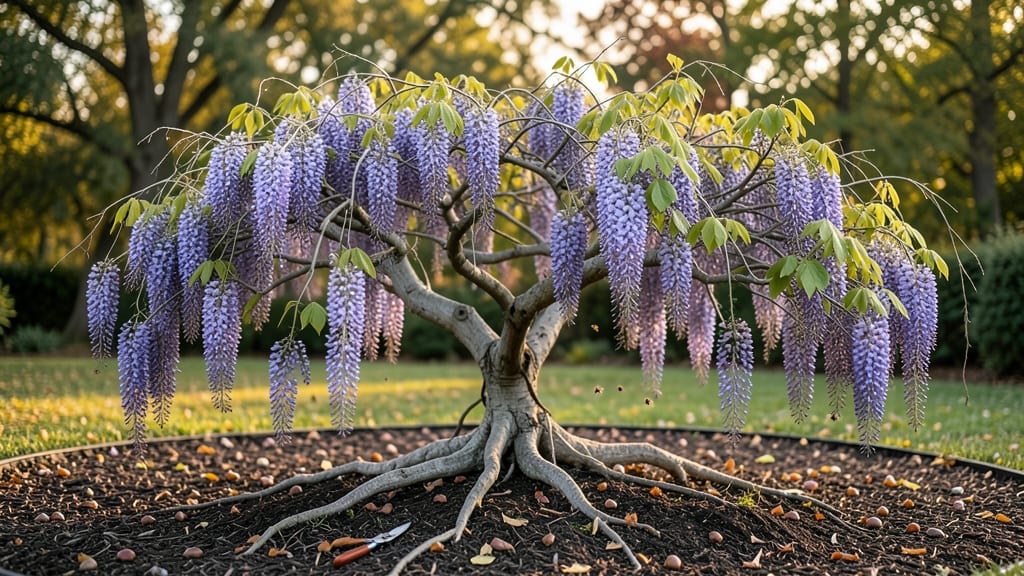
Pairing a wisteria willow tree in your landscape creates a dreamy, layered focal point that changes with every season. I fell in love with this combo after seeing how the willow’s graceful, weeping branches frame the wisteria’s cascading blooms—like nature’s own living sculpture.
The key is their complementary shapes: one reaches upward while the other spills downward, creating visual balance that’s impossible to ignore.
Pruning these two together is where the magic happens. Start by training the wisteria to climb the willow’s sturdy trunk using soft ties, then prune the willow’s lower branches to open space for those signature purple blooms.
This isn’t just about aesthetics—it’s about year-round interest, from spring’s fragrant flowers to winter’s elegant silhouette. The willow’s bark adds texture, while the wisteria’s vines soften the structure, making this a low-maintenance power duo for any garden style.
What you’ll end up with is a living centerpiece that transforms your space. Picture morning sunlight filtering through the willow’s branches while wisteria blooms spill like waterfalls, their scent lingering in the air.
Even in dormancy, the combination remains striking—think of the willow’s winter bones contrasting with wisteria’s dormant but still graceful vines. This isn’t just pruning; it’s sculpting a garden masterpiece that evolves with the seasons.
Whether you’re working with a small courtyard or a sprawling backyard, this pairing adapts beautifully. For smaller spaces, opt for dwarf varieties or container-grown willows, while larger gardens can accommodate full-sized specimens.
The secret lies in spacing them 10-15 feet apart—close enough to create drama, but far enough to let each shine. Ready to bring this serene, sophisticated look to your outdoor space?
📚 In This Guide
- What you need
- Instructions
- Tips and common mistakes
- Wrapping up and next steps
What you need
- ● Pruning shears: Bypass pruners (sharp, 6-8 inches) for cutting small branches.
- ● Loppers: 10-14 inch bypass loppers for medium-sized branches (2-3 inches in diameter).
- ● Pruning saw: A curved-bladed saw for thick branches (3+ inches in diameter).
- ● Gloves: Heavy-duty, cut-resistant gloves (gardening or pruning-specific).
- ● Safety glasses: To protect your eyes from debris.
- ● Disinfectant: 70% isopropyl alcohol or a 10% bleach solution to sterilize tools between cuts.
- ○ Pruning sealant: Optional but helpful for sealing larger cuts (e.g., tree wound paint).
- ● Ladder or step stool: Sturdy and tall enough to reach the highest branches safely.
- ● Trash bags: Heavy-duty bags for collecting pruned branches and debris.
- ● Pole pruner: For high branches that are hard to reach.
- ● Rope or harness: If working on very tall trees (safety first!).
- ● Pruning shears with a ratchet: For easier cutting of thick branches.
- ● Notebook & pen: To jot down notes on cuts, growth patterns, or future pruning plans.
- ● Mulch or compost: To replenish the soil after pruning.
Step-by-step pruning guide for wisteria willow trees
Mastering this technique transforms unruly growth into a stunning, manageable specimen.
Assess Growth in Late Winter Before Bud Break
Schedule your first pruning session in late February or early March, just as buds begin to swell but before any new growth appears. This timing ensures you remove dead wood while preserving next season's blooms. Start by examining the entire tree structure—look for dead, diseased, or crossing branches that create weak points.
Use sharp, clean bypass pruners to make precise cuts at a 45-degree angle, about ¼ inch above a outward-facing bud. This angle prevents water from pooling on the cut and encourages new growth in the desired direction. Avoid cutting flush with the trunk—this leaves no bud to regenerate from and creates an open wound.
Remove any branches that grow directly inward or rub against others. These will eventually damage the bark and compromise the tree's health. I always work from the bottom up, clearing out lower branches first to improve airflow and sunlight penetration to the canopy.
Shape the Canopy During Early Summer
After the initial spring pruning, wait until mid-June to perform your second shaping cut. This is when the tree has established new growth but hasn't yet set next year's flower buds. Focus on thinning out crowded areas—never remove more than 25% of the foliage in one session to avoid shocking the tree.
Use hand pruners for branches under ½ inch thick and loppers for thicker stems. Make cuts just above a leaf node or bud, always angling downward to direct water away. For long, leggy growth, cut back to a strong lateral branch rather than simply shortening the stem. This encourages a bushier, more compact form.
Here's the thing—wisteria willow trees respond dramatically to pruning if done correctly. You'll see new shoots emerge within 2-3 weeks of your summer cuts, signaling that the tree is actively regenerating. If you notice excessive dieback after pruning, you may have been too aggressive—scale back next year.
Light Maintenance After Flowering
Once the tree finishes blooming in late spring, perform a final light maintenance pruning to remove spent flower clusters and any weak or crossing growth. This step keeps the tree looking tidy and prevents energy drain from supporting dead flowers. Use clean shears to make quick cuts just above the next healthy leaf node.
Pay special attention to suckers—those vigorous shoots that emerge at the base of the tree. Remove these promptly, as they divert energy from the main structure. For larger branches that need thinning, use pruning saws for clean cuts, and always seal larger wounds with pruning sealant to prevent disease entry.
This is the moment that matters: after your post-flowering prune, step back and evaluate the tree's overall shape. You should see an open, airy structure with sunlight reaching the inner branches. If you notice bare spots, plan to add new branches during next year's winter pruning.
Winter Cleanup and Disease Prevention
In late fall, after leaves have dropped but before hard frosts, perform your final pruning of the year. Remove all dead, broken, or diseased branches—these are prime entry points for pests and pathogens. Sterilize your pruning tools between cuts with rubbing alcohol to prevent spreading any potential infections.
For larger branches, make your cuts just outside the branch collar—the swollen area where the branch meets the trunk. Never leave stubs, as these can rot and attract pests. After pruning, rake up and dispose of all fallen debris to reduce overwintering sites for pests.
Real talk: winter pruning is often overlooked, but it's critical for preventing fungal issues like powdery mildew. A well-maintained wisteria willow tree will reward you with vibrant spring blooms and a strong structure for years to come. If you see any signs of disease—yellowing leaves, black spots, or oozing sap—address it immediately with fungicide and adjust your pruning approach.
Tips & tricks for perfect wisteria willow tree pruning
Transforming your wisteria willow from wild to elegant requires precision—and these expert techniques will help you avoid common pitfalls while achieving the best results.
Tool Preparation: Never underestimate the importance of sharp, clean tools. Before your late February pruning, hone your bypass pruners and loppers to make clean cuts that heal properly. I learned this the hard way after struggling with dull tools that crushed branches and left ragged edges. Sterilize between cuts with rubbing alcohol to prevent disease spread—this is especially critical when working with diseased branches in late fall. A small investment in quality tools pays dividends in healthier growth and easier pruning sessions.
Seasonal Timing Nuances: The specified late February timing is ideal, but watch for regional climate variations. In warmer zones, buds may swell earlier—monitor your tree daily and prune just before you see buds begin to plump up. For the mid-June shaping, if you notice new flower buds forming earlier in your area, delay pruning by a week or two to protect next year's blooms. The key is always to prune when the tree is actively growing but hasn't yet committed to its next season's flowers.
Visual Cues for Pruning: When making cuts in Step 2, look for these visual indicators: healthy buds are plump and slightly sticky, while dead wood appears dry and brittle. For the 25% foliage guideline, imagine dividing your canopy into four quadrants—remove no more than one quadrant's worth of branches in a single session. This visual approach helps prevent over-pruning, which can stress the tree. Remember that wisteria willow trees are resilient but respond best to gradual shaping over multiple seasons.
Post-Pruning Care: After your winter cleanup, apply a thin layer of pruning sealant to all cuts larger than ½ inch in diameter to prevent disease entry. I've found that wrapping these larger wounds with tree wound dressing creates a protective barrier while still allowing the tree to heal naturally. Water deeply after pruning to help the tree recover, especially if you've removed a significant amount of foliage. This final step is often overlooked but makes a noticeable difference in spring regrowth.
Pro Tips for Wisteria Willow Tree
- Transforming your wisteria willow from wild to elegant requires precision—and these expert techniques will help you a...
- Tool Preparation: Never underestimate the importance of sharp, clean tools. Before your late February pruning, hone y...
- Seasonal Timing Nuances: The specified late February timing is ideal, but watch for regional climate variations. In w...
Frequently asked questions
Got questions about keeping your wisteria willow tree thriving with the perfect prune?
Here are answers to the most common ones—so you can grow that dreamy, cascading beauty without the guesswork!
When is the best time to prune a wisteria willow tree?
The ideal window is late winter or early spring (just before buds swell) or right after flowering. Avoid heavy pruning in fall—it can stimulate tender new growth that won’t survive frost. For willow varieties, spring is key to encourage lush, flexible branches.
How much can I trim back my wisteria willow tree?
You can safely remove up to ⅓ of the plant’s growth per year, but willows are forgiving—even aggressive cuts (like rejuvenating old wood) work if done in early spring. For wisteria, never trim more than 20-30% of flowering stems to preserve next year’s blooms.
Why isn’t my wisteria willow tree flowering?
Common culprits:
- Over-pruning (especially in fall/winter)
- Too much shade (wisteria needs 6+ hours of sun)
- Old wood (wisteria flowers on last year’s growth—prune lightly to retain stems)
Can I grow a wisteria willow tree in a container?
Yes, but choose dwarf varieties (like Wisteria floribunda ‘Amethyst Falls’) and a large, sturdy container (20+ gallons). Use well-draining soil, prune roots annually, and move it outdoors in spring/summer. Willow trees need space—containers work best for small wisteria types.
What do I do if my wisteria willow tree gets diseased or pests?
Watch for aphids, spider mites, or fungal spots (yellowing leaves, black sooty mold).
- For pests: Spray with neem oil or insecticidal soap.
- For fungus: Prune infected branches, improve airflow, and apply copper fungicide.
Wrapping up and next steps
Mastering the art of pruning your wisteria willow tree transforms it from a tangled mess into a stunning, year-round showstopper! 🌿 With the right tools, timing, and techniques—like selective thinning and strategic shaping—you’ll encourage lush blooms, strong structure, and effortless maintenance.
Whether you’re a pruning pro or just starting, consistency is your best friend.
Ready to elevate your garden? Grab your shears, mark your calendar for late winter or early spring, and dive in! Every snip brings you closer to that dreamy, cascading beauty—so roll up your sleeves and let your wisteria willow shine. 🌸