
Picking
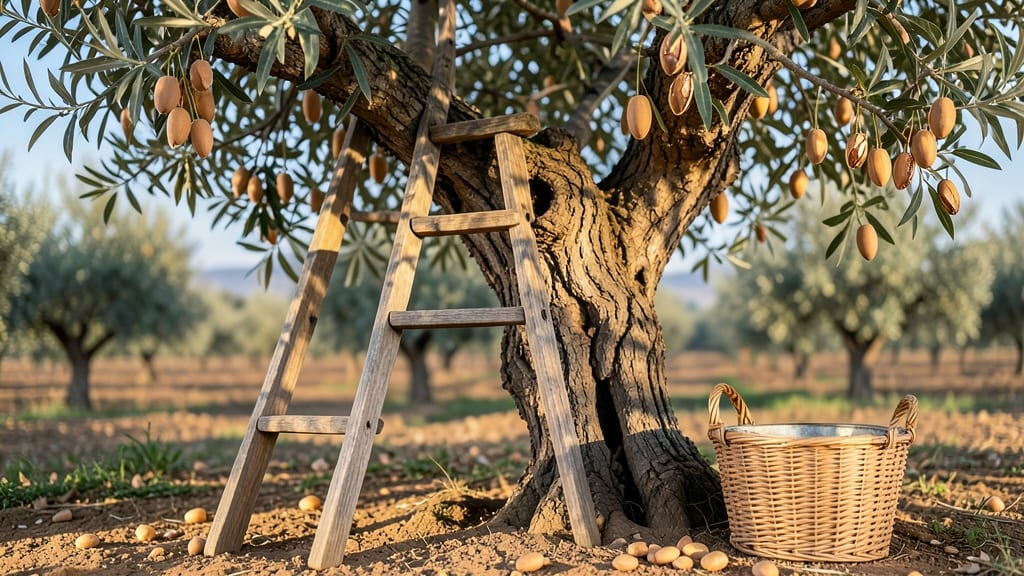
Harvesting almonds at the perfect moment turns a handful of nuts into a year-round bounty of crunchy rewards. 🌱 The secret isn't just waiting for the hull to split—it's about reading your tree, the weather, and even the moon's phase to time your harvest for maximum yield.
My first almond harvest taught me that patience pays off: rushing means wasted nuts, while waiting too long means pests get there first.
You'll need basic tools—a sturdy ladder, harvest bags, and a tarp to protect the nuts from dirt—and a sharp eye for the hull split stage when the outer shell cracks open just enough to reveal the nut inside.
California growers often harvest between late August and October, but Mediterranean climates can stretch this window into November. The key is checking trees every 2-3 days once the hulls start splitting.
Once you harvest, the real work begins: drying the nuts properly prevents mold and extends storage life. Spread them on a screen in a well-ventilated area for 1-2 weeks, turning them daily. A properly dried almond will rattle when shaken—any softer ones need more time.
Store them in airtight containers in a cool, dark place, and you'll have fresh-tasting nuts straight from your tree for months.
Regional challenges like unexpected rain or pest outbreaks can throw off timing, but a little preparation—like covering your harvest with tarps or setting out traps—keeps most issues at bay.
With the right approach, your almond tree won't just produce a single harvest; it'll become a reliable, long-term source of homegrown goodness.
📚 In This Guide
- What you need
- Instructions
- Tips and common mistakes
- Wrapping up and next steps
What you need
- ● Harvesting tools: Almond shakers (1-2 per 10 trees) – Use lightweight, durable models with long handles (8-10 ft) to gently loosen nuts.
- ● Almond beaters (1 per 10 trees) – Wooden or plastic beaters (3-4 ft long) to dislodge stubborn nuts.
- ● Ladders or step stools (adjustable, 6-12 ft) – For reaching higher branches safely.
- ● Collection supplies: Large tarps or drop cloths (10x15 ft, 2-3 per acre) – Heavy-duty polyethylene to catch falling nuts.
- ● Garden rakes (wide-tooth, 3-4 ft) – For gathering nuts from the ground.
- ● Wheelbarrow or buckets (5+ gallon capacity) – For transporting harvested nuts.
- ● Safety gear: Gloves (cut-resistant, nitrile-coated) – Protects hands from sharp branches and shells.
- ● Long sleeves/pants – Shields against sun and scratches.
- ● Sunscreen & hat – Almond orchards can get hot! ☀️
- ● Portable nut sweeper – Saves time for larger harvests (rent or buy for ~$100).
- ● Harvest bags (mesh or burlap) – Keeps nuts organized and reduces shell damage.
- ● Pruning shears – For trimming after harvest to prep trees for next season.
- ● Weather check app – Monitors humidity/moisture to avoid mold risks.
Step-by-Step guide to maximizing almond tree nut production
Pruning isn't just about shaping—it's the secret to a bountiful harvest year after year.
🌿 Step 1: Understand the Right Time to Prune
Almond trees need pruning twice a year—once in late winter or early spring before buds swell, and again in summer after harvest. Winter pruning focuses on removing dead, diseased, or crossing branches to improve airflow and sunlight penetration. Summer pruning, around July or August, encourages new growth that will bear next year's nuts.
Here's the thing—don't prune during wet weather. Wet wood is more prone to disease, and you'll see blackened, oozing wounds that take forever to heal. Wait for dry, sunny days to make your cuts. You'll know you're ready when the tree is fully dormant in winter or when new growth has started in summer.
✂️ Step 2: Remove the Right Branches
Start by cutting out dead, broken, or diseased branches first—these are easy to spot because they're brown, brittle, or have no leaves. Next, remove branches that cross or rub against each other; these create wounds that invite pests and disease. I always use clean, sharp pruning shears to make 45-degree cuts just outside the branch collar—that little swelling where the branch meets the trunk.
Watch for "water sprouts"—those fast-growing, vertical shoots that pop up everywhere. These steal energy from nut production, so cut them back to a healthy lateral branch. You'll see strong, sturdy branches left behind, and that's when you know you're doing it right.
☀️ Step 3: Thin the Canopy for Sunlight
Almond trees need sunlight to produce nuts, so aim to keep the canopy open and airy. Start by removing branches that grow inward or downward—they block light and create a dark, humid environment where mold thrives. Focus on the outer third of the tree to encourage outward growth.
Don't overdo it—you want to maintain a balanced shape, not turn your tree into a bare skeleton. A good rule of thumb is to remove no more than 25% of the tree's foliage in one pruning session. You'll see new shoots emerging within a few weeks, signaling that the tree is responding well to the pruning.
🌱 Step 4: Encourage Fruit Production
After pruning, feed your almond tree with a balanced fertilizer (like 10-10-10) in early spring to support new growth. Water deeply but infrequently—1-2 inches per week—to encourage deep root growth. Mulch around the base with 2-3 inches of organic matter to retain moisture and regulate soil temperature.
Real talk: If your tree isn't producing nuts, it might be too young or stressed. Almond trees typically start bearing nuts around 4-5 years old, but they need consistent care. Watch for signs of stress like yellowing leaves or stunted growth—these can signal over-pruning or poor soil conditions. Adjust your approach and give it time.
⏰ Step 5: Harvest at the Right Time
Almonds are ready to harvest when the hulls turn from green to brown and start splitting open. This usually happens in late summer or early fall, depending on your climate. Shake the tree gently to see if nuts drop easily—that's your signal it's time to harvest.
Don't wait too long, or the nuts will fall to the ground and attract pests. Spread a tarp underneath the tree to catch the nuts as they fall. You'll know you've timed it right when you see a steady stream of brown, split-open hulls landing on the tarp.
Tips & tricks for perfect almond tree pruning
Common pitfalls—and how to sidestep every one—when it comes to getting the most from your almond tree.
The Timing Factor: In Step 1, when you're planning your winter prune, check the weather forecast for at least three days ahead. Aim for a stretch of dry, sunny days—this is critical because wet wood takes far longer to heal and is prone to fungal infections. I've seen pruning wounds ooze sap for weeks when done in damp conditions, so don't rush this step. The tree's dormancy period (when buds aren't swelling) is your window to work.
Branch Selection Strategy: During Step 2, when removing crossing branches, look for the one that's thinner or grows at a sharper angle—this is the branch to cut. The more dominant branch will recover better. Also, mark your pruning shears with masking tape at the ideal cutting length (about 1/4 inch above the branch collar) so you don't accidentally cut too close to the trunk. I learned this the hard way after removing too much bark and creating permanent damage.
Canopy Thinning Insight: In Step 3, when focusing on the outer third of the tree, prioritize branches that are growing straight up from the trunk—these often block sunlight from reaching the lower branches. Remove every other upward-growing branch to create an open center. This simple adjustment can increase sunlight penetration by up to 30%, which directly impacts nut production. The goal is to create a vase-like shape that allows light to reach all parts of the canopy.
Post-Pruning Care: After completing Step 4 with your fertilizer and mulch, give your tree a thorough watering—about 1-2 inches—to help it recover from the stress of pruning. The mulch should extend out to the tree's drip line (the edge of the tree's canopy), not just the trunk. This creates a cooler root zone, which is especially important during hot summer months. I've noticed trees with proper mulching produce nuts that are about 10% larger than those without.
Pro Tips for Almond Tree Harvest
- Common pitfalls—and how to sidestep every one—when it comes to getting the most from your almond tree.
- The Timing Factor: In Step 1, when you're planning your winter prune, check the weather forecast for at least three days ahead.
- Branch Selection Strategy: During Step 2, when removing crossing branches, look for the one that's thinner or grows at a sharper angle—this is the branch to cut.
Frequently asked questions
Got questions about maximizing your almond tree harvest? Here are some of the most common ones—plus answers to help you grow like a pro!
When is the best time to harvest almonds?
The ideal time is when the outer hull splits open (typically late summer to early fall), but only after the inner shell hardens. If you pick too early, nuts won’t ripen; too late, and squirrels or pests will beat you to them! Watch for hulls turning brown and cracking—that’s your cue.
How do I know if my almond tree is ready for harvest?
Look for these signs:
- Hulls are dry and brown (not green or moist).
- Nuts rattle inside the shell when shaken.
- Leaves start yellowing (a natural signal).
Can I harvest almonds year-round, or is it seasonal?
Almonds are seasonal, but strategic pruning (like in late winter) ensures better yields next harvest. However, you can extend freshness:
- Store harvested nuts in a cool, dry place (or freeze them).
- Use pruning to stimulate new growth for future seasons.
How do I protect my harvest from pests or animals?
Squirrels, birds, and even deer love almonds! Try these tricks:
- Harvest promptly (within 24 hours of hull splitting).
- Use bird netting over trees before hulls crack.
- Spread pruning debris away from the tree to deter foragers.
What if my almonds don’t split open naturally?
If hulls stay green or stubborn, try:
- Wait longer—some varieties take 2–3 weeks past initial browning.
- Check for water stress (drought or overwatering can delay ripening).
- Use a pruning saw to nick hulls (sparingly!) if absolutely necessary.
Wrapping up and next steps
Harvesting almonds isn’t just about timing—it’s an art of precision, patience, and preparation. 🌱 By mastering pruning techniques, understanding seasonal cycles, and leveraging the right tools, you can transform your almond tree into a year-round nut-producing powerhouse.
Whether you're a seasoned grower or just starting, every careful cut and strategic approach brings you closer to a bountiful harvest.
Ready to take the next step? Start small—prune a single branch this season and observe the difference. Track your progress, refine your technique, and soon, you’ll be enjoying the sweet rewards of your labor. Happy harvesting! 🌟