
Blooming
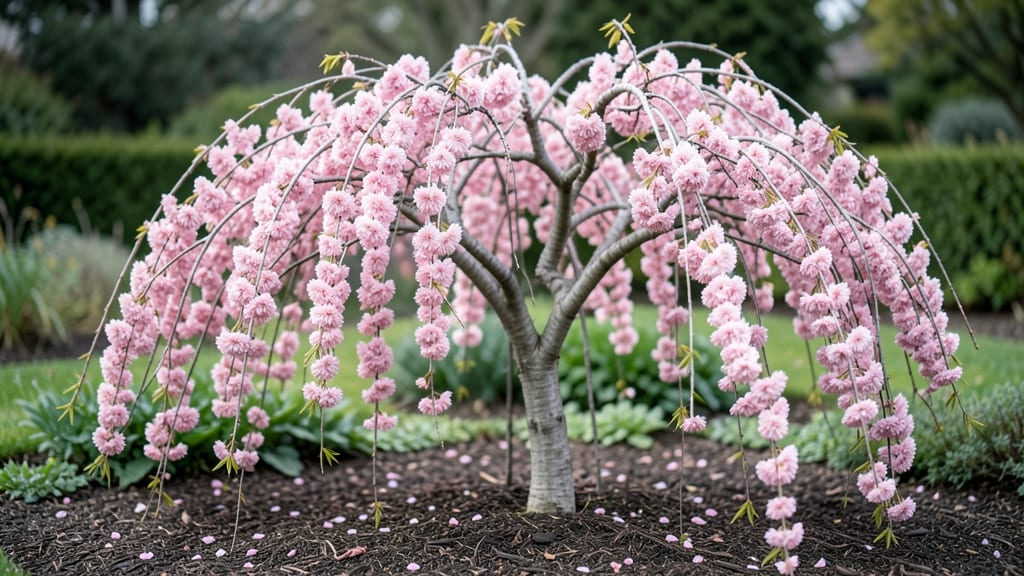
A double blossom weeping cherry tree transforms any yard into a living waterfall of pink and white—its cascading branches heavy with flowers that arrive twice a year. I planted mine last spring after struggling with leggy, one-time bloomers, and this variety changed everything.
The secret isn’t just its stunning display but how effortlessly it maintains that graceful shape with minimal pruning.
These trees thrive in full sun and well-drained soil, making them perfect for USDA zones 5-8. My tree now stands 12 feet tall with a 10-foot spread, but it grows slower than upright cherries, so spacing matters.
The double blooms arrive in spring and again in early summer, giving you two seasons of drama without the high-maintenance upkeep of other ornamentals.
With the right care, you’ll end up with a tree that looks like it belongs in a botanical garden, not just your backyard. The branches stay lush and full, the bark develops beautiful texture with age, and even the fall foliage adds color.
The only trade-off? They do attract birds—so be ready for some feathered visitors during bloom season.
Whether you’re planting one now or pruning an established tree, this variety delivers year-round interest with surprisingly little effort. The key is understanding its growth habits and when to step in—so let’s get into the details that make this tree such a standout.
📚 In This Guide
- What you need
- Instructions
- Tips and common mistakes
- Wrapping up and next steps
What you need
- ● Double Blossom Weeping Cherry Tree: Choose a healthy, disease-resistant Prunus serrulata variety (e.g., 'Kanzan' or 'Shirofugen'). Ensure it’s 3–5 years old for best establishment.
- ● High-Quality Potting Soil: 5–10 gallons of well-draining, slightly acidic soil (pH 5.0–6.5). Mix in compost (20% by volume) for nutrients.
- ● Fertilizer: Slow-release balanced fertilizer (10-10-10 or 20-20-20), 1 lb per 100 sq ft.
- ● Organic options: Fish emulsion or bone meal (for phosphorus).
- ● Mulch: 3–4 inches of organic mulch (e.g., shredded bark or pine needles) to retain moisture and suppress weeds.
- ● Hand Trowel or Spade (for digging).
- ● Pruning Shears (bypass type, sharp and sterilized).
- ● Gloves (heavy-duty for protection).
- ● Watering Can or Hose with Adjustable Nozzle (gentle spray setting).
- ● Measuring Tape (to track tree growth and pruning cuts).
- ○ Optional: Tree Stake (if planting in windy areas).
- ● Pruning Sealant (for larger cuts, 1–2 oz per cut).
- ● Soil Moisture Meter (to monitor watering needs).
- ● Sunlight: Full sun (6+ hours daily). Partial shade may reduce blooms.
- ● Space: Mature height of 15–25 ft; plant 15–20 ft from structures.
- ● Climate: Hardy in USDA Zones 5–8. Protect from late frosts if in Zone 5.
- ● Water Access: Drip irrigation or hose within reach for deep watering (1–2 inches per week).
How to cultivate a double blossom weeping cherry tree for season-long beauty
This elegant tree thrives with minimal fuss—just a few key steps to encourage its signature cascading blooms.
🌱 Step 1: Select the Perfect Planting Site
The double blossom weeping cherry demands full sun—at least 6 hours of direct sunlight daily—to produce its abundant spring flowers. I always choose a location with morning sun and afternoon shade to prevent leaf scorch in hot climates. The tree’s graceful branches need 15-20 feet of horizontal space to fully spread, so avoid tight corners or power lines.
Soil should drain well but retain moisture—amend heavy clay with 2-3 inches of organic compost before planting. The tree tolerates a range of soil types but struggles in waterlogged conditions. A slight mound of soil at the base helps prevent root rot during heavy rains.
🪴 Step 2: Plant with Care for Strong Root Establishment
Dig a hole twice as wide as the root ball but no deeper—planting too low suffocates roots. Gently loosen any circling roots and position the tree so the top of the root ball sits 1-2 inches above ground level. This prevents water from pooling around the trunk.
Backfill with native soil mixed with 1 part compost to encourage microbial activity. Water deeply to settle the soil, then create a 2-inch-high berm around the base to direct water toward the roots. Mulch with 3-4 inches of shredded bark (keeping it 6 inches from the trunk) to retain moisture and regulate soil temperature.
✂️ Step 3: Prune for Structure and Flowering
Prune immediately after flowering (late spring) to avoid removing next year’s blooms. Remove dead, crossing, or weak branches first, then thin out 10-15% of the canopy to improve airflow. The weeping habit means branches naturally grow downward—never force them upward, as this disrupts the tree’s graceful form.
Use clean, sharp pruners to make cuts just outside the branch collar. Seal larger wounds (over ½ inch in diameter) with pruning sealant to prevent disease. Avoid heavy pruning in fall or winter, as this stimulates vigorous new growth that won’t harden off before freeze.
☀️ Step 4: Maintain Year-Round for Optimal Health
Water deeply once a week during the first growing season to establish roots, then taper to every 10-14 days once established—unless experiencing drought. The tree’s shallow root system signals thirst by drooping leaves in late afternoon, which perk up after watering. Overwatering causes yellowing leaves and root rot, so always check soil moisture 2 inches below the surface before watering.
Fertilize once in early spring with a balanced 10-10-10 formula (follow package rates) to support new growth. Avoid high-nitrogen fertilizers, which promote leafy growth at the expense of flowers. In fall, apply a slow-release granular fertilizer to build root strength for next year’s blooms.
⏰ Step 5: Protect Against Pests and Diseases
Watch for cherry leaf spot (dark spots with yellow halos) and powdery mildew (white fuzzy patches) in humid summers. Improve airflow with light pruning and apply neem oil spray at the first sign of trouble. For aphids or scale, blast off infestations with a strong stream of water, then treat with insecticidal soap if needed.
Japanese beetles adore weeping cherries—cover young trees with fine netting during peak beetle season (late June to August). A reflective mulch (like aluminum foil) around the base also deters them. Avoid chemical pesticides, as they harm beneficial pollinators and disrupt the tree’s delicate ecosystem.
Tips & tricks for perfect double blossom weeping cherry tree cultivation
These simple strategies will help you coax the most stunning blooms from your weeping cherry while keeping maintenance effortless.
Sunlight Strategy: The 6 hours of daily sunlight requirement is non-negotiable for those signature double blossoms, but here's the trick: position your tree where it gets morning sun and afternoon shade in hot climates. I've seen trees in full afternoon sun develop leaf scorch that ruins the delicate foliage. If your yard only offers partial sun, consider planting near a south-facing wall that reflects light during the critical morning hours.
Root Establishment Hack: When planting, that 1-2 inch elevation above ground level for the root ball isn't just about drainage—it's about creating an oxygen-rich zone at the base. I've found that adding a handful of perlite to the backfill mix around the root ball helps maintain this air pocket. This simple adjustment prevents that suffocating feeling roots get when planted too deep, which leads to poor establishment and fewer blooms.
Pruning Precision: The late spring timing for pruning is crucial because you're working with a tree that flowers on old wood. I've learned to mark my calendar for the moment when 80% of blooms have fallen—this is your window to prune without sacrificing next year's display. For larger branches, I make the cut just outside the branch collar but leave a small bump—this natural healing response actually strengthens the tree over time.
Watering Wisdom: That shallow root system gives you a clear signal when it's thirsty—the drooping leaves in late afternoon are your tree's way of saying "I need water now." I've found that watering deeply at the base rather than sprinkling the canopy prevents fungal issues. And here's a pro move: water in the morning so any excess moisture evaporates before nightfall, reducing disease risk.
Pro Tips for Double Blossom Weeping Cherry Tree
- These simple strategies will help you coax the most stunning blooms from your weeping cherry while keeping maintenance effortless.
- Sunlight Strategy: The 6 hours of daily sunlight requirement is non-negotiable for those signature double blossoms, but here's the trick: position your tree where it gets morning sun and afternoon shade in hot climates.
- Root Establishment Hack: When planting, that 1-2 inch elevation above ground level for the root ball isn't just about drainage—it's about creating an oxygen-rich zone at the base.
Frequently asked questions
Got questions about your double blossom weeping cherry tree? You’re not alone! Here are answers to the most common queries to help you nurture this stunning tree with ease.
When is the best time to plant a double blossom weeping cherry tree?
Plant your tree in early spring or fall when temperatures are mild. This gives roots time to establish before extreme heat or cold. Avoid planting during summer droughts or winter freezes—both can stress young trees. Choose a spot with well-draining soil and partial shade to mimic its natural habitat.
How often should I prune a weeping cherry tree to keep it healthy?
Prune your tree once a year, in late winter or early spring (before buds swell). Focus on removing dead, diseased, or crossing branches to improve airflow. Avoid heavy pruning—these trees thrive with minimal shaping. Use sterilized tools to prevent bacterial infections, and never prune in fall (risk of silver leaf disease).
Why aren’t my double blossom weeping cherry tree’s flowers as vibrant?
Fewer or duller blooms often signal nutrient deficiencies, overcrowding, or improper light. Ensure your tree gets 6+ hours of sunlight daily and amend soil with phosphorus-rich fertilizer in early spring. Overwatering or compacted soil can also stress roots. If branches are bare, check for canker disease—prune affected areas immediately and treat with fungicide.
Can I grow a double blossom weeping cherry tree in a container?
While possible, these trees thrive best in the ground due to their size (15–25 ft tall/wide). If container-grown, use a large pot (20+ gallons) with drainage holes and well-aerated potting mix. Repot every 2–3 years and move containers indoors during winter if temperatures drop below 10°F. Expect slower growth and fewer blooms compared to in-ground planting.
What pests should I watch for in a weeping cherry tree?
Common pests include:
- Japanese beetles: Handpick or use neem oil to protect leaves and flowers.
- Aphids: Spray with water or insecticidal soap for infestations.
- Borers: Watch for sawdust-like frass; treat with systemic insecticides if detected.
- Scale insects: Scrape off manually or apply horticultural oil in dormant season.
Wrapping up and next steps
The double blossom weeping cherry tree is a stunning addition to any garden, offering year-round elegance with minimal pruning demands. Its cascading branches and abundant flowers make it a standout choice for both seasoned gardeners and beginners alike—proof that beauty doesn’t require complexity. 🌸
Ready to bring this enchanting tree into your outdoor space? Start by researching local nurseries or reputable online sellers to find a healthy sapling. Then, plan your planting spot with care, ensuring it has enough room to thrive and showcase its natural grace!