
Pruning
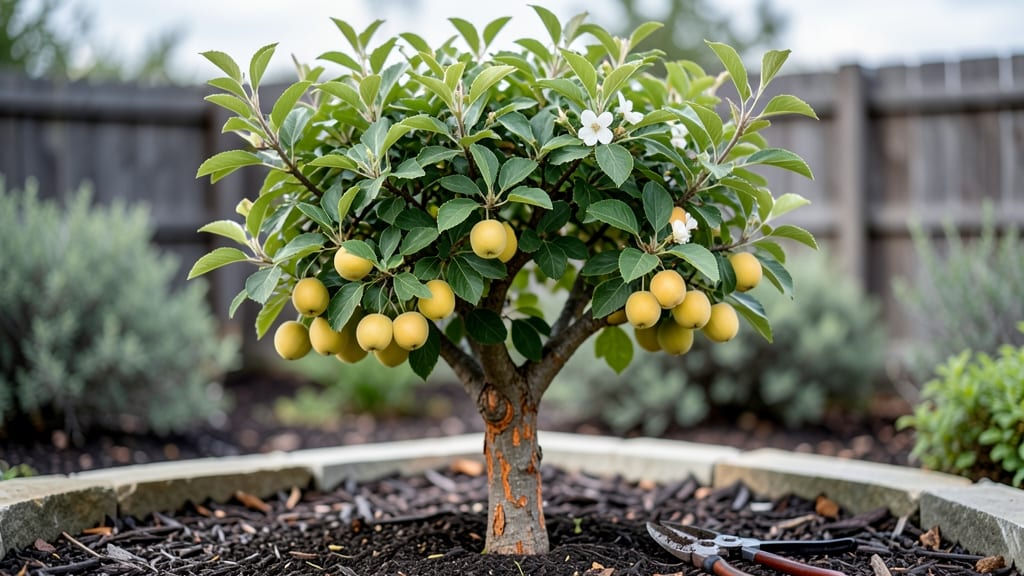
A dwarf apricot tree brings orchard magic to patios and backyards where full-sized fruit trees won't fit. I planted mine in a 15-gallon container last spring, and now it's loaded with sweet, velvety fruit—proving you don't need acres to grow your own apricots.
The key is choosing the right variety, like 'Dwarf' or 'Goldbar,' which stay under 8 feet tall while still producing heavy harvests.
These trees thrive in full sun and well-draining soil, whether planted in-ground or in containers. My urban garden gets 6+ hours of sunlight daily, and the tree responds with glossy leaves and abundant blossoms each spring.
Water deeply once a week during dry spells, and feed with citrus-specific fertilizer in early spring—no fancy equipment needed, just attention to basics.
By summer, you'll be harvesting apricots that burst with flavor, perfect for fresh eating or baking. The tree even handles small-space pruning—just trim back leggy branches after harvest to keep it compact.
With proper care, your dwarf apricot will reward you for years, proving that big harvests belong in small gardens too.
Works beautifully in containers, raised beds, or in-ground plantings. The real secret? Starting small and letting the tree grow into its perfect size—naturally. Ready to turn your patio into a fruit-producing oasis?
📚 In This Guide
- What you need
- Instructions
- Tips and common mistakes
- Wrapping up and next steps
What you need
- ● Ready to cultivate your own dwarf apricot tree? Here’s everything you’ll need to get started—whether you’re planting from a sapling or pruning an existing tree! 🌱✂️
- ● Pro tip: 💡 Sterilize tools between cuts to prevent disease spread—just a quick wipe with 70% isopropyl alcohol does the trick!
Step-by-Step guide to planting and caring for a dwarf apricot tree
Here's how to create your own compact fruit haven—delicious apricots without the orchard space.
🌱 Step 1: Choose the Right Location and Prepare the Soil
Select a spot that gets at least 6-8 hours of full sun daily—this is non-negotiable for apricots. The tree needs warmth to ripen fruit, so avoid shaded areas or spots where cold air settles. I like to plant mine against a south-facing wall or fence for extra protection from wind.
Before planting, test your soil's drainage. Apricots hate soggy roots, so if your soil feels heavy when squeezed, mix in 2-3 inches of coarse sand or perlite to improve aeration. The ideal soil pH for apricots is 6.0-7.0. If your soil is too acidic, add lime to raise the pH gradually over a few months.
Loosen the soil to a depth of 18-24 inches around the planting area. This helps roots spread easily without resistance. I like to add a 5-gallon bucket of well-aged compost mixed into the top 12 inches of soil to provide nutrients without overwhelming the tree.
🪴 Step 2: Plant Your Dwarf Apricot Tree Properly
Dig a hole twice as wide as the root ball but no deeper. The tree should sit at the same depth it was in the nursery pot—burying too deep can suffocate roots, while planting too shallow exposes them to drying out. Gently remove the tree from its container and tease apart any circling roots with your fingers.
Place the tree in the hole and backfill with soil, tamping lightly every 4-6 inches to eliminate air pockets. Water deeply to settle the soil around the roots. This first watering helps eliminate air gaps and encourages root contact with the soil. After watering, the soil surface should look slightly damp but not glistening—this prevents waterlogging.
Create a 2-3 inch deep watering basin around the tree's base by mounding soil outward. This helps direct water straight to the roots where it's needed most. Mulch the area with 2-3 inches of organic mulch (like wood chips or straw), keeping it 3-4 inches away from the trunk to prevent rot. This mulch layer helps retain moisture and regulate soil temperature.
☀️ Step 3: Water and Fertilize for Healthy Growth
Water your dwarf apricot tree deeply once a week during the first growing season, providing 1-2 gallons of water each time. The goal is to encourage roots to grow deep rather than staying shallow. You'll know you're watering correctly when the soil feels moist 4-6 inches below the surface—stick your finger in to check.
Start fertilizing in early spring with a balanced fruit tree fertilizer (look for one with equal parts nitrogen, phosphorus, and potassium). Apply it according to package instructions, usually every 4-6 weeks during the growing season. Avoid fertilizing in late summer or fall—this can stimulate new growth that won't harden off before winter.
Watch for signs of stress: yellowing leaves often mean overwatering or poor drainage, while brown leaf edges usually indicate underwatering. Apricots are drought-tolerant once established, but young trees need consistent moisture. If leaves start curling or dropping, adjust your watering schedule immediately.
✂️ Step 4: Prune for Shape and Fruit Production
Prune your dwarf apricot tree in late winter or early spring before new growth begins. Remove any dead, diseased, or crossing branches first—these compete with healthy growth and can spread problems. Cut back to the nearest outward-facing bud to encourage healthy regrowth. I like to use clean, sharp pruning shears to make clean cuts without tearing the bark.
Shape the tree by opening the center to allow good air circulation—this prevents fungal diseases. Aim for an open vase shape that lets sunlight reach all branches. For dwarf varieties, keep the height manageable by trimming back any branches that grow taller than 6-8 feet. This keeps the tree compact while still productive.
After the first year, you can do light pruning in summer to control size and shape. Remove any suckers (shoots growing from the base) immediately—they drain energy from the main tree. Thin out some of the fruit in late spring to leave 6-8 inches between apricots. This ensures larger, higher-quality fruit rather than a heavy crop of small ones.
⏰ Step 5: Protect and Maintain Through the Seasons
In early spring, apply a 2-3 inch layer of mulch around the base of the tree, keeping it away from the trunk. This helps retain moisture and regulate soil temperature. Remove any weeds within a 3-foot radius of the tree—they compete for nutrients and water.
Watch for common pests like aphids or scale insects. If you see sticky residue on leaves (called honeydew), spray with neem oil or insecticidal soap to control infestations. Apricots are generally low-maintenance, but keeping an eye out for problems early prevents major issues later.
In fall, reduce watering gradually as temperatures drop. Once the tree goes dormant, apply a thin layer of mulch (about 1-2 inches) to protect roots from freezing temperatures. Dwarf apricot trees are hardy, but a little extra protection helps them thrive year after year. With proper care, you'll see fruit in 2-3 years—and it's worth the wait!
Tips & tricks for perfect dwarf apricot tree care
Here's what I learned after watching my first dwarf apricot tree thrive—and how to avoid the mistakes I made along the way.
Sunlight Strategy: Those crucial 6-8 hours of sunlight in Step 1 aren't just about warmth—they're about consistent exposure. I planted mine against a south-facing fence, but even then, nearby trees cast shadows in the afternoon. If your space has partial shade, consider a portable grow light for supplementary exposure during fruit development. The tree's leaves will tell you if it's getting enough light: vibrant green means perfect, while pale or yellowing leaves signal it needs more sun.
Soil Preparation Secret: When loosening soil to 18-24 inches in Step 1, don't just dig—score the soil in a crosshatch pattern. This creates channels for roots to grow deeper without resistance. I also recommend adding a handful of mycorrhizal fungi to the planting hole (optional but game-changing). These beneficial microbes help roots absorb nutrients more efficiently, giving your tree a head start. The 5-gallon bucket of compost should be mixed into the top 12 inches—this creates a nutrient-rich zone where young roots will establish first.
Watering Wisdom: That "slightly damp but not glistening" soil after initial watering in Step 2 is your golden standard. I've learned to check soil moisture at 4-6 inches deep with a simple soil probe—if it feels dry, it's time to water. For the weekly 1-2 gallons during the first year, I use a soaker hose placed at the tree's base. This delivers water directly to the roots where it's needed, rather than wasting it on leaves. The 2-3 inch watering basin you create helps prevent runoff, ensuring every drop reaches your tree's roots.
Pruning Precision: When shaping your tree in Step 4, focus on creating an open center rather than just trimming branches. I use a simple trick: hold your pruners at a 45-degree angle when cutting, just above an outward-facing bud. This encourages new growth in the right direction. For summer pruning, I wait until after flowering to avoid removing potential fruit buds. The 6-8 inch spacing between apricots is crucial—this prevents overcrowding that leads to small, poor-quality fruit. Think of it as giving each apricot room to grow into its best self.
Pro Tips for Dwarf Apricot Tree
- Here's what I learned after watching my first dwarf apricot tree thrive—and how to avoid the mistakes I made along the way.
- Sunlight Strategy: Those crucial 6-8 hours of sunlight in Step 1 aren't just about warmth—they're about consistent exposure.
- Soil Preparation Secret: When loosening soil to 18-24 inches in Step 1, don't just dig—score the soil in a crosshatch pattern.
Frequently asked questions
Got questions about growing a dwarf apricot tree? You’re not alone!
Here are answers to the most common queries—from planting to pruning—so you can enjoy sweet success without the fuss.
How soon can I expect fruit after planting a dwarf apricot tree?
A dwarf apricot tree typically bears fruit within 2–3 years of planting, though some varieties may take up to 4 years for a full harvest. Patience pays off—young trees focus on root growth first! For faster results, choose a self-pollinating variety or plant a second tree nearby to aid pollination.
When is the best time to prune a dwarf apricot tree?
Prune your dwarf apricot tree during late winter or early spring (before buds swell) to shape the tree and remove dead wood. Avoid heavy pruning in fall, as it can stimulate new growth that’s vulnerable to frost. Light trimming after harvest (summer) helps maintain airflow and reduce disease risk. See our step-by-step pruning guide for details!
Can dwarf apricot trees survive cold winters?
Most dwarf apricot trees thrive in USDA Zones 6–9, but they’re semi-tender and may need protection in colder climates (Zone 5 or below). Use mulch, frost cloth, or a windbreak to shield roots and branches. Dwarf varieties are hardier than standard trees but still benefit from winter care.
What are the best alternatives if my dwarf apricot tree fails to thrive?
If your apricot struggles, consider these low-maintenance, compact fruit trees:
- Dwarf peach tree: Similar care, slightly more cold-hardy.
- Plumcot tree: Hybrid of plum and apricot, disease-resistant.
- Fig tree (dwarf varieties): Thrives in containers, heat-tolerant.
- Blueberry bush (dwarf): Perfect for small spaces, minimal pruning.
Why are my apricot leaves turning yellow or curling?
Yellowing or curling leaves often signal pests (aphids, mites) or disease (bacterial spot, powdery mildew). Start with these fixes:
- Inspect leaves for bugs or webs—spray with neem oil if needed.
- Ensure proper watering (avoid soggy soil) and good airflow.
- Apply copper fungicide if fungal spots appear.
- Check soil pH—apricots prefer 6.0–7.0.
Pro Tip: Harvesting Hack
Apricots ripen all at once, so harvest them every 2–3 days at peak ripeness (when they’re slightly soft and fragrant). Store unripe fruit in a cool, dark place to finish ripening. For best flavor, eat fresh or freeze within 3–5 days of picking!
Wrapping up and next steps
Growing a dwarf apricot tree is a rewarding way to enjoy fresh, sun-kissed fruit without sacrificing space—perfect for balconies, patios, or small yards! 🌱 With the right pruning skills, seasonal care, and a little patience, you’ll harvest sweet, juicy apricots in just a few years.
Whether you’re a seasoned gardener or a beginner, this compact orchard gem proves that big flavors don’t need big space.
Ready to dive in? Start by choosing your dwarf variety and grab your pruning shears—your future apricot harvest is just a cut (and a lot of sunshine) away! 🌞