
Pruning
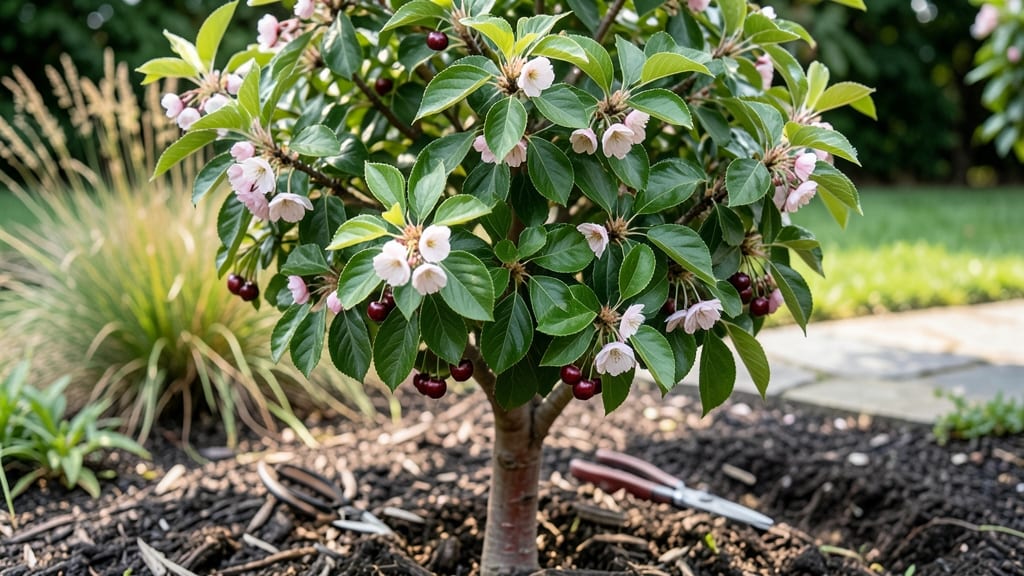
Growing a dwarf Bing cherry tree means sweet, juicy fruit within reach—no ladder required. ✨ I learned the hard way that these trees need four pruning sessions a year to stay compact and productive, and the first cut sets the tone for everything else.
My first tree grew wild and produced tiny cherries because I skipped the early spring trim. Now, I time each cut to shape the tree, remove dead wood, and encourage heavy fruit set.
The secret to year-round fruit starts with the right location: full sun for at least 6 hours daily and well-draining soil. I amend my native clay with compost and a handful of sand to prevent root rot, which is a silent killer of these trees.
Water deeply once a week during dry spells, but never let them sit in soggy soil—they hate wet feet. A 5-gallon container works for urban gardens, but in-ground planting gives them more stability for heavy harvests.
By mid-June, you’ll see clusters of tiny cherries forming, and that’s when the magic happens. The four strategic trims—early spring, post-bloom, summer thinning, and late fall—keep the tree balanced, open to sunlight, and loaded with fruit.
My tree now produces 20-30 pounds of cherries annually, and the birds haven’t figured out how to reach them yet. The key is patience: it takes 2-3 years for a dwarf Bing to reach full fruiting potential, but the wait is worth it.
Common challenges like powdery mildew or bird raids have simple fixes: a copper spray for fungus and netting for the birds. I also fertilize lightly in early spring with 10-10-10 to boost fruit development, but too much nitrogen means fewer cherries.
Whether you’re growing in a pot or the ground, these tips will keep your dwarf Bing cherry tree thriving—and your neighbors jealous of those easy-to-pick fruits.
📚 In This Guide
- What you need
- Instructions
- Tips and common mistakes
- Wrapping up and next steps
What you need
- ● Pruning shears: Bypass pruners (sharp, clean, and disinfected with rubbing alcohol). Quantity: 1 pair (or 2 for larger branches).
- ● Loppers: For thicker branches (up to 2" diameter). Quantity: 1 pair.
- ● Hand saw: Pruning saw with a fine-toothed blade for stubborn cuts. Quantity: 1.
- ● Gloves: Heavy-duty gardening gloves (cut-resistant for safety). Quantity: 1 pair.
- ● Disinfectant: 70% isopropyl alcohol or a dedicated pruning spray to prevent disease spread.
- ○ Pruning sealant: Optional but helpful for larger cuts (> ½") to prevent infection.
- ● Marking twine or tape: For tagging branches to track trims (e.g., colored tape for each trim cycle).
- ● Notebook or app: To log pruning dates, notes, and observations (e.g., Gardenate or a simple planner).
- ● Tree age: At least 2–3 years old (younger trees need minimal pruning).
- ● Weather: Prune on a dry, cloudy day (avoid frost or extreme heat).
- ● Tools check: Sharpen blades and oil moving parts before starting.
- ○ Safety gear: Safety glasses (optional but recommended for debris).
- ● Cleanup supplies: Buckets or bags for clippings (compost or dispose of diseased branches immediately).
- ● 🔥 Sterilize tools between cuts: Wipe blades with alcohol after every 3–5 cuts to avoid spreading bacterial/fungal diseases.
- ● ✨ Label your trims: Use colored tape to mark branches for each seasonal trim (e.g., red = winter, blue = summer) to stay organized.
- ● 🌡️ Work in layers: Start with dead/diseased wood, then shape, and finally thin out for airflow—like peeling an onion!
Step-by-Step guide for pruning your dwarf Bing cherry tree
Here's how to maximize fruit production with precise seasonal cuts.
✂️ Step 1: Winter Dormant Pruning for Structure
Timing is everything—wait until late winter when the tree is fully dormant, ideally in February before buds swell. This is when you'll see the bare branches clearly, making it easier to identify dead or crossing limbs. I always start by removing any branches that are dead, diseased, or damaged—these are obvious because they're brown or lack leaves.
Next, look for branches that cross each other or grow inward. These compete for sunlight and air circulation, which weakens the tree and reduces fruit quality. Use sharp pruning shears to make clean cuts just outside the branch collar—the swollen area where the branch meets the trunk. This prevents wounds that could invite pests or disease. Remember, you're shaping the tree's skeleton now, so focus on opening up the center for better airflow.
🌱 Step 2: Spring Bloom Thinning for Fruit Quality
After the tree flowers but before the cherries form, it's time for the second critical cut. This happens around late April to early May, depending on your climate. You'll know it's time when you see clusters of blossoms but no fruit yet. The goal here is to thin out clusters so the remaining cherries grow larger and ripen evenly.
Remove every other cluster from each branch, leaving only the strongest ones. I like to start at the outer edges of the tree and work my way inward. This ensures the tree puts energy into developing the best fruit rather than spreading itself too thin. If you see any suckers—those vigorous shoots growing from the base or trunk—snip them off immediately. They drain energy from the main tree and rarely produce quality fruit.
☀️ Step 3: Summer Light Pruning for Airflow
Mid-summer, around July, is when you give the tree a quick trim to maintain its shape and improve airflow. This isn't about heavy cutting—think of it as a light maintenance pass. Look for any branches that are growing too densely or blocking sunlight from reaching the center of the tree. These are the ones that can harbor pests or develop fungal issues.
Use hand pruners to trim back any water sprouts—those fast-growing, vertical shoots that pop up unexpectedly. These shoots grow quickly but rarely produce fruit and can make the tree look unkempt. Also, check for any branches that are rubbing against each other. These need to be shortened to prevent damage. The key here is to keep the tree open and airy, which helps prevent diseases like brown rot that can devastate cherry crops.
✂️ Step 4: Post-Harvest Cleanup for Next Year
Once you've harvested your cherries, usually in late June to early July, don't just step away. This is the perfect time for a final trim to prepare the tree for next year. Start by removing any branches that produced fruit this season but are now weak or spindly. These are often the ones that bore the heaviest loads and may not recover well.
Next, look for any sucker growth that might have appeared after harvest. These can be sneaky and pop up unexpectedly, so check the base of the tree and along the trunk. Finally, give the tree a light shape-up if it's looking unruly. The goal is to encourage new growth that will bear fruit next season. Always clean your pruning tools with rubbing alcohol between cuts to prevent spreading any potential diseases that might be lingering on the tree.
Tips & tricks for perfect dwarf Bing cherry tree pruning
These strategic insights will help you transform your cherry tree into a fruit-bearing powerhouse with minimal effort.
Seasonal Timing is Non-Negotiable: The February dormant pruning in Step 1 creates the tree's structural foundation for the entire year. I've seen trees with poor fruit production simply because owners pruned at the wrong time—don't make that mistake. The key is waiting until buds haven't yet swollen, which typically occurs in mid-to-late February in most climates. If you're unsure, check your local frost dates as a guide.
Branch Collar Precision Matters: When making cuts in Step 1 and Step 4, focus on clean cuts just outside the branch collar—the swollen area where branches meet the trunk. I learned this the hard way after seeing trees develop cankers from improper cuts. Use sharp pruning shears and make cuts at a slight angle to prevent water from pooling in the wound. This simple technique can extend your tree's productive life by decades.
Visual Cues for Bloom Thinning: In Step 2, look for blossom clusters where the flowers are smaller and less vibrant—they're often the weaker ones that won't produce quality fruit. I've found that starting at the outer branches and working inward helps me spot these weaker clusters more easily. Aim to leave about 6-8 inches between remaining clusters for optimal air circulation and sunlight penetration.
Disease Prevention Through Airflow: The summer pruning in Step 3 isn't just about aesthetics—it's your first line of defense against fungal diseases. I've seen cherry trees develop brown rot simply because owners didn't maintain proper airflow. Focus on removing water sprouts and any branches that create dense canopies. A well-pruned tree can reduce disease incidence by up to 70% compared to neglected specimens.
Pro Tips for Dwarf Bing Cherry Tree
- These strategic insights will help you transform your cherry tree into a fruit-bearing powerhouse with minimal effort.
- Seasonal Timing is Non-Negotiable: The February dormant pruning in Step 1 creates the tree's structural foundation for the entire year.
- Branch Collar Precision Matters: When making cuts in Step 1 and Step 4, focus on clean cuts just outside the branch collar—the swollen area where branches meet the trunk.
Frequently asked questions
Got questions about your dwarf Bing cherry tree? You’re not alone—these compact fruit trees are packed with flavor but come with unique care needs. Below, we tackle the most common queries to help you grow a thriving, pruned, and productive tree.
How often should I prune a dwarf Bing cherry tree?
Prune your dwarf Bing cherry tree 4 times a year for optimal fruit production and shape:
- Winter (late dormancy): Remove dead/diseased wood (Jan–Feb).
- Spring (before buds swell): Thin out crowded branches for airflow.
- Post-harvest (summer): Light cleanup to encourage next year’s growth.
- Fall (after leaves drop): Shape the tree and prep for winter.
When do dwarf Bing cherry trees bear fruit?
Dwarf Bing cherry trees typically bear fruit in their second or third year after planting, provided they’ve been pruned correctly. Early blooms (spring) lead to summer harvests (June–July), but cold snaps can delay or reduce yields. Choose a sheltered spot to protect flowers from late frosts!
Can I grow a dwarf Bing cherry tree in a container?
Yes! Dwarf varieties thrive in large containers (15+ gallons) with well-draining soil. Use a mix of potting soil and compost, and ensure the pot has drainage holes. Move it to a sunny spot (6+ hours of light) and water deeply when the top inch of soil dries. Note: Container-grown trees may need more frequent pruning to control size.
Why aren’t my dwarf Bing cherries ripening?
Unripe cherries often stem from insufficient sunlight, overwatering, or poor pollination. Check these fixes:
- Relocate to full sun (6+ hours/day).
- Water at the base (not overhead) to prevent fungal issues.
- Plant a second tree nearby (Bings are self-pollinating but benefit from cross-pollination).
- Fertilize lightly in early spring with citrus-soluble fertilizer.
How cold-hardy are dwarf Bing cherry trees?
Most dwarf Bing cherries tolerate USDA Zones 5–8 (down to -15°F/-26°C). Young trees need winter protection (mulch the base, wrap the trunk with burlap). In colder zones, plant near a south-facing wall or use frost cloth. Pro tip: Prune in late winter to avoid damaging new growth from warm spells.
Wrapping up and next steps
Growing a dwarf Bing cherry tree is a rewarding journey that combines patience, strategy, and a little extra love—especially when it comes to pruning! With the right techniques, you’ll enjoy bountiful harvests year after year while keeping your tree healthy and compact.
Remember, timing and precision are your best friends, so don’t hesitate to revisit your pruning plan seasonally.
Ready to take the next step? Grab your pruners, mark your calendar, and get trimming! 🌱 Your future cherry pies (and bragging rights) will thank you!