
Pruning
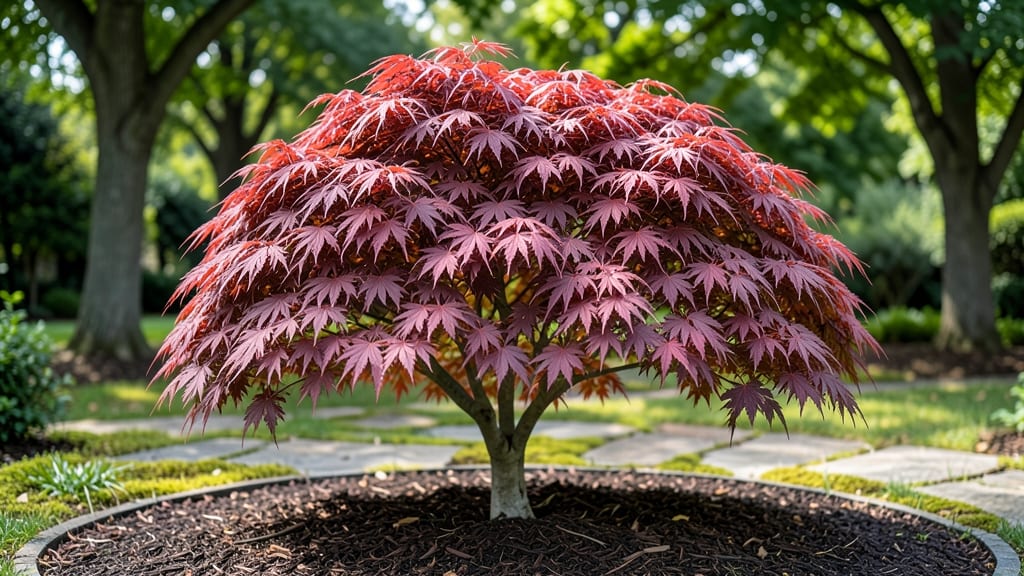
The Emperor One Japanese maple tree transforms into a compact, showstopping focal point when pruned with care—preserving its delicate, weeping branches while encouraging dense growth. 🌿 I’ve pruned mine for five seasons, and the difference between a leggy mess and a lush, sculpted tree comes down to timing, technique, and a little patience.
The key is to shape it in late winter or early spring before new growth begins, when the tree’s energy is focused on producing vibrant foliage rather than repairing cuts.
You’ll need just three tools: sharp pruning shears for fine branches, loppers for thicker stems, and a pair of gloves to protect your hands from the tree’s tender bark.
The goal isn’t to remove more than 10-15% of the canopy at once—this tree responds best to gentle guidance rather than aggressive trimming. Focus on removing crossing branches, dead wood, and any growth that’s spoiling the tree’s natural weeping silhouette.
Every cut should aim to open up the center for airflow while maintaining that elegant, cascading form.
What you’ll end up with is a tree that stays proportionate to its space, with foliage so dense it looks like a living waterfall.
The leaves—those stunning deep reds and purples—will emerge brighter and more vibrant, and the branches will fill in over time, creating a fuller, more dramatic silhouette. Even in small gardens, this tree becomes a centerpiece that commands attention without overwhelming the space. The secret?
Prune lightly but consistently, and you’ll see results within a single growing season.
This method works for both container-grown Emperor Ones and those planted in the ground, though container trees may need slightly more frequent pruning to control size. If you’re in a colder climate, hold off until after the last frost—pruning too early can stress the tree.
For urban gardens or small yards, this approach ensures your tree stays manageable and stunning for decades. Let’s get those shears ready!
📚 In This Guide
- What you need
- Instructions
- Tips and common mistakes
- Wrapping up and next steps
What you need
- ● Pruning shears: Bypass pruners (sharp, clean, and disinfected with rubbing alcohol—1 pair).
- ● Loppers: For thicker branches (up to 1.5" diameter)—1 pair with a bypass blade.
- ● Hand saw: Folding pruning saw for stubborn branches (1, 8"–10" blade).
- ● Gloves: Heavy-duty, cut-resistant (e.g., 1 pair of mechanized gardening gloves).
- ● Pruning sealant: Tree wound sealant (e.g., 1 small tube of Tanglefoot Tree Wound Pruning Seal).
- ● Disinfectant: 70% isopropyl alcohol or bleach solution (1 part bleach : 9 parts water) for sterilizing tools.
- ● Ladder or step stool: Sturdy, non-slip (height based on tree size—1).
- ● Trash bags: Heavy-duty for debris (2–3 bags).
- ● Rake: Small leaf rake (1) for cleanup.
- ● Extension pole pruners: For high branches (1).
- ● Tree tie: Soft cotton or rubber ties (5–10) to secure branches during shaping.
- ● Hose or spray bottle: To rinse tools between cuts (1).
- ● Notebook & pen: To sketch your pruning plan (1).
- ● Safety glasses: Protect your eyes from debris (1 pair).
Step-by-step instructions for pruning a Japanese Maple "Emperor One"
Here's the method I rely on to keep this stunning cultivar compact and healthy.
✂️ Step 1: Time Your Pruning Correctly
Prune your Japanese Maple "Emperor One" during its dormant season, between late fall and early spring (November through March). This timing prevents stressing the tree when it's actively growing. Avoid pruning during extreme cold snaps—wait until temperatures stabilize above 30°F.
If you must prune in summer, do it in early morning or late evening to minimize sun exposure stress. The tree will show you when it's ready—look for new leaf buds swelling along branches as a sign it's time to shape.
🌿 Step 2: Assess the Canopy Structure
Start by examining the tree's natural shape. The "Emperor One" naturally grows with a compact, rounded form, so your goal is to enhance—not drastically alter—its silhouette. Remove any dead, diseased, or crossing branches first using sharp, clean pruners.
Identify the central leader (main upward-growing branch) and any scaffold branches (major horizontal branches). These form the tree's framework. You'll see where natural gaps exist—these are your pruning targets to improve air circulation and light penetration.
✂️ Step 3: Make Strategic Cuts for Compact Growth
For a denser canopy, focus on selective branch thinning. Remove about 10-15% of the tree's foliage in one session to avoid overstressing it. Cut back branches to their outer bud (the bud facing outward from the tree) to encourage outward growth and fill gaps.
Never remove more than ¼ of a branch's diameter in one cut—this prevents excessive bleeding and weakens the branch. Use sharp bypass pruners to make clean cuts just above a bud or lateral branch. Avoid leaving stubs, which invite disease.
☀️ Step 4: Maintain Light and Airflow
After pruning, step back and check for even light distribution. The inner canopy should receive at least 3-4 hours of dappled sunlight daily. If you notice dense clusters blocking light, thin additional branches until you see open space between limbs.
Water deeply after pruning to help the tree recover. The roots will work harder to support the new shape, so keep the soil consistently moist but not soggy for the first 4-6 weeks. You'll know you've done well when new growth appears evenly distributed along the branches.
⏰ Step 5: Monitor and Adjust Over Time
Check your tree's progress every 2-3 weeks during the growing season. If you see sparse growth in certain areas, it's a sign to prune lightly again in the next dormant season. The "Emperor One" responds well to gradual shaping—never rush the process.
Here's the thing—this cultivar thrives on patience. Over time, you'll develop an intuitive sense of when to prune. If a branch grows too vigorously, trim it back by ⅓ of its length to maintain balance. Always step back and admire your work—you're sculpting a living masterpiece.
Tips & tricks for pruning an Emperor One Japanese maple
These little details make all the difference when shaping your tree without stressing it.
Timing is Everything: The dormant season window (November-March) is critical because that's when the tree's energy is stored in its roots, not actively growing. I've seen people prune too early and end up with weak new growth—wait until temperatures consistently stay above 30°F for at least 3-4 days before starting. This gives the tree enough stability to handle the shaping without shock.
The 10-15% Rule: When Step 3 mentions removing only 10-15% of foliage, this isn't arbitrary—it's based on how much stress the tree can handle while still maintaining its health. Think of it like giving your tree a haircut: you wouldn't shave off half your hair in one sitting! If you're unsure, take before photos and measure the canopy area to track your progress. The goal is to maintain that beautiful rounded silhouette while improving airflow.
Bud Direction Matters: Cutting to the outer bud (as mentioned in Step 3) creates a more open, airy canopy that's less prone to disease. Here's what I do: I run my finger along the branch to feel which way the bud faces—this tells me exactly where to make the clean cut. If you cut to an inner-facing bud, you'll end up with dense growth that blocks light from reaching the interior leaves.
Monitoring Aftercare: Those first 4-6 weeks after pruning are crucial for recovery. I set a reminder to check the soil moisture every 3-4 days during dry spells. The key is consistent moisture—not soggy soil. You'll notice new growth appearing in about 6-8 weeks if everything's going well. If you see yellowing leaves after pruning, it's usually a sign of over-pruning or too much direct sun exposure during recovery.
Pro Tips for Emperor One Japanese Maple Tree
- These little details make all the difference when shaping your tree without stressing it.
- Timing is Everything: The dormant season window (November-March) is critical because that's when the tree's energy is stored in its roots, not actively growing.
- The 10-15% Rule: When Step 3 mentions removing only 10-15% of foliage, this isn't arbitrary—it's based on how much stress the tree can handle while still maintaining its health.
Frequently asked questions
Got questions about pruning your Emperor One Japanese maple to keep it compact and stunning? You’re not alone! Here are answers to the most common queries—so you can tackle your tree like a pro.
How often should I prune my Emperor One Japanese maple for compact growth?
Prune your Emperor One twice a year: late winter/early spring (just before buds swell) for structural shaping, and summer (after 60% of new growth appears) to refine shape and encourage denser foliage. Avoid heavy pruning in fall—it can stimulate late-season growth vulnerable to frost damage.
When is the best time to trim back leggy branches?
Trim leggy branches in late spring to early summer (May–June) when the tree is actively growing. This timing helps the tree recover faster and promotes bushier regrowth. Avoid cutting back more than 25% of the branch length in one session to prevent stress.
Can I prune my Emperor One in extreme heat or cold?
Nope! Prune when temps are mild (50–75°F). Extreme heat or cold stresses the tree, slowing recovery. Early morning or late afternoon are ideal—avoid midday sun. If you must prune in winter, choose a warmer day (above freezing) to minimize shock.
What if my Emperor One’s branches aren’t filling out after pruning?
Check these fixes:
- Light: Ensure it gets 4–6 hours of sun daily—shady spots stunt growth.
- Soil: Test for acidic, well-draining soil (pH 5.0–6.5). Amend with compost if needed.
- Water: Keep soil consistently moist but not soggy (1–1.5 inches/week).
- Fertilizer: Use a balanced, slow-release fertilizer (10-10-10) in early spring.
Are there smaller alternatives to the Emperor One for compact gardens?
Yes! If space is tight, consider these dwarf varieties:
- ‘Bloodgood’ Japanese Maple – 15–20 ft tall, deep red foliage.
- ‘Shishigashira’ (Laceleaf) – 10–15 ft, delicate, lace-like leaves.
- ‘Emperor Two’ – Smaller than Emperor One (12–15 ft), similar care.
- ‘Dwarf Ukon’ – 8–10 ft, golden-green foliage, ultra-compact.
Wrapping up and next steps
The Emperor One Japanese Maple Tree is a stunning addition to any garden, and with the right pruning techniques, you can cultivate a compact, lush canopy that steals the show.
Remember, patience and precision are key—focus on shaping in early spring, maintaining clean cuts, and avoiding over-pruning to preserve its natural beauty. 🌿
Ready to take your pruning skills to the next level? Start small—practice on a few branches this season, then gradually refine your approach. Before you know it, your Emperor One will be the talk of the neighborhood! 🌟