
Lawn
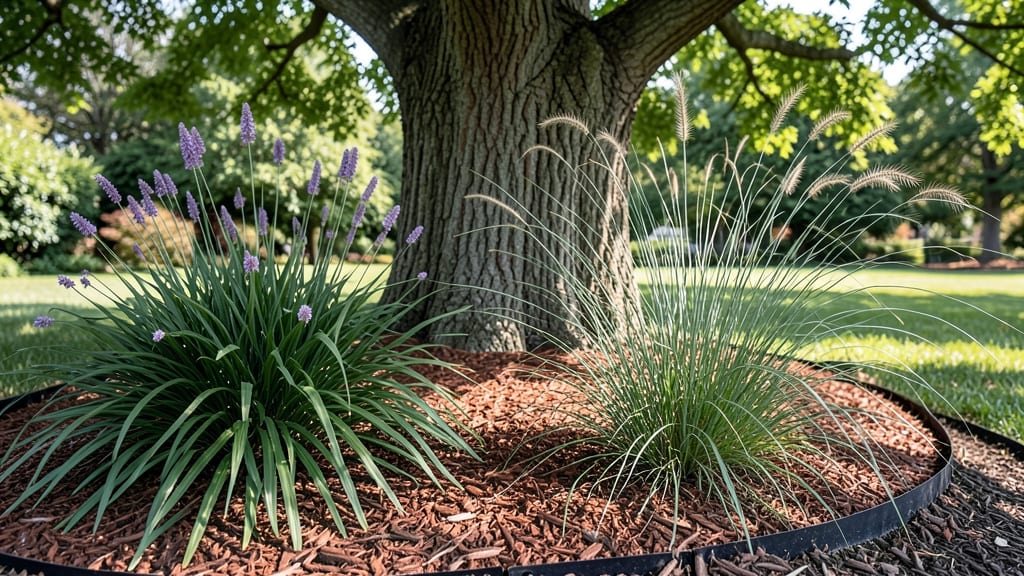
Grass around trees is the battleground where weeds win every time—until you change the game. 🌳 The roots compete for water, the soil stays compacted, and weeds take over because grass can't survive in those tight, dry conditions.
I've lost count of how many times I've pulled weeds from under my oak tree, only to see them back within weeks.
The fix isn't complicated, but it is different from regular lawn care. You need a 3-inch layer of mulch (wood chips or shredded bark) to block weeds, aerate the soil to help roots breathe, and water deeply but less often to encourage grass to grow downward.
Most people overwater, which just drowns the tree roots and keeps weeds happy.
By summer's end, you'll have a zone where grass fights back—dense, green, and weed-free—while your tree thrives. The mulch breaks down slowly, feeding the soil, and the aeration lets both roots and grass stretch out. No more losing this turf war every season.
This works for any tree—oaks, maples, even young fruit trees—just adjust the mulch width to match the tree's spread. The key is consistency: once you start, keep the mulch topped up and the soil loose. Your lawn (and your trees) will thank you.
📚 In This Guide
- What you need
- Instructions
- Tips and common mistakes
- Wrapping up and next steps
What you need
- ● Garden gloves – A pair of durable, chemical-resistant gloves (e.g., nitrile-coated) to protect your hands.
- ● Handheld weeder or dandelion digger – A sturdy tool with a forked tip for extracting weeds root and all.
- ● Sharp garden shears or pruners – For trimming grass and weeds close to the tree trunk.
- ● Organic mulch – 2–3 inches of shredded bark, wood chips, or pine straw to suppress weeds and retain moisture.
- ○ Pre-emergent herbicide (optional) – A natural, tree-safe option like corn gluten meal (apply in early spring).
- ○ Post-emergent herbicide (optional) – A selective spray (e.g., vinegar-based or targeted for broadleaf weeds) for stubborn invaders.
- ● Wheelbarrow or bucket – For hauling mulch, clippings, or weeds.
- ● Rake (bow or leaf rake) – To clear debris and level mulch around the tree base.
- ● Hose with adjustable nozzle – For watering (a gentle spray setting works best).
- ● Measuring tape or ruler – To ensure mulch stays 3 inches deep but 6+ inches away from the tree trunk.
- ○ Knee pad or cushion (optional) – For comfort during long sessions.
- ● A dry, sunny day – Avoid working in wet conditions to prevent soil compaction.
- ● Tree health check – Ensure your tree is not stressed (e.g., no signs of disease or recent planting).
- ● Clear the area – Remove rocks, toys, or other obstacles within a 3-foot radius of the tree.
- ● Know your weeds – Identify common weeds (e.g., clover, dandelions, or crabgrass) to target treatment effectively.
Step-by-Step guide to maintaining grass around trees
Here’s how to keep your lawn lush and weed-free near trees without damaging roots or bark.
🌱 Step 1: Clear Existing Weeds and Debris
Start by removing any weeds, leaves, or dead grass within a 3-foot radius of the tree trunk. Use a hand rake or a small garden fork to gently loosen the soil and pull weeds by the roots—this prevents regrowth. Avoid digging too deep near the trunk; stick to the top 1-2 inches of soil to protect shallow roots.
If you spot stubborn weeds like dandelions or clover, spot-treat them with a vinegar-based weed killer (5% acetic acid) mixed with 1 tablespoon of dish soap per gallon. Apply directly to the leaves on a sunny day—this kills weeds without harming grass. Wait 24 hours before proceeding to let the solution work.
💧 Step 2: Apply Mulch Correctly
Spread 2-3 inches of wood chip mulch or pine straw in a donut-shaped ring around the tree, starting 6 inches away from the trunk. Keep the mulch even and loose—don’t pile it against the bark, as this can trap moisture and encourage rot. Use a rake to smooth out clumps and ensure even coverage.
Real talk: If you’ve ever seen mulch piled like a volcano around a tree, you know why this step matters. The goal is to suppress weeds while allowing water and air to reach the roots. Check the mulch after a week—if it’s settled unevenly, fluff it up with a rake to maintain that 2-inch layer.
☀️ Step 3: Water Deeply and Infrequently
Water the area deeply once a week (or twice in extreme heat) to encourage grass roots to grow downward. Use a soaker hose or drip irrigation set to deliver water slowly for 20-30 minutes—this prevents runoff and keeps moisture where it’s needed. Avoid overhead sprinklers, which can wash mulch away and create bare spots.
Here’s the thing—you’ll know you’re doing it right when the soil feels moist 2-3 inches down after watering. If the top layer dries out too quickly, your watering isn’t deep enough. Grass around trees needs consistent moisture but hates soggy conditions, so always let the top ½ inch dry out between waterings.
✂️ Step 4: Mow Carefully and Maintain Regularly
Set your mower blade to 3-4 inches high to keep grass healthy and shade-tolerant. When mowing near trees, avoid the trunk entirely—leave a 6-inch buffer of unmowed grass or mulch to protect the bark. If you have young trees, consider using a string trimmer with a guard to edge neatly without damaging the trunk.
Every 4-6 weeks, check for new weeds sneaking in and pull them before they spread. A quick inspection after rain is the best time—weeds are easier to remove when the soil is soft. If you notice bare patches, overseed with shade-tolerant grass seed like fine fescue or creeping red fescue to fill them in.
Tips & tricks for perfect grass maintenance around trees
Keeping your lawn vibrant near trees takes the right approach—here are the details that make all the difference.
Weed Removal Precision: In Step 1, focus on the 3-foot radius but work in sections. Start at the outer edge and move inward to avoid disturbing soil near the trunk. For stubborn weeds like dandelions, I’ve found that applying the vinegar solution twice—once now and again after the 24-hour wait—gives even better results. The second application catches any regrowth before it starts.
Mulch Application Strategy: When creating that donut-shaped ring in Step 2, leave a 1-inch gap between the mulch and tree trunk to prevent moisture buildup. I use a metal rake to spread the mulch because it’s easier to smooth out clumps than with a plastic one. After spreading, lightly press down the edges to keep it in place—this prevents it from blowing away during windy conditions.
Watering Technique: For the 20-30 minute watering in Step 3, I recommend using a soaker hose with adjustable flow. Start with 20 minutes and check the soil moisture at 2-3 inches down after 10 minutes—if it’s not moist, add another 5-10 minutes. The key is slow, deep watering that penetrates without creating surface runoff. I’ve seen many people overwater because they don’t let the top ½ inch dry between sessions.
Mowing Safety: In Step 4, when setting your mower to 3-4 inches, remember to adjust for your grass type. Fine fescue needs the full 4 inches, while tougher grasses like Kentucky bluegrass can handle 3 inches. For young trees, I always use a string trimmer with a guard—it gives me better control than a mower. After trimming, I sweep up any grass clippings from the mulch area to keep it looking clean and prevent thatch buildup.
Pro Tips for Grass Around Trees
- Keeping your lawn vibrant near trees takes the right approach—here are the details that make all the difference.
- Weed Removal Precision: In Step 1, focus on the 3-foot radius but work in sections.
- Mulch Application Strategy: When creating that donut-shaped ring in Step 2, leave a 1-inch gap between the mulch and tree trunk to prevent moisture buildup.
Frequently asked questions
Got questions about managing grass and weeds around your trees? You’re not alone! Here are some of the most common concerns—and straightforward answers to keep your yard looking sharp without harming your lawn or trees.
Why does grass struggle to grow near trees?
Trees compete for water, nutrients, and sunlight, leaving the surrounding soil dry and nutrient-poor. Their root systems also release chemicals (like tannins) that can inhibit grass growth. This "tree shadow effect" is natural, but it doesn’t mean you’re stuck with bare patches or weeds!
When is the best time to tackle grass around trees?
Spring and early fall are ideal—soil is moist, and temperatures are mild, giving new grass or mulch a fighting chance. Avoid summer heat or winter frost, which can stress plants and reduce success rates. Pro tip: Water deeply 2–3 times per week after planting to encourage root growth.
Can I just mulch instead of grass around trees?
Mulching (with wood chips, bark, or pine straw) suppresses weeds, retains moisture, and protects tree roots. Just keep mulch 3–4 inches deep and 3–6 inches away from the tree trunk to prevent rot. For a polished look, blend mulch with ornamental grass or ground cover like clover.
How do I remove weeds without harming the tree?
Use a vinegar-based herbicide (10–20% acetic acid) for spot treatment—it’s non-selective but breaks down quickly. For stubborn weeds, pull them by hand (with gloves!) or smother them with cardboard/cardboard topped with mulch. Skip glyphosate near tree roots; it can damage them.
What’s the easiest way to keep grass green near trees long-term?
Combine these strategies:
- Deep watering: Soak the root zone 1–2 times per week.
- Slow-release fertilizer: Use a low-nitrogen option (like 10-10-10) in spring.
- Shade-tolerant grass: Switch to varieties like Fine Fescue or Creeping Red Fescue.
- Mulch + grass combo: Edge mulch with grass for a balanced look.
Still stuck? Try a local extension office for soil tests and tree-specific advice!
Wrapping up and next steps
Caring for the grass around your trees doesn’t have to be a battle—it’s all about strategic maintenance and patience. 🌱 By using the right tools, techniques, and a little know-how, you can keep weeds at bay while nurturing a lush, healthy lawn.
Remember, consistency is key, so schedule regular check-ins to mulch, edge, and monitor your tree bases.
Ready to take the next step? Start small—pick one tree this weekend and give it the TLC it deserves! With each effort, you’ll see your landscape transform into a thriving, weed-free oasis. Happy gardening! 🌳✨