
Size
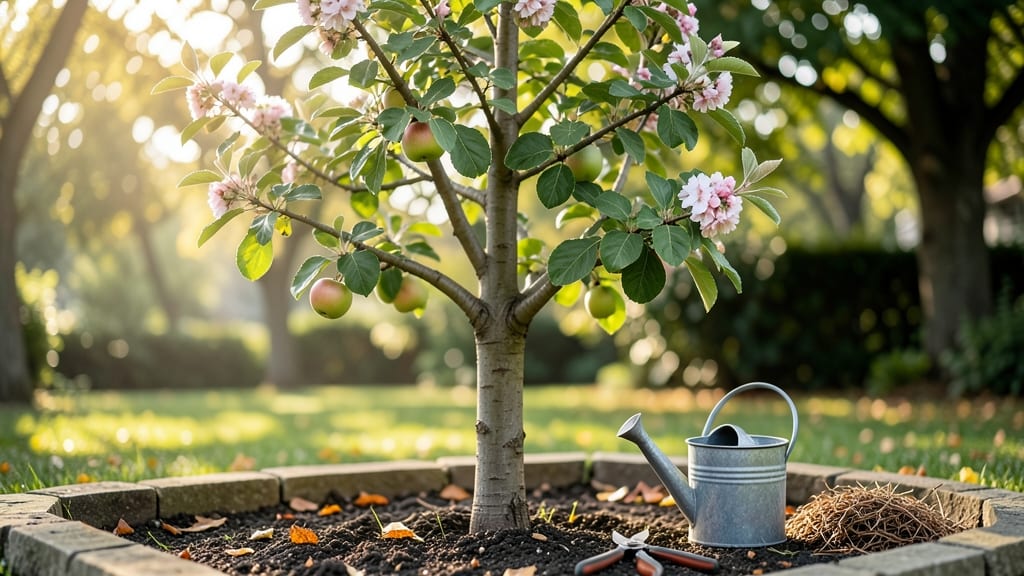
Growing a garden apple tree from seed or sapling lets you enjoy homegrown fruit in just a few years—even in small spaces. I’ve watched my dwarf Honeycrisp go from a foot-tall sapling to a bushy 6-foot tree producing bushels of crisp apples, all on my tiny urban lot.
The secret isn’t luck; it’s choosing the right variety, planting in the perfect spot, and giving it consistent care.
You’ll need a sunny location with at least 6-8 hours of light daily, well-draining soil, and a pollination partner if growing from seed (or a self-pollinating variety like ‘Liberty’). Dwarf trees thrive in containers too—just pick a 5-gallon pot for young saplings and upgrade as they grow.
The upfront work pays off when you’re harvesting juicy, flavorful apples by your third or fourth year.
Pruning in late winter keeps the tree compact and productive, while a thin layer of mulch retains moisture and suppresses weeds. Watch for apple scab and codling moths—both are common pests, but neem oil and row covers keep them at bay.
With the right care, your tree will reward you with years of harvests and the pride of growing something truly special.
Whether you’re planting in the ground or a large pot, this method works for any climate where apples grow. The key is patience—apple trees take 3-5 years to bear fruit, but once they do, they’ll keep producing for decades. Let’s get your orchard started!
📚 In This Guide
- What you need
- Instructions
- Tips and common mistakes
- Wrapping up and next steps
What you need
- ● Dwarf apple tree sapling: 1 tree (choose a dwarf variety like ‘Liberty,’ ‘Honeycrisp,’ or ‘Fuji’ for compact growth—typically 6–10 ft tall at maturity).
- ● Ensure it’s rootstock-compatible with your climate zone (e.g., M.9 for cold regions, B.9 for warmer areas).
- ● Planting site: Full sun (6–8+ hours of direct sunlight daily).
- ● Well-draining soil (pH 6.0–7.0; amend with compost if needed).
- ● Space: 6–8 ft apart (or follow rootstock spacing guidelines).
- ● Tools: 1 shovel or trowel (for digging).
- ● 1 garden fork (to loosen soil).
- ● 1 pruning shears (sterilized, sharp).
- ● 1 watering can or hose (with gentle nozzle).
- ● Soil amendments: 5–10 lbs of organic compost or aged manure.
- ● 1 cup of balanced fertilizer (10-10-10 or 5-10-10, low in nitrogen).
- ● Mulch: 2–3 inches of wood chips, straw, or shredded bark (keep 6 inches away from trunk).
- ● Pollination: A second dwarf apple tree of a compatible variety (e.g., ‘Gala’ + ‘Honeycrisp’) for cross-pollination.
- ● Tree supports: 1–2 stakes or cages (if planting in windy areas).
- ● Drip irrigation system: For consistent watering (especially in dry climates).
- ● Tree guard: 1 wire mesh cylinder (to protect from rodents or deer).
- ● Pest control: Neem oil, copper spray, or beneficial insects (like ladybugs).
- ● Seasonal care: Slow-release fruit tree fertilizer (spring/fall).
Step-by-Step instructions for planting and cultivating a dwarf apple tree
Here's how to establish a thriving, space-efficient apple orchard in your backyard.
Select and Prepare the Planting Site
Choose a location with 6-8 hours of direct sunlight daily—apple trees need full sun to develop sweet, flavorful fruit. Avoid low spots where cold air settles, as young trees are vulnerable to frost damage. I always test the soil pH first; apple trees thrive in slightly acidic soil with a pH between 6.0 and 7.0. If your soil is too alkaline, amend it with sulfur or peat moss before planting.
The site should also have well-draining soil. If your yard has heavy clay, mix in 2-3 inches of compost and 1 inch of coarse sand to improve drainage. Dig a hole that's twice as wide but only as deep as the root ball—this encourages roots to spread horizontally rather than settling too deeply.
Plant the Dwarf Apple Tree at the Right Depth
Remove the tree from its container and gently loosen the roots if they're circling. Place the tree in the hole so the graft union (the bump where the scion was attached to the rootstock) sits 2-3 inches above the soil line. This prevents the union from being buried, which can cause the tree to grow like a suckering rootstock rather than producing fruit.
Backfill the hole with the native soil you removed, tamping it lightly every 6 inches to eliminate air pockets. Water deeply to settle the soil around the roots, then create a 4-inch-high berm around the base to direct water toward the root zone. Mulch with 2-3 inches of organic mulch (like wood chips or straw), keeping it 6 inches away from the trunk to prevent rot.
Water and Fertilize for Strong Early Growth
Water the tree deeply twice a week for the first 4-6 weeks to encourage root establishment. You'll know it's getting enough moisture when the soil feels damp 6 inches below the surface. Overwatering at this stage can suffocate roots, so avoid soggy conditions. After the initial period, reduce to once a week unless rainfall provides 1 inch of moisture.
Apply a balanced, slow-release fertilizer (like 10-10-10) at planting time, following the package instructions. In early spring of the second year, switch to a fruit-tree-specific fertilizer with higher nitrogen for leaf growth and potassium for root development. Avoid high-nitrogen fertilizers in late summer—they promote tender new growth that can't harden off before winter.
Prune and Train for Structure
Prune your dwarf apple tree in late winter or early spring before new growth begins. Remove any dead, crossing, or inward-growing branches first, then open the center of the tree to allow sunlight and air circulation. I like to shape dwarf trees into an open-center or central-leader form, depending on the variety. For dwarfs, aim to keep the height under 8 feet to maintain manageability.
Use sharp, clean pruners to make cuts just outside the branch collar (the swollen area where the branch meets the trunk). Avoid leaving stubs—this invites disease and weak growth. Thin out too many water sprouts (vigorous vertical shoots) to redirect energy into fruit production. After pruning, apply wound paint to cuts larger than ¼ inch to prevent disease entry.
Monitor and Protect Through the Growing Season
Watch for aphids, apple maggots, and codling moths—common pests that can devastate fruit. I use row covers in early spring to prevent moths from laying eggs, and horticultural oil in dormant season to smother overwintering pests. For organic control, spray neem oil or kaolin clay when fruit is pea-sized to deter pests without harming beneficial insects.
Thin fruit when it's golf-ball sized to improve size and quality. Leave 4-6 inches between apples on dwarf trees—overcrowding leads to small, misshapen fruit. Harvest when the fruit easily separates from the tree with a gentle twist and the skin has developed full color. Store in a cool (32-40°F), humid environment to extend shelf life.
Tips & tricks for perfect dwarf apple tree cultivation
Here's what I've learned from years of growing compact apple trees—these details make all the difference between a struggling sapling and a productive orchard.
Site Selection Wisdom: The 6-8 hours of direct sunlight requirement isn't just about quantity—it's about quality. South-facing locations get the most consistent sun exposure, but if your yard only has west-facing space, that can work too as long as it's protected from afternoon winds. I've found that morning sun helps prevent fungal issues by drying dew quickly, which is especially important for dwarf varieties that stay closer to the ground where moisture lingers.
Root Ball Preparation: When loosening circling roots in Step 2, don't go overboard—you just want to encourage outward growth, not damage the delicate root tips. I use my fingers to gently separate roots no more than 1-2 inches from the edges. This mimics natural root spread patterns and helps the tree establish faster. The key is to work quickly while the root ball is still moist from its container.
Watering Strategy: Those first 4-6 weeks of twice-weekly watering are critical, but timing matters just as much as frequency. Water in the morning so the foliage has all day to dry, which reduces disease risk. I set up a soaker hose on a timer for 20 minutes twice weekly during this period—it delivers consistent moisture without the shock of overhead watering. The 6-inch soil dampness check is your best indicator; if it's still dry, you need to adjust your watering schedule.
Pruning Precision: The late winter/early spring pruning window is non-negotiable for dwarf trees. Cold dormancy makes them less susceptible to shock, and you want to establish the framework before new growth begins. I mark my calendar for early February in most climates—this gives me time to finish before bud break. For water sprouts, I remove about 80% of them in the first year to redirect energy to fruit production rather than vertical growth.
Pro Tips for Grow A Garden Apple Tree
- Here's what I've learned from years of growing compact apple trees—these details make all the difference between a struggling sapling and a productive orchard.
- Site Selection Wisdom: The 6-8 hours of direct sunlight requirement isn't just about quantity—it's about quality.
- Root Ball Preparation: When loosening circling roots in Step 2, don't go overboard—you just want to encourage outward growth, not damage the delicate root tips.
Frequently asked questions
Got questions about growing your own dwarf apple tree? You’re not alone!
Here are answers to the most common concerns—from picking the right spot to troubleshooting pests. Let’s make your compact orchard a success!
How long does it take for a dwarf apple tree to bear fruit?
A dwarf apple tree typically starts producing fruit 2–4 years after planting, depending on the variety and care. Some early-bearing types (like ‘Columnar’ or ‘Semi-Dwarf’) may fruit even sooner—just be patient!
Can I grow a dwarf apple tree in a container?
Many dwarf varieties thrive in large containers (at least 15–20 gallons) with proper drainage. Just ensure it gets 6+ hours of sunlight daily and use well-draining potting mix. Rotate the pot occasionally for even growth.
Do dwarf apple trees need winter protection?
Dwarf trees are hardier than you think, but young trees or tender varieties (like ‘Red Delicious’) may need mulch or frost cloth in harsh winters. Avoid heavy snow buildup on branches—gently brush it off to prevent damage.
What’s the best way to prevent pests on a dwarf apple tree?
Start with healthy soil and regular pruning to improve airflow. Use neem oil or insecticidal soap for early pest detection (like aphids or codling moths). Bird netting can also protect ripe fruit from critters!
Can I grow just one dwarf apple tree, or do I need a pollinator?
Most dwarf apple trees require a pollinator (another variety blooming at the same time) for fruit set. Check the tag for compatibility—some self-pollinating types (like ‘Liberty’ or ‘Enterprise’) work solo!
Wrapping up and next steps
Growing your own dwarf apple tree is a rewarding journey that brings fresh, homegrown fruit to your doorstep—literally! 🍏 With the right variety, care, and a little patience, you’ll enjoy juicy, flavorful apples in just a few years, all while saving space.
Whether you’re a beginner or a seasoned gardener, this compact orchard blueprint makes it easier than ever to turn your backyard (or balcony!) into a fruitful haven.
Now that you’re armed with the know-how, take the next step—pick your favorite dwarf variety, grab your tools, and plant that tree! Start small, celebrate each milestone, and soon, you’ll be harvesting apples that taste like summer in every bite. Happy growing! 🌱