
Pruning
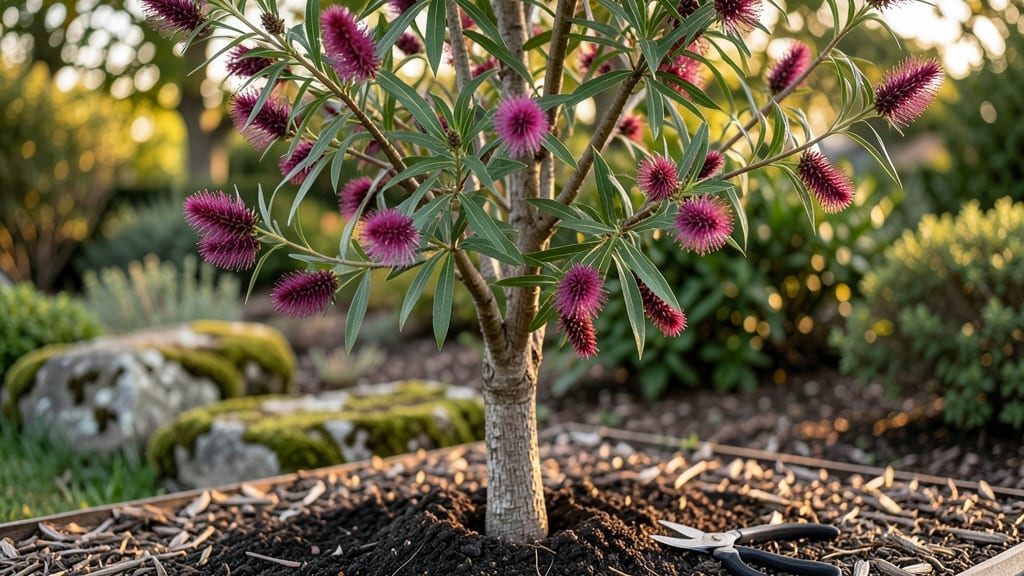
That first flush of purple bottle brush tree spikes in late winter is what makes pruning worth every minute. 🌿 I remember my first attempt—cutting too late, missing the right growth points, and ending up with a sad, leggy mess.
Now I know the exact timing and technique to keep those bold blue flowers coming year after year.
The secret isn't complicated: prune right after flowering but before new growth starts, and always cut back to a leaf node. This tree thrives on bold cuts—up to one-third of the plant if needed—because it rebounds with vigor.
Even in drought conditions, it rewards sharp pruners with dense, velvety foliage and those signature bottle-brush blooms.
What you'll end up with is a tree that looks like it belongs in a botanical garden, not just your backyard. The spikes stay bright and abundant from spring through fall, and the pruned shape opens up space for other plants below.
Plus, it handles shearing better than most natives, so you can shape it into a hedge if you prefer.
Works equally well in containers or as a standalone specimen, and handles heat and poor soil better than many ornamentals. Once you master the timing, you'll never look at a bottle brush tree the same way again—it becomes a year-round showstopper with minimal effort.
📚 In This Guide
- What you need
- Instructions
- Tips and common mistakes
- Wrapping up and next steps
What you need
- ● Pruning shears – Bypass pruners (sharp, 6-8" blades) for clean cuts on small branches.
- ● Loppers – For thicker branches (1-2" diameter), with a long handle (24-36") for reach.
- ● Pruning saw – For branches 2"+ in diameter, with a fine-tooth blade to avoid tearing.
- ● Garden gloves – Heavy-duty, cut-resistant (e.g., mechanized or leather) to protect hands from thorns and sap.
- ● Disinfectant (70% isopropyl alcohol or bleach solution) – 1 part bleach to 9 parts water to sterilize tools between cuts and prevent disease.
- ● Buckets or bags – 2-3 large containers for collecting pruned branches (compost or disposal).
- ● Step ladder or stump – Sturdy and tall enough to safely reach upper branches (check weight capacity!).
- ● Purple bottle brush tree – Healthy, mature plant (3+ years old) with bold blue flower spikes you’re ready to shape!
- ● Hand pruners (felco or ratchet-style) – For precision trimming on delicate branches.
- ● Pole pruner – Extendable tool for high branches without a ladder (10-12' reach).
- ○ Sealing wax or pruning paste – To protect large cuts from pests/disease (optional for small pruning jobs).
- ● Notebook & pen – To sketch a pruning plan before starting (great for beginners!).
- ● Safety goggles – If working near dense foliage or thorny areas.
Step-by-step pruning guide for your purple bottle brush tree
Here's how to keep your tree's signature blue flowers blooming beautifully all year.
✂️ Step 1: Prune After Flowering Season
Wait until your purple bottle brush tree has finished blooming—usually in late summer or early fall. This timing ensures you don't cut off next year's flower buds. Look for spent flower spikes that have turned brown and dried out; these are your first targets.
Use clean, sharp pruning shears to cut back the old flower spikes to just above the first set of healthy leaves. I always make my cuts at a 45-degree angle about ¼ inch above a leaf node—this prevents water from pooling and causing rot. If you're unsure where to cut, remember: you can't grow back what you prune, so err on the side of caution.
✂️ Step 2: Shape the Tree for Balance
Step back and assess your tree's overall shape. Purple bottle brush trees grow naturally with a slightly open, airy habit, so avoid heavy pruning that turns it into a dense ball. Focus on removing any crossing or rubbing branches—these create wounds where pests and diseases can enter.
For larger branches, use loppers to make clean cuts just outside the branch collar (the swollen area where the branch meets the trunk). If you're pruning to encourage more flowering, trim back one-third of the oldest stems to stimulate new growth. You'll notice fresh green shoots emerge within 4-6 weeks, signaling successful pruning.
✂️ Step 3: Thin Out Overcrowded Branches
Look for clusters of branches growing too close together. These compete for sunlight and nutrients, weakening the tree's overall health. Select the weakest or smallest branch in each cluster and remove it entirely at its base. This opens up the canopy and allows air to circulate, reducing the risk of fungal diseases.
I like to thin in stages—don't remove more than 20-25% of the tree's foliage in one session. If you're unsure which branches to cut, prioritize those growing inward or downward. After thinning, your tree should look like it has a natural, open framework with sunlight reaching the center.
✂️ Step 4: Clean Up and Monitor for New Growth
Once you've finished pruning, gather all the clippings and dispose of them properly. If you're concerned about pests or diseases, bag them and throw them away—don't compost them. Next, give your tree a light watering to help it recover from the stress of pruning.
Watch for new growth in the spring. Healthy purple bottle brush trees should produce bright green shoots within 2-3 weeks of pruning. If you notice yellowing leaves or stunted growth, it might mean you pruned too aggressively. In that case, hold off on heavy pruning until next year.
Tips & tricks for pruning your purple bottle brush tree
Here's what I've learned after years of working with these stunning trees to keep them thriving.
Timing is Everything: The late summer/early fall window is critical because that's when your tree has finished flowering for the season. If you prune too early, you risk cutting off next year's flower buds before they form. I've seen people accidentally prune in spring and end up with no blooms the following year—don't make that mistake! Look for those dried-out, brown flower spikes as your clear signal it's time to prune.
Cutting Technique Matters: That 45-degree angle cut you make about ¼ inch above a leaf node isn't just random—it's what prevents water from pooling and causing rot. I've seen too many pruning jobs where people made straight cuts and ended up with waterlogged wounds. Take your time with this step, especially on larger branches. And remember: you can't grow back what you prune, so when in doubt, leave it!
Encouraging New Growth: When you trim back one-third of the oldest stems, you're not just making your tree look better—you're stimulating fresh growth. I've noticed that trees pruned this way produce bright green shoots within 4-6 weeks, while those that weren't pruned properly might take months or not respond at all. This is your tree's way of saying "thank you" for giving it a little encouragement!
Spring Growth Check: Those bright green shoots you should see within 2-3 weeks after pruning are your best indicator of success. If you're not seeing them, it might mean you pruned too aggressively. In that case, hold off on heavy pruning until next year. I've learned this the hard way—once, I pruned too much and my tree took an entire season to recover. Now I always play it safe and thin gradually.
Pro Tips for Purple Bottle Brush Tree
- Here's what I've learned after years of working with these stunning trees to keep them thriving.
- Timing is Everything: The late summer/early fall window is critical because that's when your tree has finished flowering for the season.
- Cutting Technique Matters: That 45-degree angle cut you make about ¼ inch above a leaf node isn't just random—it's what prevents water from pooling and causing rot.
Frequently asked questions
Got questions about keeping your Callistemon citrinus (purple bottle brush tree) looking its best?
Here are the answers to the most common ones—so you can prune with confidence and enjoy those vibrant blooms all year!
When is the best time to prune a purple bottle brush tree?
The ideal time to prune is late winter or early spring, just before new growth begins. This helps shape the tree and encourages fresh blooms. For light shaping, you can also prune after flowering (summer or early fall) to maintain its form without sacrificing next year’s spikes. Avoid heavy pruning in fall, as it may stimulate tender growth vulnerable to cold.
How hard can I prune my purple bottle brush tree?
These trees are highly resilient and can handle moderate to hard pruning if needed. For rejuvenation, you can cut back up to ⅓ of the tree’s height in late winter. Just avoid over-pruning—never remove more than ⅓ of the foliage in a single session, or you risk stressing the tree. Younger trees benefit from light annual pruning to encourage bushier growth.
What if my purple bottle brush tree isn’t blooming?
Lack of blooms often stems from over-pruning in fall/winter or nutrient deficiencies. To fix it:
- Prune after flowering (never in late winter if you want spring blooms).
- Fertilize with a balanced, phosphorus-rich fertilizer (like 10-10-10) in early spring.
- Ensure it gets full sun (6+ hours/day)—shady spots reduce blooms.
- Check for pests (like scale) or fungal issues, which can stress the tree.
Can I prune a purple bottle brush tree in cold climates?
Yes, but time it right! In colder zones (USDA 8-10), prune after the last frost (late winter/early spring) to avoid damaging dormant buds. If you must prune in fall, do so 6+ weeks before the first frost and avoid heavy cuts. In frost-prone areas, light pruning in late winter (when temps are above freezing) is safest.
What’s a good alternative if I can’t grow a purple bottle brush tree?
If your climate is too cold (below USDA Zone 8) or you want similar bold color, try these low-maintenance alternatives:
- Coral Bells (Heuchera): Adds vibrant foliage (purples, reds) and thrives in partial shade.
- Salvia (Salvia microphylla): Drought-tolerant with purple spikes and long blooming seasons.
- Dwarf Bottle Brush (Callistemon viminallis): A hardier, compact version (Zone 7+).
- Lantana (Lantana camara): Heat-loving annual with purple blooms (great in containers!).
Pro Tip:
Use sterilized pruners (rubbing alcohol or bleach solution) to prevent bacterial infections like canker disease. And never prune when the tree is wet—this spreads sap-borne diseases. A sharp pair of bypass pruners makes clean cuts that heal faster!
Wrapping up and next steps
The purple bottle brush tree is a stunning addition to any landscape, and with the right pruning techniques, you can keep its vibrant blue spikes thriving year-round. Remember to prune in late winter or early spring, use clean tools, and shape it gently to encourage fuller growth.
Now that you’re armed with the know-how, go ahead and give your tree the care it deserves! 🌿 Try experimenting with different pruning styles to see what works best for your climate and space. Happy gardening!