
Pruning
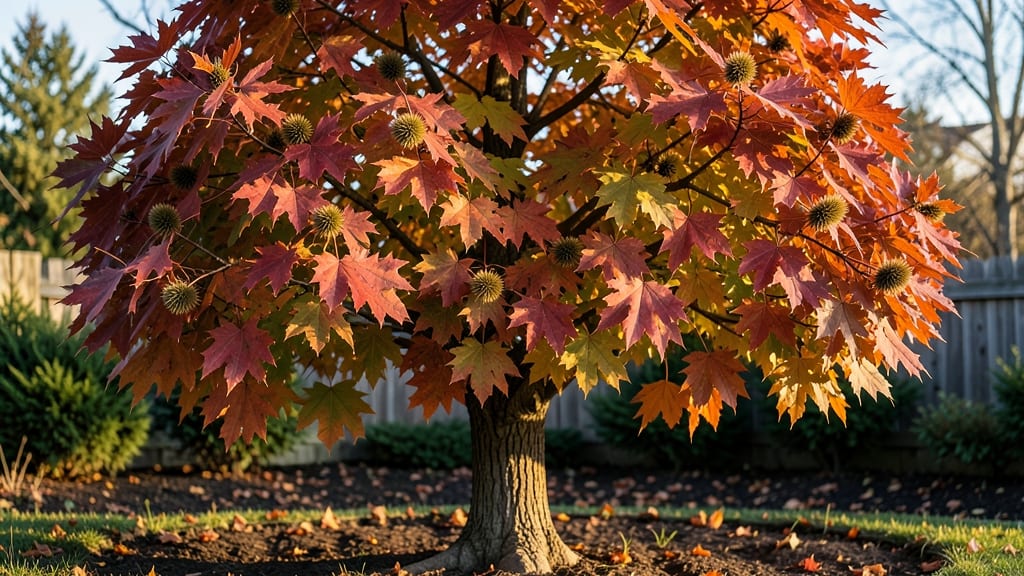
The slender silhouette sweetgum tree transforms any garden into a living sculpture with its graceful, upright form and delicate branching. 🌿 Unlike its bushy cousins, this cultivar grows in a narrow, columnar shape—perfect for tight spaces or as a dramatic vertical accent.
The moment I spotted one in a city park, I knew it would redefine my backyard’s focal point.
What makes it truly special is how its fall foliage—deep burgundy and gold—pops against evergreens or dark foliage. The airy canopy lets light filter through, creating dappled shadows that dance across patios.
At 20-30 feet tall but only 10-15 feet wide, it fits seamlessly into mixed borders or urban landscapes without overwhelming smaller gardens.
Pruning isn’t just about maintenance—it’s about sculpting that signature silhouette. A few strategic cuts each year keep its elegant shape while encouraging dense, upward growth. The result?
A tree that feels like a natural work of art, year-round. Imagine it framing a doorway, anchoring a pollinator garden, or standing sentinel in a courtyard.
This tree thrives in full sun to partial shade and handles city pollution better than many others. Whether you’re designing a modern minimalist garden or a lush cottage-style retreat, its versatile structure and seasonal drama make it a standout. Ready to see how it can elevate your outdoor space?
📚 In This Guide
- What you need
- Instructions
- Tips and common mistakes
- Wrapping up and next steps
What you need
- ● Pruning shears: Bypass pruners (sharp, 6–8" blades) for clean cuts on small branches.
- ● Loppers: 1 pair (8–12" cutting capacity) for thicker branches (½"–1.5" diameter).
- ● Pruning saw: 1 lightweight saw (for branches >1.5" diameter).
- ● Disinfectant: 70% isopropyl alcohol or rubbing alcohol (for sterilizing tools between cuts).
- ● Heavy-duty gloves: 1 pair (cut-resistant, long sleeves for protection).
- ● Ladder or step stool: Sturdy, extendable (ensure it supports your weight + tools).
- ○ 5-gallon bucket + water: For collecting debris (optional but handy!).
- ● Sharpie marker: Permanent (to mark branches for removal if planning ahead).
- ● Pole saw: Extendable for high branches (if your tree is tall!).
- ● Tree wound dressing: Pruning sealant (controversial—skip if you prefer natural healing!).
- ● Work apron/pouch: To carry small tools and debris.
- ● Camera or sketchbook: Document your progress (or plan cuts beforehand!).
- ● Safety glasses: For debris protection (especially if sawing).
Step-by-step guide to pruning sweetgum trees for an airy canopy
Transform your sweetgum into a graceful, open-grown specimen with this precision pruning method.
🌿 Step 1: Assess the Tree Structure and Identify Target Branches
Start by examining the tree's overall form from all sides. Sweetgums naturally develop dense canopies, so your goal is to create an open, airy silhouette by removing branches that compete for space or grow inward. Look for branches that cross others, grow straight up from the trunk, or create a crowded "V" shape with another branch.
Use your hands to gently trace each branch's path through the canopy. You'll feel where branches intersect or where one branch blocks light from reaching another. These are your primary candidates for removal. Focus first on branches that are less than 3 inches in diameter—thinner branches are easier to remove without causing significant stress to the tree.
✂️ Step 2: Make Clean Cuts at the Right Locations
Never remove more than 25% of the tree's canopy in a single pruning session to avoid shocking the tree. For each branch you're removing, locate the branch collar—the swollen area where the branch meets the trunk or another branch. This collar contains protective tissues that help the tree seal the wound.
Make your cut just outside the branch collar, using sharp bypass pruners for branches under ½ inch thick or a pruning saw for thicker branches. Avoid leaving stubs—these invite disease and weaken the tree. Angle your cut slightly away from the branch collar to prevent water from pooling and rotting the wound.
☀️ Step 3: Thin the Canopy for Light Penetration and Airflow
Step back and visualize the tree's final structure. Your goal is to create a canopy where light can filter through to the lower branches, encouraging even growth. Remove branches that grow directly upward from the trunk—these create a "bottle brush" effect and block light from reaching the interior of the tree.
Pay special attention to the tree's scaffold branches—the main structural branches that form the framework of the canopy. These should be spaced 8-12 feet apart along the trunk and should be well-attached (no weak crotches). If a scaffold branch is weak or poorly attached, remove it entirely and redirect growth to stronger branches.
💧 Step 4: Prune for Seasonal Health and Long-Term Growth
Sweetgums bleed sap heavily when pruned in late winter or early spring, but this isn't harmful. However, the best time to prune for an airy canopy is late winter to early spring, just before new growth begins. This allows the tree to heal before the growing season and ensures you can see the full structure of the branches.
After pruning, monitor the tree for signs of stress, such as wilting leaves or oozing sap. If you notice excessive sap bleeding, apply a pruning sealant to larger wounds (over 2 inches in diameter) to protect the tree. Avoid over-pruning—your goal is to shape, not to strip the tree of its foliage. A well-pruned sweetgum should still retain 60-70% of its branches after the process.
Tips & tricks for perfect sweetgum tree pruning
Transforming your sweetgum into an elegant, airy silhouette takes precision—not brute force. Here's what I've learned after years of shaping these majestic trees without causing stress.
Visualize First: Before making a single cut, step back and study the tree's natural growth patterns. Sweetgums grow in a pyramid shape, so your goal is to create an inverted cone where light can filter through the center. I find it helpful to sketch a rough outline of the branches I want to remove using chalk on the trunk—this gives me a clear reference point and prevents over-pruning. Remember, we're aiming to remove branches that are less than 3 inches in diameter first, as these are easier to manage without shocking the tree.
Tool Selection Matters: Using the right tool for each branch size makes all the difference. For branches under ½ inch thick, sharp bypass pruners are ideal—they make clean cuts that heal faster. For anything thicker, switch to a pruning saw with a fine-tooth blade. I've ruined several cuts trying to force thick branches through pruners, which can tear the bark and create larger wounds. Pro tip: Wipe your tools with rubbing alcohol between cuts to prevent spreading disease.
Branch Collar Preservation: The branch collar is your tree's natural healing mechanism, so never cut flush with the trunk. Instead, make your cut just outside the collar, leaving about ¼ inch of space. This small detail prevents water from pooling in the wound and gives the tree the best chance to seal itself. I've seen trees develop cankers from improper cuts, so this step is non-negotiable for long-term health.
Seasonal Timing Strategy: Late winter to early spring is the ideal window for pruning sweetgums because the tree is dormant but will soon burst with new growth. The cold weather also reduces sap flow, making cuts cleaner and easier to seal. If you must prune outside this window, avoid extreme heat—summer pruning can stress the tree and attract pests. I've learned this the hard way after seeing a tree I pruned in July develop fungal issues.
Pro Tips for Slender Silhouette Sweetgum Tree
- Transforming your sweetgum into an elegant, airy silhouette takes precision—not brute force.
- Visualize First: Before making a single cut, step back and study the tree's natural growth patterns.
- Tool Selection Matters: Using the right tool for each branch size makes all the difference.
Frequently asked questions
Got questions about pruning your slender silhouette sweetgum tree for that dreamy, airy canopy? You’re not alone!
Here are answers to the most common queries—so you can prune with confidence and keep your tree looking effortlessly elegant.
When is the best time to prune a sweetgum tree for a slender silhouette?
The ideal window is late winter to early spring (before buds swell), when the tree is dormant but not yet actively growing. Avoid pruning in fall—it can stimulate late-season growth vulnerable to frost damage. For minor shaping, summer pruning (after 60% of leaves emerge) works, but it may spur excessive growth. Pro tip: Never prune in extreme heat or drought!
How much can I trim off without harming the tree?
For a slender silhouette, aim to remove no more than 25% of the tree’s foliage per year. Sweetgums are resilient, but aggressive pruning can stress the tree or encourage weak, leggy growth. Focus on selective thinning—target crossing branches, dead wood, or inward-growing limbs first. If you’re unsure, start small and monitor the tree’s response over 1–2 seasons.
Will pruning my sweetgum tree reduce its iconic spiky seed pods?
Pruning won’t eliminate seed pods entirely, but strategic cuts can reduce their impact. Remove pods by pruning last year’s growth (water sprouts) where they form most heavily. For a low-mess landscape, prioritize pruning in early spring to minimize pod production. Just be prepared—they’re part of the tree’s charm!
Are there alternatives to sweetgum trees for a similar airy look?
If sweetgums aren’t your style, consider these low-maintenance, slender-canopied trees:
- Southern magnolia – Glossy leaves and fragrant blooms (but needs more space).
- Japanese Zelkova – Exfoliating bark and fine texture; drought-tolerant.
- Crape myrtle – Summer flowers and smooth bark (great for small yards).
- Eastern redbud – Spring blooms and heart-shaped leaves (smaller stature).
My sweetgum’s branches are dying—what should I do?
Dead or dying branches are a red flag! Start by removing the affected limbs entirely (cut back to the collateral branch or trunk). Check for:
- Fungal infections (e.g., anthracnose) – Prune in dry weather and sterilize tools.
- Pests (e.g., scale insects) – Use horticultural oil if infestation is mild.
- Environmental stress (e.g., compacted soil, drought) – Improve drainage and water deeply.
Wrapping up and next steps
The slender silhouette sweetgum tree can be your garden’s elegant centerpiece with the right pruning approach—think structured beauty meets low-maintenance charm! 🌿 By mastering selective cuts, seasonal timing, and tool care, you’ve unlocked the secrets to a graceful, airy canopy that thrives year after year.
Now that you’re armed with knowledge, roll up your sleeves and give your sweetgum tree the TLC it deserves. Start with a single branch this weekend—confidence grows with every snip! For deeper dives, explore local arborist workshops or dive into sustainable landscaping guides to keep your green thumb shining.