
Pruning
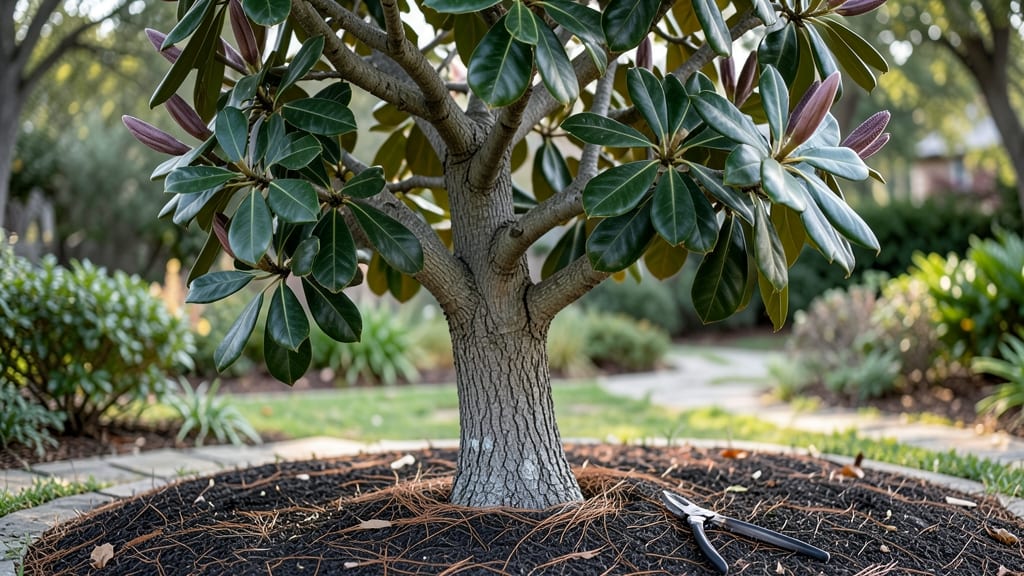
Those pink southern magnolia tree buds are nature’s promise of summer—when they bloom, your yard will smell like a tropical paradise. 🌸 I’ve watched my own magnolia go from bare branches to a canopy of fragrant white blooms, and the secret lies in understanding when and how to prune without harming next year’s buds.
Most gardeners wait until late winter or early spring, but timing is everything—cut too early, and you risk removing next season’s flower buds. The key is patience: prune after the tree finishes blooming but before new growth hardens off, usually in late May to June.
Avoid heavy pruning in fall or winter when the tree is dormant.
What you’ll end up with is a tree that bursts with hundreds of blooms each spring, their creamy-white flowers releasing that intoxicating scent. The buds themselves are tough—drought and heat won’t stop them—but proper pruning keeps the tree’s energy focused on growth, not repair.
This method works for both young trees and mature giants, though larger specimens may need a ladder. The payoff? A magnolia that lives for decades, thriving in heat and humidity while other trees struggle. Ready to unlock its full potential?
📚 In This Guide
- What you need
- Instructions
- Tips and common mistakes
- Wrapping up and next steps
What you need
- ● Pruning shears: Bypass pruners (sharp, 6–8" blades) for clean cuts on small branches.
- ● Loppers: Bypass or anvil type (18–24" handles) for thicker branches (1–2" diameter).
- ● Pruning saw: Curved-tooth saw for branches thicker than 2" (avoid jagged cuts!).
- ● Disinfectant: 70% isopropyl alcohol or bleach solution (1 part bleach : 9 parts water) to sterilize tools between cuts.
- ● Gloves: Heavy-duty, cut-resistant (gardening or pruning-specific) to protect hands.
- ● Safety glasses: ANSI-rated to shield eyes from debris.
- ● Ladder: Sturdy, extendable (20–30 ft) with a non-slip base for taller trees.
- ● Heavy-duty trash bags: 30–50 gallon for collecting pruned branches.
- ○ Pruning sealant: Optional but helpful (e.g., Tanglefoot Tree Wound Pruning Seal) for large cuts.
- ● Extension pole: For loppers/saw to reach higher branches safely.
- ● Pole pruners: For ultra-high branches (if ladder access is tricky).
- ● Work boots: Steel-toe or waterproof for stability on uneven ground.
- ● Tree wrap: For protecting bark if rubbing occurs post-pruning.
- ● Notebook & pen: To sketch a pruning map of your tree’s structure.
Step-by-step guide to pruning southern magnolia buds
Here's how I keep my magnolia blooming bigger and more fragrant every year—without stressing the tree.
✂️ Step 1: Identify the Right Time to Prune
Prune your southern magnolia immediately after flowering, when the blooms have fully fallen but before new buds form. This timing ensures you don't accidentally cut off next year's flowers. I aim for late March to early April in my zone 8 garden—right when the last petals drift to the ground.
Look for bare branches with no leaves or buds—these are safe to trim. Avoid pruning in late summer or fall, as new growth won't harden off before winter. If you miss the window, wait until late winter before buds swell, but this reduces next year's bloom count.
🌿 Step 2: Remove Dead, Diseased, or Crossing Branches
Start by inspecting the tree for dead wood—branches that snap easily, have no bark, or ooze sap when cut. Use sharp pruning shears to make clean cuts just outside the branch collar (the swollen area where the branch meets the trunk). I always sterilize my tools with rubbing alcohol between cuts to prevent spreading disease.
Next, remove any branches that cross or rub against each other. These create wounds that invite pests and diseases. Cut back to the branch collar at a 45-degree angle if the branch is thicker than ½ inch. For thinner branches, a straight cut works fine. Watch for buds along the branch—never cut into a bud, as it will die.
☀️ Step 3: Thin the Canopy for Better Airflow
Southern magnolias naturally grow dense, so I focus on thinning the canopy to improve airflow and light penetration. Look for branches growing inward or downward and remove 10-20% of the total branches to open up the center. Start from the bottom and work upward to maintain the tree's natural shape.
When thinning, prioritize branches that are thinner than pencil-sized—they're easier to remove without causing stress. Avoid "heading back" (cutting back to a lateral branch), as magnolias bloom on old wood and this practice reduces flower production. Step back frequently to check your progress—you want sunlight to reach the inner branches.
⏰ Step 4: Clean Up and Monitor for New Growth
After pruning, rake up all debris and dispose of it in the trash—not the compost—since diseased branches can spread pathogens. I also apply a copper fungicide spray as a preventative measure, especially if my tree has had issues with anthracnose in past years.
Watch for new growth within 3-4 weeks. Healthy new shoots should emerge from the branch collars of the cuts you made. If you see no new growth after 6 weeks, the cuts may have been too severe. Water deeply around the base to encourage recovery, and avoid fertilizing for 6-8 weeks—the tree needs time to heal.
Tips & tricks for pruning southern magnolia buds
Between us, pruning magnolia buds is where the magic happens for those showstopping blooms. Here's what I've learned after years of trial and error—tricks that'll keep your tree thriving.
Timing is Everything: That late March to early April window is non-negotiable for zone 8 gardens. I mark my calendar for when the last petals hit the ground—usually about 2-3 weeks after peak bloom. If you're in a different zone, adjust by about 2 weeks earlier for cooler climates or later for warmer ones. The key is catching that moment when new buds haven't started swelling yet.
Tool Preparation Matters: Sterilizing your pruning shears between cuts is more important than you might think. I keep a small bottle of rubbing alcohol handy and wipe down blades after every 3-4 cuts, especially when dealing with diseased branches. This simple step prevents spreading anthracnose and other fungal issues that can weaken your tree. Also, make sure your shears are sharp—dull blades crush branches instead of making clean cuts.
Visual Cues for Healthy Cuts: When making those 45-degree cuts on branches thicker than ½ inch, look for the branch collar—the swollen area where the branch meets the trunk. Your cut should be just outside this collar, leaving a small bump. This natural feature helps the tree seal the wound faster. For thinner branches, aim for a straight cut that doesn't leave any stubs—those little nubs are perfect hiding spots for pests.
Post-Pruning Recovery: After all that work, don't forget the 6-8 week fertilizer break. Your tree is already stressed from pruning, and adding nutrients too soon can actually hinder healing. Instead, focus on deep watering every 7-10 days. I water mine until the soil is moist about 12 inches down—you can check this by inserting a screwdriver. The goal is to help the tree establish new roots without overwhelming it.
Pro Tips for Southern Magnolia Tree Buds
- Between us, pruning magnolia buds is where the magic happens for those showstopping blooms.
- Timing is Everything: That late March to early April window is non-negotiable for zone 8 gardens.
- Tool Preparation Matters: Sterilizing your pruning shears between cuts is more important than you might think.
Frequently asked questions
When is the best time to prune Southern magnolia buds for optimal bloom?
The ideal window is late winter or early spring (just before buds swell but before they break). Avoid pruning in fall—it can encourage tender new growth that’s vulnerable to cold. For heavy shaping, prune in stages to minimize stress. Pro tip: Never prune after June, as it may reduce next year’s blooms!
Why aren’t my Southern magnolia buds opening? Could it be cold damage?
Southern magnolias are hardy but sensitive to late frosts. If buds appear mushy or blackened, frost likely damaged them. Wait until buds firm up (usually by mid-spring) before panicking—new growth may still emerge. For prevention, mulch the base and water deeply in droughts. Watch for: brown, shriveled buds (frost) vs. dry, papery buds (drought).
Can I prune Southern magnolia buds to encourage thicker foliage?
Prune selectively—remove 1/3 of the oldest, leggy branches to redirect energy to younger growth. Focus on outward-facing buds to open the canopy. Avoid "topping" (cutting the main stem)—this stresses the tree. Bonus: Pruning in layers (start with small cuts) reduces shock and promotes bushier regrowth.
Are my Southern magnolia buds being eaten by pests? How do I fix it?
Look for magnolia scale, webworms, or borers. Scale leaves sticky residue; webworms create silk tents. Treat with neem oil (early stages) or insecticidal soap. For borers, inject systemic insecticide into holes. Prevent pests by keeping the tree healthy—water deeply and mulch to deter infestations.
What’s a good alternative if my Southern magnolia buds aren’t thriving?
If your tree struggles, consider closely related varieties like Saucer Magnolia (Magnolia × soulangeana) (earlier blooms) or Little Gem (evergreen, compact). For fragrance, try Sweetbay Magnolia. All three are low-maintenance and pest-resistant. Key difference: Southern magnolias are evergreen; others may be deciduous.
Wrapping up and next steps
Your Southern magnolia tree’s buds are the key to its stunning blooms and lush foliage—and now you’ve got the pruning know-how to nurture them! With the right tools, timing, and techniques, you’ll encourage vibrant growth, fragrant flowers, and a healthier tree for years to come. 🌿✨
Ready to put your new skills to work? Mark your calendar for late winter or early spring—the perfect time to prune—and watch your magnolia thrive with minimal effort. Happy gardening!