
Pruning
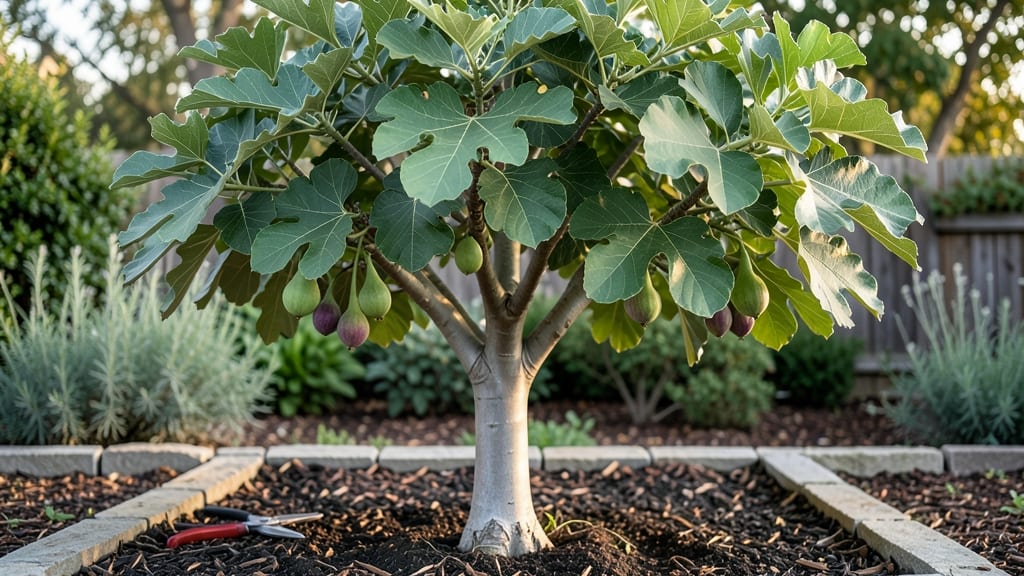
Pruning your tiger fig tree isn’t just about shaping—it’s about unlocking that bold, striped growth you fell in love with. I’ve learned the hard way that skipping pruning turns those dramatic leaves into a tangled mess, but three well-timed cuts a year keep it lush and bushy.
The secret? Timing matters more than technique, and I’ll show you exactly when to reach for those shears.
This hardy plant thrives indoors or out, but its care hinges on three key cuts: a light trim after winter dormancy, a mid-summer shape-up, and a late-season cleanup before cooler weather sets in.
You’ll need sharp pruners, a clean workspace, and about 20 minutes—that’s it. No fancy tools, no guesswork, just strategic snipping to encourage fuller foliage and stronger stems.
What you’ll end up with is a tiger fig tree that looks like it belongs in a botanical garden, not just your living room. Those signature variegated leaves will pop against the background, and the plant will grow faster and fuller than ever.
Plus, you’ll avoid the dreaded leggy look that turns heads for all the wrong reasons.
Works for both potted plants and garden beds, and adapts to low-light conditions better than most. Let’s get those cuts right—your plant’s future depends on it.
📚 In This Guide
- What you need
- Instructions
- Tips and common mistakes
- Wrapping up and next steps
What you need
- ● Bypass pruners: Sharp, clean pair (for cuts under ½ inch thick). Pro tip: 💡 Sterilize with rubbing alcohol to prevent disease!
- ● Loppers: Heavy-duty, long-handled (for branches ½–2 inches thick).
- ● Pruning saw: Curved-tooth blade (for branches over 2 inches thick).
- ● Gloves: Heavy-duty, cut-resistant (tiger fig thorns are serious!).
- ● Disposable pruning bags: 3–5 (to collect debris and thorns safely).
- ● Rubbing alcohol (70%+) or bleach solution: 1:10 ratio (for sterilizing tools).
- ● Hose or spray bottle: With water (to clean tools and wounds).
- ● Pruning sealant: (For large cuts—controversial but some swear by it!)
- ● Extension pole: With pruners attached (for high branches).
- ● Labeling tags: (To mark cuts if training the tree).
- ● Compost bin: (For repurposing pruned branches).
- ● 🌡️ Best weather: Prune on a dry, overcast day (avoid midday heat).
- ● 📅 Timing: Follow the 3 strategic cuts (dormant season, post-fruit, and shaping cuts).
- ● 👀 Safety first: Wear long sleeves/pants—tiger fig thorns hurt!
How to prune a tiger fig tree for year-round vigorous growth
This three-cut system keeps your tree lush, productive, and pest-resistant all year.
Winter Dormancy Pruning for Structural Health
Start in late winter, just before new growth begins. Look for branches that crossed, grew inward, or died back completely—these are your first targets. I always begin with the 30% rule: remove no more than 30% of the canopy at once to avoid shocking the tree. Use sharp, clean pruners to make cuts at a 45-degree angle, just above a leaf node or outward-facing bud.
The key here is to open up the center of the tree. Tiger figs naturally grow dense, so you're creating airflow that prevents fungal issues. If you see any dead or diseased branches, cut them back to healthy wood immediately. Don't leave stubs—this invites rot and weakens the tree's structure. After pruning, wipe your tools with rubbing alcohol to prevent spreading any potential pathogens between cuts.
Post-Harvest Summer Pruning for Fruit Production
After your main harvest season, typically in late summer, focus on shaping the tree and encouraging next year's fruit. Remove any branches that produced fruit this year—they've expended their energy. Look for suckers (those small shoots growing from the base or along the trunk) and thin them out, keeping only 2-3 of the strongest. These suckers compete with the main tree for nutrients, so pruning them now redirects energy to fruit production.
This is also when you address any branches growing toward the center. A good rule of thumb: if you can see sunlight through the canopy, you need to prune more. Make your cuts just above an outward-facing bud to encourage new growth in the right direction. Water the tree deeply after pruning to help it recover and reduce stress. You'll notice new leaves emerging within 2-3 weeks—that's your sign the tree is responding well.
Light Maintenance Pruning Throughout the Growing Season
Between the major cuts, keep an eye out for any branches that look crowded, damaged, or diseased. Grab your pruners and remove anything that's growing in an awkward direction or rubbing against other branches. The goal here is to maintain the shape you established in the winter and summer pruning. I like to do this on a monthly basis during the growing season—it keeps the tree looking tidy and prevents any small issues from becoming big problems.
Pay special attention to the tips of branches. If you see any that are growing too long or leggy, trim them back to encourage bushier growth. Always make your cuts just above a leaf node or bud. This light maintenance pruning is about refinement, not drastic changes. You'll know you're doing it right when the tree looks balanced and full, with sunlight able to reach all parts of the canopy. This consistent care leads to healthier leaves, better fruit production, and a more attractive tree overall.
Tips & tricks for perfect tiger fig tree pruning
These strategic insights will help you maintain a thriving tiger fig tree throughout the year while avoiding common pitfalls that can stress your plant.
Timing is Everything: Late winter pruning during dormancy is critical because the tree's energy reserves are at their peak. I've seen gardeners make the mistake of pruning too early or too late—both can shock the tree. Aim for just before buds begin to swell, which is typically 4-6 weeks before your last expected frost date. This timing allows the tree to heal quickly before new growth begins.
Pruning Technique That Makes a Difference: When making your 45-degree cuts in Step 1, always look for outward-facing buds. These buds will grow away from the center of the tree, creating a more open canopy. I learned this the hard way after years of pruning without checking bud direction—my trees ended up with dense centers that blocked sunlight and encouraged fungal growth. A good trick is to use a small flashlight to inspect buds in low light.
Understanding the 30% Rule: The 30% canopy removal guideline isn't arbitrary—it's based on how much foliage a tiger fig can comfortably regrow. After pruning more than this in one session, I noticed my trees took an extra 2-3 weeks to recover, with some branches showing dieback. If you're unsure how much you've removed, take photos before and after pruning to track your progress visually.
Post-Pruning Care That Boosts Recovery: Deep watering after each major pruning session is essential, but timing matters. Water immediately after pruning, then again 3-4 days later. This two-step approach helps establish new root growth while preventing water stress. I've also found that applying a balanced fertilizer 2 weeks after summer pruning gives the tree the nutrients it needs to produce new leaves within that critical 2-3 week window.
Pro Tips for Tiger Fig Tree
- These strategic insights will help you maintain a thriving tiger fig tree throughout the year while avoiding common pitfalls that can stress your plant.
- Timing is Everything: Late winter pruning during dormancy is critical because the tree's energy reserves are at their peak.
- Pruning Technique That Makes a Difference: When making your 45-degree cuts in Step 1, always look for outward-facing buds.
Frequently asked questions
Got questions about pruning your Ficus carica "Tiger Fig" tree? You’re not alone!
Here are the most common concerns—and straightforward answers to keep your tree thriving year-round.
When is the best time to prune a Tiger Fig tree?
The ideal times are late winter/early spring (before new growth) and right after harvest to encourage fruit production. Avoid heavy pruning in summer—it can stress the tree. Light shaping (removing dead branches) is safe anytime, but major cuts disrupt the tree’s energy reserves.
Can I prune my Tiger Fig tree in fall?
Fall pruning is risky because new growth may not harden off before winter, leaving it vulnerable to frost damage. If you must prune, do so 4–6 weeks before the first frost and avoid heavy cuts. Focus on removing diseased or broken branches instead.
How much can I prune without harming the tree?
For established Tiger Fig trees, never remove more than 25–30% of the canopy in one season. Younger trees tolerate slightly more, but aggressive pruning can reduce fruit yield. Prioritize open-center shaping to improve airflow and sunlight penetration.
What if my Tiger Fig tree isn’t fruiting after pruning?
Lack of fruit often stems from over-pruning, poor sunlight, or nutrient deficiencies. Check for:
- Sunlight: Tiger Figs need 6+ hours of direct sun daily.
- Water: Deep water 1–2 times per week (drought stress = fewer figs).
- Fertilizer: Use a balanced 10-10-10 or fig-specific fertilizer in spring.
- Age: Young trees (<3 years) may not fruit—be patient!
Do I need special tools to prune a Tiger Fig tree?
Basic tools suffice! Use:
- Bypass pruners for small branches (<½ inch).
- Loppers for medium branches (½–1½ inches).
- Pruning saw for thick branches (1½+ inches).
- Rubbing alcohol or bleach to sterilize tools between cuts (prevents disease).
What if my Tiger Fig tree has “bleeding” sap after pruning?
“Bleeding” (sap oozing from cuts) is normal in late winter/early spring when the tree’s sap flows. It’s harmless and doesn’t indicate damage. To minimize it, prune on dry, cool days (not warm ones). Seal large cuts (>2 inches) with pruning sealant if concerned, but small cuts don’t need it.
Wrapping up and next steps
Pruning your tiger fig tree doesn’t have to be intimidating—with just three strategic cuts throughout the year, you can keep it thriving and full of vibrant foliage! 🌿 Whether you’re trimming for shape, health, or fruit production, consistency is key.
Now that you’re armed with the right tools and techniques, there’s no better time to roll up your sleeves and give your tree the care it deserves.
Ready to take action? Pick a sunny day, gather your supplies, and start pruning today—your tiger fig tree will thank you with lush growth and delicious rewards! 🌱