
Pruning
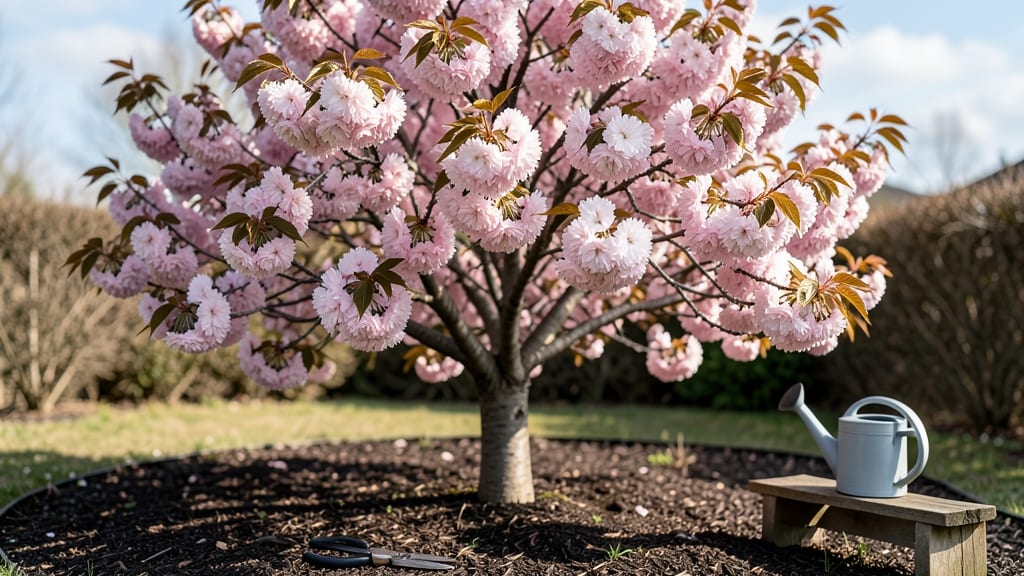
Your Yoshino cherry tree flower display starts with just four strategic cuts—the secret to keeping those iconic pink clouds of blooms coming back bigger every spring. 🌸 I learned this the hard way after my first tree produced half the flowers it should have, all because I pruned at the wrong time.
The magic isn't in how much you cut, but when and where—and it changes everything.
This tree thrives in zones 5-8 where winters chill its buds just enough for dramatic spring blooms, but even in warmer climates, the right pruning keeps it flowering reliably. You'll need sharp pruners, a ladder (for mature trees), and 10-15 minutes—that's it.
The key is timing: prune right after flowering, never in late summer when new growth needs protection for winter. Most people skip this step entirely, which explains why so many Yoshinos look leggy and underwhelming.
What you'll end up with is a tree that looks like a living watercolor when in bloom—those clouds of pink flowers can cover the entire canopy for weeks. The branches stay strong, the shape stays balanced, and you avoid the common mistake of over-thinning that weakens next year's buds.
Even if you've never pruned a cherry tree before, these four cuts will give you professional-looking results that neighbors will envy.
Works for both young saplings and established trees, though the technique adjusts slightly for size. Whether you're shaping a new planting or reviving an overgrown specimen, this method keeps the tree healthy and flowering for decades. Let's get those pruners ready—spring's magic starts with winter's preparation.
📚 In This Guide
- What you need
- Instructions
- Tips and common mistakes
- Wrapping up and next steps
What you need
- ● Pruning shears (bypass or anvil type) – sharp, clean, and sized for small to medium branches (6–10 inches)
- ● Loppers – for thicker branches (up to 2 inches in diameter)
- ○ Pruning saw (if needed) – for larger, stubborn branches (optional but helpful)
- ● Disinfectant (70% isopropyl alcohol or pruning sealant) – to sterilize tools and wounds
- ● Garden gloves – thick, cut-resistant (e.g., nitrile or leather)
- ○ Pruning paint or wound dressing – optional but recommended for cuts larger than ½ inch
- ● Ladder or step stool – if your tree is taller than 6 feet
- ● Trash bags or bucket – for collecting pruned branches
- ● Sharpie or marker – to label cuts if needed (e.g., "remove next year")
- ● Timing – Prune immediately after flowering (late April–early May) or during dormant season (winter).
- ● Weather – Choose a dry, overcast day to avoid stressing the tree.
- ● Safety first! – Wear gloves, avoid wet branches (they’re slippery), and keep a first-aid kit nearby.
- ● Tree health check – Inspect for diseased or dead branches before pruning.
Step-by-step instructions for pruning Yoshino cherry trees
Here's how to shape your Yoshino cherry blooms with confidence—no green thumb required.
✂️ Step 1: Time Your Pruning for Peak Bloom
Prune your Yoshino cherry tree late winter to early spring, just as buds begin to swell but before flowers appear. This timing ensures you won’t sacrifice next year’s spectacular pink canopy. I always mark my calendar for February to March in most climates—check your local frost dates to avoid late-season cold snaps that could stress fresh cuts.
If you missed the window, wait until after flowering but before new growth starts. Never prune during active bloom—you’ll remove next year’s flowers along with dead wood. Look for tight, plump buds as your signal to begin.
✂️ Step 2: Remove Dead, Damaged, or Crossing Branches First
Start by cutting out dead, diseased, or broken branches—these are easy to spot as they’re brown, brittle, or lack leaves. Use clean, sharp pruners (sterilized with rubbing alcohol) to make 45-degree cuts just outside the branch collar. I like to work from the bottom up, so I don’t accidentally cut healthy branches while reaching higher.
Next, remove branches that cross or rub against others. These wounds create entry points for pests and diseases. Look for V-shaped intersections—these are prime candidates for removal. Make your cuts just outside the branch collar (the swollen area where the branch meets the trunk) to promote faster healing.
✂️ Step 3: Thin Out Overcrowded Branches for Airflow
Yoshino cherries bloom best when they get good airflow and sunlight. Thin out overcrowded branches by removing one-third of the oldest, thickest branches from the center. Start at the base of the tree and work outward, cutting branches that grow inward or downward. This opens up the canopy so light reaches all the buds.
For each branch you remove, look for suckers or water sprouts (thin, fast-growing shoots) and prune those too. These compete with flowering branches for energy. Aim to keep the tree’s shape open and vase-like—this is how Yoshino cherries naturally grow in Japanese gardens.
✂️ Step 4: Shape the Tree for Balance and Bloom
Now it’s time to refine the silhouette. Step back and visualize the tree’s natural shape—Yoshino cherries should have a rounded, tiered form. Use your pruners to shorten overlong branches by cutting back to a bud or lateral branch that faces outward. This encourages new growth in the right direction.
Never cut more than one-third of the tree’s total foliage in a single year—this stresses the tree and can reduce flowering. If you’re unsure, err on the side of caution and leave branches slightly longer. The goal is to maintain a balanced, airy structure that lets sunlight reach every branch for maximum bloom.
Tips & tricks for perfect Yoshino cherry tree pruning
Here's what nobody tells you about keeping your Yoshino cherry tree looking its best—these little details make all the difference.
Timing is Everything: The late winter to early spring window (February to March) is critical because it lets your tree recover before summer heat arrives. I've seen people prune too early when buds are still dormant, and the tree struggles to regenerate. Look for those tight, plump buds as your green light—this is when the tree's energy is focused on new growth, not protecting old wounds. If you miss this window, waiting until after flowering but before new leaves appear is your second chance, but don't linger too long.
Clean Tools Save Your Tree: Sterilizing your pruners with rubbing alcohol between cuts is non-negotiable. I learned this the hard way after seeing a healthy tree decline from bacterial spread through dirty tools. Make those 45-degree cuts just outside the branch collar every time—this small detail prevents the tree from sealing wounds incorrectly, which leads to rot or pest entry points. Think of it as giving your tree a clean surgical cut rather than a jagged tear.
Shape Matters More Than You Think: The open, vase-like structure isn't just aesthetic—it's how Yoshino cherries naturally bloom in Japanese gardens. When you're thinning branches in Step 3, imagine sunlight filtering through like a Japanese lantern. Cutting back to outward-facing buds creates natural growth patterns that let every branch get equal sunlight. This is why your tree will reward you with that spectacular pink canopy next spring.
Don't Overdo It: Remember the one-third rule—never remove more than one-third of the tree's foliage in a single year. I've seen people get overzealous and end up with a tree that looks like it's recovering from surgery. The tree needs its leaves for photosynthesis to fuel next year's flowers. If you're unsure, it's better to leave branches slightly longer than to cut too aggressively. Think of pruning as sculpting rather than haircutting—you want to refine, not transform.
Pro Tips for Yoshino Cherry Tree Flower
- Here's what nobody tells you about keeping your Yoshino cherry tree looking its best—these little details make all th...
- Timing is Everything: The late winter to early spring window (February to March) is critical because it lets your tre...
- Clean Tools Save Your Tree: Sterilizing your pruners with rubbing alcohol between cuts is non-negotiable. I learned t...
Frequently asked questions
Got questions about pruning your Yoshino cherry tree flowers? You’re not alone! Here are some of the most common concerns—plus quick, expert-backed answers to keep your tree thriving.
When is the best time to prune a Yoshino cherry tree?
The absolute best time is late winter or early spring (just before buds swell but before flowers bloom). Avoid pruning during fall or summer—it stresses the tree and can stunt blooms. Pro tip: Never prune after flowering—you’ll sacrifice next year’s stunning pink canopy!
How much can I trim back my Yoshino cherry tree?
Keep it modest! Remove no more than 20-30% of the tree’s branches in a single session. Focus on dead, crossing, or overcrowded branches first. Over-pruning weakens the tree and reduces flower production. For thick branches, make cuts just outside the branch collar (the swollen area where the branch meets the trunk).
Why aren’t my Yoshino cherry tree flowers as vibrant as they used to be?
Duller blooms often mean over-pruning, poor nutrition, or disease. Check for:
- Thinning canopy (prune less aggressively next time).
- Nutrient deficiency (add balanced fertilizer in early spring).
- Pests/fungus (inspect leaves for spots or sawfly damage).
Can I prune a Yoshino cherry tree after heavy rain or snow?
Wait until the ground is dry and workable—wet soil can damage roots. Prune on a calm, sunny day to avoid fungal infections from damp tools or cuts. If you must prune after snow, let the tree recover for at least 2-3 weeks before flowering season. Always sterilize tools with rubbing alcohol to prevent disease spread!
What’s a good alternative if I don’t have a Yoshino cherry tree?
If Yoshino cherries aren’t in your area, try these low-maintenance, blooming alternatives:
- Kwanzan cherry (double pink flowers, disease-resistant).
- Weeping cherry (Prunus subhirtella) (elegant drooping branches).
- Japanese flowering cherry (Prunus serrulata ‘Shirofugen’) (white/pink blooms).
- Ornamental plum (Prunus cerasifera) (early spring flowers, drought-tolerant).
Wrapping up and next steps
The Yoshino cherry tree flower isn’t just a fleeting burst of pink—it’s a symbol of renewal, patience, and the quiet artistry of Japanese gardens. With just four simple cuts, you’ve unlocked the secret to nurturing its beauty for years to come.
Whether you’re a seasoned gardener or a curious beginner, every snip is a step toward a thriving tree that will dazzle your landscape with its iconic blooms.
Ready to watch your cherry tree flourish? 🌸 Grab your pruners, mark your calendar for the best timing, and take pride in your green thumb! Next up: Share your progress with fellow gardeners or explore how to pair your Yoshino with complementary plants for a showstopping garden display.