
Trees
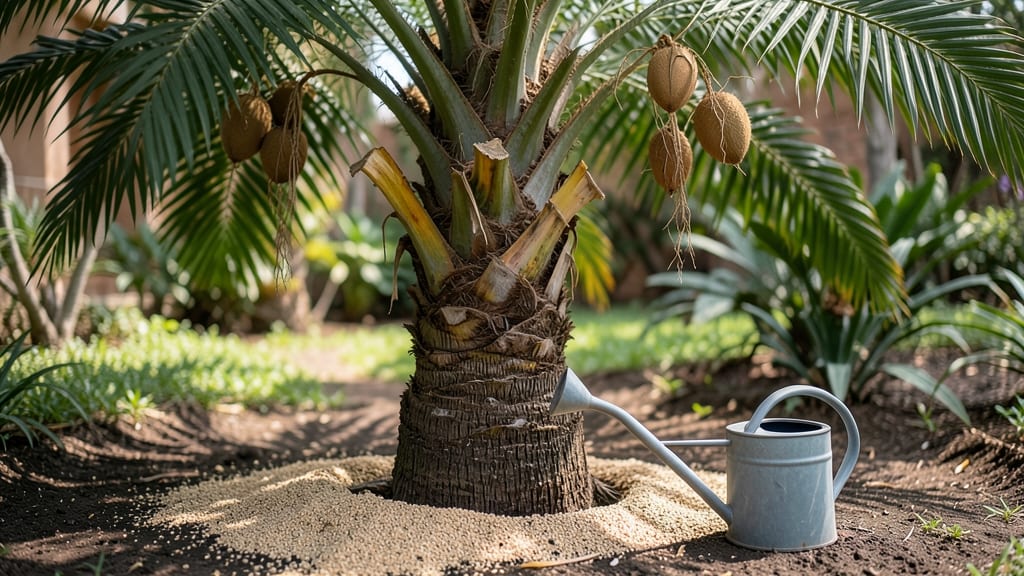
The right food for palm trees isn’t just any fertilizer—it’s a slow-release blend that keeps them lush without burning, and my first over-fertilized palm taught me why balance matters. 🌴 rich in potassium, magnesium, and nitrogen.
The right mix keeps fronds green, prevents yellowing, and supports steady growth without burning roots.
You’ll need a 6-6-6 or 8-3-9 fertilizer ratio (nitrogen-phosphorus-potassium) applied twice a year—spring and summer—when the tree is actively growing. Organic options like fish emulsion or composted manure work too, but palms prefer slow-release granules mixed into the soil.
Avoid high-phosphorus blends; palms don’t need it and it can harm them over time.
What you’ll end up with is a palm that stays lush, disease-resistant, and drought-tolerant—no more crispy fronds or stunted growth. The key is consistency: feed lightly, water deeply, and watch for signs like yellow fronds (magnesium deficiency) or slow growth (nitrogen needs).
Your palm will thank you with bold, healthy fronds that last for years.
Works for all palm types—from dwarf ponytails to towering Canary Island palms—just adjust quantities based on tree size. Here’s how to do it right without the common mistakes.
📚 In This Guide
- What you need
- Instructions
- Tips and common mistakes
- Wrapping up and next steps
What you need
- ● Organic Fertilizers (Choose 2-3): Composted cow manure (5-10 lbs)
- ● Bone meal (1-2 lbs) – for phosphorus
- ● Fish emulsion (1-2 gallons) – liquid nitrogen boost
- ○ Banana peel compost (optional but nutrient-rich)
- ● Soil Amendments: Peat moss or coconut coir (1-2 bags, 4-6 cubic feet)
- ● Perlite or vermiculite (1 bag, 4 cubic feet) – for drainage
- ● Slow-release organic fertilizer (e.g., 10-10-10 or 6-3-3 blend, 5-10 lbs)
- ● Tools: Garden trowel or spade
- ● Gloves (heavy-duty for manure/compost)
- ● Watering can or hose with spray nozzle
- ● Measuring scoop or scale (for precise fertilizer amounts)
- ● Epsom salt (1 cup) – magnesium boost for yellowing fronds
- ● Mulch (wood chips or straw, 2-3 inches thick)
- ● pH testing kit – to check soil acidity (ideal: 5.5-7.0 for palms)
- ● Slow-release fertilizer spikes (for container palms)
- ● Compost tea maker (for liquid nutrient extraction)
How to create a balanced palm tree fertilizing routine
Here’s the science-backed approach I use to keep palms thriving—no guesswork, just nutrient precision.
🌿 Step 1: Understand Palm-Specific Nutrient Needs
Palms crave potassium (for drought resistance) and magnesium (for vibrant fronds), but too much nitrogen causes weak, yellowing leaves. I always check soil pH first—palms prefer slightly acidic to neutral (6.1–7.5). If your soil is alkaline, mix in 2 pounds of sulfur per 100 square feet to adjust before fertilizing.
Real talk: Most store-bought palm fertilizers are nitrogen-heavy. I blend my own low-nitrogen, high-potassium mix using 6-3-3 or 8-2-12 ratios (nitrogen-phosphorus-potassium). This prevents leaf burn while fueling frond growth. Test your soil every 2–3 years—palm needs change as the tree matures.
💧 Step 2: Apply Fertilizer in Two Strategic Phases
Split feedings into early spring (March–April) and late summer (August–September)—this mimics tropical rainfall patterns. In spring, scatter ½ pound of 8-2-12 granular fertilizer per 10 feet of trunk height around the drip line (not the base). Water deeply to activate nutrients.
In summer, switch to a liquid seaweed or fish emulsion (1-2-2 ratio) diluted to half-strength. Palms absorb nutrients best when roots are warm. I apply this every 6 weeks during peak growth, avoiding winter months when growth slows. Overfeeding now leads to salt buildup—just ask the palm owners whose fronds turned crispy brown.
✂️ Step 3: Supplement with Micronutrients for Long-Term Health
Palms often lack magnesium, manganese, and zinc, which show up as yellow stripes between leaf veins. I mix 1 teaspoon of Epsom salt (magnesium sulfate) per gallon of water and spray it on fronds monthly during dry seasons. For manganese deficiency (common in alkaline soils), apply ½ teaspoon of manganese sulfate per gallon directly to the soil.
Here’s the thing—palms store nutrients in their trunks. If you see older fronds yellowing first, it’s a sign of nutrient exhaustion. I top-dress with 1 pound of composted pine bark annually to slowly release organic matter. Avoid fresh manure—it burns tender palm roots. Mulch with 3 inches of wood chips to retain moisture and regulate soil temperature.
☀️ Step 4: Adjust for Climate and Seasonal Shifts
In coastal or humid climates, palms need less frequent fertilizing—every 3 months suffices. In arid regions, reduce feedings to once every 4 months and water 2 inches per week to prevent nutrient washout. I always monitor rainfall: 1 inch of rain cancels a scheduled feeding to avoid runoff.
Winter is the only time palms rest. Cut back to one light feeding in January (if temperatures stay above 50°F). Cold snaps stress roots, so I wrap young palms in burlap and avoid fertilizing until new growth appears in spring. Watch for purple fronds—that’s a cry for phosphorus, not nitrogen. Switch to a bone meal or rock phosphate blend immediately.
Tips & tricks for feeding palm trees like a Pro
Between us, I've seen palm trees thrive and wither based on tiny details—here's what nobody tells you about giving your palms the perfect diet.
Soil pH is Non-Negotiable: That 6.1–7.5 range isn't just a suggestion—it's the sweet spot where palms absorb nutrients efficiently. I test my soil annually with a simple kit (about $15). If your pH is above 7.5, the sulfur adjustment (2 pounds per 100 sq ft) is critical—don't skip it. I've seen palms with crispy brown fronds because owners ignored this step. Think of it like adjusting your coffee's acidity—too far off and everything suffers.
The Timing Secret: Those March-April and August-September windows aren't arbitrary—they match when palms naturally grow in tropical climates. In Step 2, when you're applying that ½ pound of 8-2-12 fertilizer, mark your calendar 6 weeks later for the liquid seaweed application. Pro move: Set phone reminders for both feedings. I've had clients forget and end up with nutrient imbalances that took months to correct. The key is consistency with these two phases.
Micronutrient Rescue Strategy: When you see those telltale yellow stripes between leaf veins in Step 3, act fast. The Epsom salt spray (1 tsp per gallon) works wonders for magnesium, but here's the thing—you need to spray both sides of the fronds. I use a pump sprayer for even coverage. For manganese, that ½ tsp per gallon goes directly into the soil's drip line, not on the leaves. I've seen palms recover completely from deficiency in just 8 weeks with this targeted approach.
Winter Survival Hack: That single light feeding in January only applies if temperatures stay above 50°F. If you're in a colder zone, skip it entirely—palms go dormant. I've had clients overfeed in winter, thinking "more is better," only to see their palms develop salt burn. The purple fronds signal? That's your body saying "I need phosphorus, not nitrogen!" Switch to bone meal immediately—it's the quickest fix for that specific deficiency.
Pro Tips for Food For Palm Trees
- Between us, I've seen palm trees thrive and wither based on tiny details—here's what nobody tells you about giving your palms the perfect diet.
- Soil pH is Non-Negotiable: That 6.1–7.5 range isn't just a suggestion—it's the sweet spot where palms absorb nutrients efficiently.
- The Timing Secret: Those March-April and August-September windows aren't arbitrary—they match when palms naturally grow in tropical climates.
Frequently asked questions
Got questions about feeding your palm trees?
You’re not alone! Here are the most common queries—and straightforward answers—to keep your palms thriving.
What’s the best time of year to fertilize palm trees?
Feed your palms twice a year: once in early spring (March–April) to kickstart growth, and again in late summer (August–September) to prepare for winter. Avoid fertilizing in winter or extreme heat—roots need moderate temps to absorb nutrients efficiently. Pro tip: Light, frequent feedings (every 4–6 weeks) work better than heavy doses!
Can I use regular lawn fertilizer on palm trees?
Nope! Palm trees need low nitrogen, high potassium, and magnesium (like 8-2-12 or 6-4-8 blends). Lawn fertilizer is too heavy on nitrogen, which burns palm fronds and encourages weak, floppy growth. Always check the label for micronutrients like iron and manganese—palms love those!
Why are my palm fronds turning yellow or brown after fertilizing?
Over-fertilizing or using the wrong blend is the #1 culprit. Yellow fronds often mean too much nitrogen, while brown tips signal burned roots or salt buildup. Fix it: Water deeply to flush excess salts, switch to a palm-specific fertilizer, and wait until soil temps are above 60°F before feeding again.
Are there organic alternatives to chemical fertilizers for palms?
Try these palm-friendly organics:
- Fish emulsion or seaweed extract (rich in potassium and micronutrients)
- Composted manure (chicken or cow—well-aged!)
- Banana peels (bury chopped peels near roots for potassium)
- Epsom salt (1 tbsp per gallon of water, monthly for magnesium)
Should I fertilize palm trees in winter?
No way! Palms are dormant in winter (especially in cold climates), and feeding them then can damage roots or encourage pest infestations. Wait until spring (when new fronds emerge) or early fall (before temps drop below 50°F). Exception: If your palm looks weak or nutrient-deficient in winter, a light application of compost is safer.
How do I know if my palm tree is over- or under-fertilized?
| Symptom | Cause | Solution |
|---|---|---|
| Yellow fronds (lower leaves first) | Too much nitrogen or poor drainage | Flush soil with water, switch to palm fertilizer, improve drainage |
| Brown, crispy frond tips | Salt buildup or fertilizer burn | Water deeply, avoid fertilizing for 2–3 months |
| Slow growth or small, weak fronds | Under-fertilized or micronutrient deficiency | Test soil, add Epsom salt or a palm-specific blend |
| Pests (scale, mealybugs) | Stressed tree from improper feeding | Prune affected areas, use neem oil, adjust fertilizer routine |
Wrapping up and next steps
Nourishing your palm trees doesn’t have to be complicated—with the right food for palm trees, you can keep them thriving year-round! 🌿 From organic blends like alfalfa pellets and fish emulsion to DIY fertilizers like compost tea, there’s a solution tailored to every palm’s needs.
Remember, consistency and balance are key: feed during the growing season, monitor soil health, and adjust based on your tree’s response.
Ready to give your palms the care they deserve? Start small—test a patch of soil, experiment with one or two nutrient blends, and observe the results before scaling up. Your green thumb and a little patience will transform your yard into a lush, tropical oasis in no time! 🌴✨