
Pruning
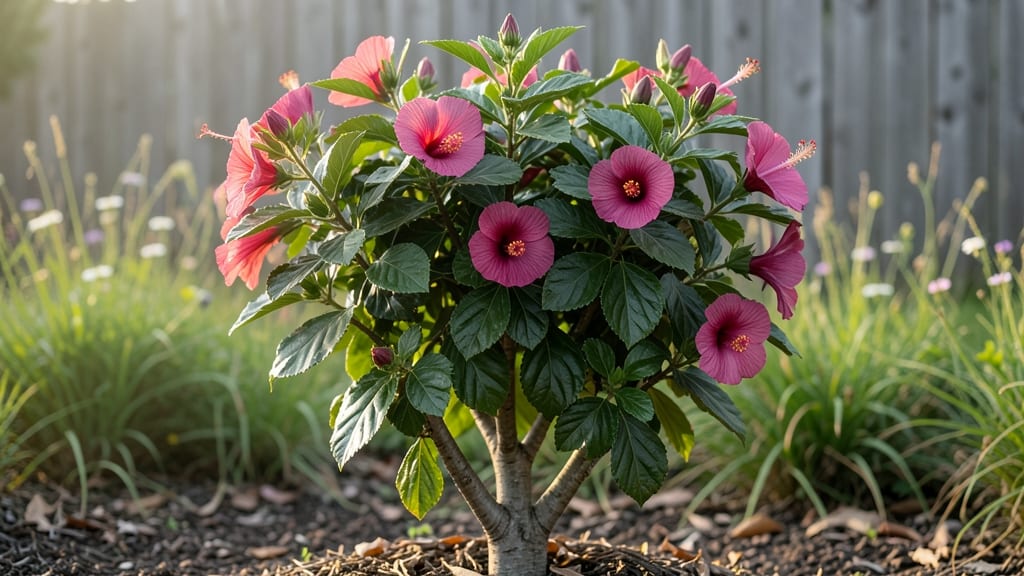
That first burst of blooms from my hibiscus flowering tree in spring is worth every minute of pruning—trust me, I’ve turned my once-sparse tree into a year-round showstopper with just a few sharp cuts.
The secret isn’t complicated: timing, technique, and knowing whether you’re dealing with a tropical hibiscus that needs warmth or a hardy variety that can brave cooler nights. Most gardeners over-prune or cut at the wrong time, and suddenly those dramatic blooms vanish.
I’ll show you how to keep your tree flowering like clockwork, even in winter.
You only need three tools: clean pruning shears, a small ladder (for taller trees), and a spray bottle for disinfecting cuts. The real work happens in late winter or early spring, right before new growth starts—this is when you shape the tree and remove dead wood.
For tropical hibiscus, you can prune lightly after blooms fade to encourage more flowers, but hardy types need a heavier cut in early spring. Think of it like giving your tree a haircut: too little, and it gets wild; too much, and you stunt its growth.
By summer, you’ll be rewarded with bold, velvety blooms that last for months if you’ve pruned correctly. The key is cutting just above a leaf node at a 45-degree angle, which encourages new growth where you want it.
Hardy hibiscus might even surprise you with fall blooms if you’ve kept up with regular trimming. The best part? A well-pruned tree stays compact, resists disease, and produces more flowers than you can count—no more begging your neighbors for cuttings!
Works for both tropical and hardy hibiscus, whether you’re in a warm climate or zone 5 with a microclimate. The same principles apply, just adjust the timing. Ready to transform your tree into a flowering powerhouse? Let’s get those shears sharp.
📚 In This Guide
- What you need
- Instructions
- Tips and common mistakes
- Wrapping up and next steps
What you need
- ● Pruning shears – Bypass-type (sharp, 6-8" blades) for clean cuts. 1 pair (sterilized with rubbing alcohol).
- ● Loppers – Bypass or anvil (for thicker branches, 10-14" blades). 1 pair.
- ● Hand pruners – For precision work (smaller branches, 4-6"). 1 pair.
- ● Gloves – Heavy-duty, cut-resistant (protects from thorns and sap). 1 pair.
- ● Disinfectant – 70% isopropyl alcohol or bleach solution (1 part bleach to 9 parts water). Small spray bottle.
- ○ Pruning sealant – Optional but recommended (for large cuts > ½ inch). Small tube.
- ● Extension pole – For high branches (3-6 ft, with pruner attachment). 1 unit.
- ● Bucket or bag – For collecting debris. 1 medium-sized.
- ● Marking twine or tags – To label cuts (if shaping). Small roll.
- ● Safety glasses – Protects eyes from debris. 1 pair.
- ● Knee pads – For comfort if pruning near the ground. 1 pair.
- ● Hose or water spray – Cleans sap off tools and skin. Small sprayer.
- ● Sharpie or chalk – Marks branches for future reference.
- ● Compost bin – For recycling pruned material.
How to prune a hibiscus flowering tree for continuous, stunning blooms
Pruning isn’t just about cutting back—it’s about sculpting your hibiscus into a blooming powerhouse.
Time Your Pruning for Maximum Impact
Prune your hibiscus right after the last frost date in spring, when new growth has just begun. This timing ensures you’re not cutting into dormant buds and gives your plant the entire growing season to recover. If you prune too early, you risk damaging tender shoots that haven’t hardened off yet.
For tropical hibiscus varieties, you can also do a light pruning in late summer to encourage one last flush of blooms before winter. Avoid pruning in fall—your hibiscus needs all its energy to store nutrients for next year’s growth.
Assess and Remove Problematic Growth
Start by inspecting your hibiscus for dead, diseased, or crossing branches. These are your top priorities—remove them first. Use clean, sharp pruners to make cuts at a 45-degree angle, about ¼ inch above a leaf node or outward-facing bud. This encourages new growth in the right direction.
Next, look for branches that are growing inward or rubbing against each other. These compete for sunlight and nutrients, weakening your plant’s overall health. Thin these out first, even if they’re not dead, to improve airflow and reduce disease risk.
Shape for Balance and Airflow
Step back and visualize your hibiscus as a natural vase shape—wider at the base, narrowing toward the top. This shape allows sunlight to penetrate all the way to the center, where most blooms form. Use your pruners to trim back any branches that disrupt this flow, focusing on the outer edges first.
For each cut, aim to remove no more than ⅓ of the plant’s total foliage in one session. Over-pruning shocks your hibiscus and can lead to sparse blooming. If you’re unsure, err on the side of caution—you can always do more next year.
Encourage New Growth with Strategic Cuts
After shaping, look for overly leggy branches—those long, bare stems with few leaves. These are prime candidates for rejuvenation cuts. Trim them back to a healthy leaf node, about 6-12 inches from the tip. This stimulates bushier growth and more flowering sites.
Pay special attention to the lower third of the plant. If this area is bare, prune back the tallest branches to encourage new shoots from the base. This keeps your hibiscus compact and ensures blooms aren’t all clustered at the top.
Post-Pruning Care for a Strong Recovery
Water your hibiscus deeply right after pruning to help it recover from the stress. The top 6 inches of soil should feel moist but not soggy. Avoid fertilizing immediately—wait 4-6 weeks to let the new cuts heal before adding nutrients.
Keep your hibiscus in a bright, indirect light spot for the first week after pruning. This gives it time to adjust without the added stress of direct sun. Once new growth appears—usually within 2-3 weeks—you can resume normal care.
Tips & tricks for perfect hibiscus pruning
Transforming your hibiscus into a blooming beauty takes more than just cutting branches—it’s about strategic timing and technique. Here’s what I’ve learned after watching my own hibiscus go from sparse blooms to a nonstop floral display.
Timing is Everything: The spring pruning after the last frost is non-negotiable for temperate climates. If you’re unsure about your last frost date, check your local agricultural extension service—they provide precise data for your region. For tropical hibiscus, that late summer light pruning is your secret weapon for extending the bloom season into fall.
Tool Prep Matters: Before you even touch your plant, sterilize your pruners with rubbing alcohol. I’ve seen fungal infections spread from dirty tools, and once hibiscus gets sick, it’s a battle to revive. Also, make sure your blades are sharp—dull pruners crush stems instead of making clean cuts, which stress the plant and invite disease.
Visualize the Vase Shape: When shaping in Step 3, hold your pruners at a 45-degree angle and imagine the classic vase silhouette. The goal is to create an open center that lets sunlight reach all branches. I like to start with the outer branches first, working my way inward like peeling an onion. This prevents accidental cuts to healthy inner growth while you’re focusing on the edges.
Post-Pruning Recovery Hack: After your deep watering, add a handful of mulch around the base. This helps retain moisture in the critical first week while the cuts heal. I use pine bark mulch because it also slowly releases nutrients as it breaks down—just don’t pile it against the trunk where it might cause rot.
Pro Tips for Hibiscus Flowering Tree
- Transforming your hibiscus into a blooming beauty takes more than just cutting branches—it’s about strategic timing and technique.
- Timing is Everything: The spring pruning after the last frost is non-negotiable for temperate climates.
- Tool Prep Matters: Before you even touch your plant, sterilize your pruners with rubbing alcohol.
Frequently asked questions
Got questions about keeping your hibiscus flowering tree in top bloom? We’ve got answers! Here are some of the most common queries from gardeners just like you—whether you’re a hibiscus newbie or a seasoned pruner looking to refine your skills.
When is the best time to prune a hibiscus flowering tree for maximum blooms?
Prune your hibiscus after its main flowering season—typically late winter or early spring (just before new growth starts). For tropical hibiscus, you can also do light pruning after heavy blooms in summer. Avoid pruning in fall or winter in colder climates, as it can stunt growth before dormancy.
How much can I prune a hibiscus tree without harming it?
You can safely remove up to 1/3 of the tree’s total foliage in one session, but avoid over-pruning. Focus on shaping, removing dead branches, and thinning out crowded growth. Hibiscus are resilient, but drastic cuts can stress the plant. For dramatic blooms, aim for structured pruning—cut back overgrown branches to encourage bushier, more abundant flowering.
Why isn’t my hibiscus flowering, even after pruning?
Lack of blooms often stems from light, nutrients, or pruning timing. Ensure your hibiscus gets 6+ hours of sunlight daily and fertilize with a high-phosphorus bloom booster (like 10-20-10) every 4-6 weeks during growing season. Also, check for pests (like spider mites) or root issues—healthy roots = more flowers!
Can I grow a hibiscus flowering tree in a container? If so, how do I prune it?
Potted hibiscus thrive with regular pruning to control size and shape. Use the same techniques as outdoor pruning, but repot every 2-3 years to refresh soil. Trim back leggy growth in spring and pinch back new shoots to encourage bushiness. Just ensure your container has drainage holes and you’re using well-draining potting mix.
What’s a good alternative if my hibiscus struggles in my climate?
If your zone is too cold for tropical hibiscus, try hardy hibiscus (Hibiscus moscheutos) or rose-of-Sharon (Hibiscus syriacus). Both are cold-tolerant, drought-resistant, and produce stunning blooms. For containers, Chinese hibiscus (Hibiscus rosa-sinensis) is a great indoor-outdoor hybrid—just bring it inside before frost!
Still stumped? Drop your hibiscus pruning woes in the comments—we’re happy to help troubleshoot!
Wrapping up and next steps
Transforming your hibiscus flowering tree into a year-round blooming star is simpler than you think! With the right tools, timing, and techniques—like pruning in late winter or early spring and removing spent blooms—you’ll unlock vibrant, continuous flowers. Remember, patience and consistency are key, so don’t rush the process. 🌸
Ready to take the next step? Start small: pick one branch to practice your cuts, then gradually expand. Before you know it, your hibiscus will be the showstopper of your garden! Grab those shears and get pruning! 🌿✂️