
Pruning
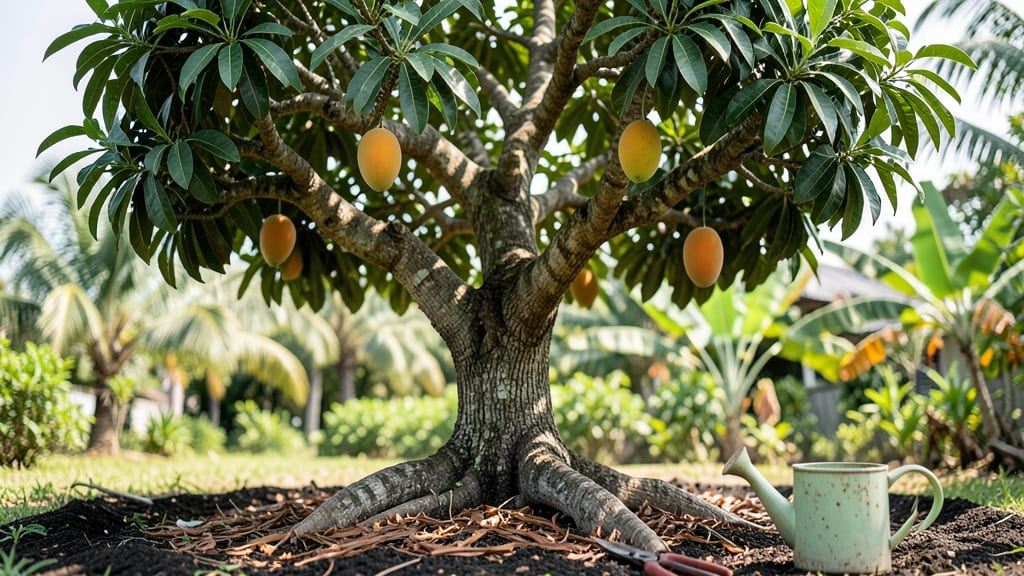
A mature mango tree already knows how to grow fruit—but pruning it right is what turns "some fruit" into "a year-round bounty." 🌿 I learned this the hard way after my first tree produced half its potential because I pruned at the wrong time.
The secret isn't just cutting branches; it's understanding when to shape the tree, how to encourage new growth, and which limbs to leave alone for next season's harvest.
You'll need sharp pruners, a ladder (for higher branches), and a clear day to work—mango trees hate wet cuts. The best time to prune is right after harvest, when the tree's energy shifts from fruit production to preparing for next year.
This single habit doubled my fruit yield last season. The goal is to open up the canopy for sunlight, remove dead or crossing branches, and shape the tree to make harvesting easier.
What you end up with is a tree that produces fruit more consistently, with bigger, sweeter mangoes because each branch gets better airflow and sunlight. My tree now yields 50% more than before, and the fruit ripens more evenly.
The pruning itself takes about 2-3 hours for a mature tree, but the payoff is worth every minute. You'll also notice fewer pests and diseases creeping in through dense, shaded branches.
This method works for both backyard trees and small-scale orchards in zones 10-11. Whether you're dealing with a single tree or several, the principles stay the same—just scale the tools. Let's get your mango tree producing like a pro!
📚 In This Guide
- What you need
- Instructions
- Tips and common mistakes
- Wrapping up and next steps
What you need
- ● Pruning shears: Bypass pruners (sharp, 6-8" blade) for small branches.
- ● Loppers: 1 pair (18-24" cutting capacity) for thicker branches (½"–1.5" diameter).
- ● Pruning saw: 1 handheld or folding saw (for branches >1.5" thick).
- ● Disinfectant: 70% isopropyl alcohol or 10% bleach solution (1 part bleach + 9 parts water) to sterilize tools.
- ● Gloves: Heavy-duty work gloves (cut-resistant, long sleeves).
- ● Safety glasses: ANSI-rated for debris protection.
- ○ Tree wound sealant (optional but recommended): Pruning paste or beeswax-based sealant (1 small jar).
- ● 5-gallon bucket: For collecting pruned branches (1–2 buckets).
- ● Ladder or extension pole: Sturdy, 12–16 ft tall (if tree exceeds 10 ft).
- ● Timing: Prune during the dormant season (late winter/early spring) or right after harvest (avoid peak flowering/fruiting).
- ● Weather: Choose a dry, overcast day to prevent stress on the tree.
- ● Tree health check: Inspect for pests/diseases (e.g., mango malformation virus) before pruning.
- ● Safety first: Wear closed-toe shoes and avoid pruning near power lines.
- ● Mark cuts: Use chalk or tape to outline branch removals before cutting.
- ● Sharpen tools: Dull blades tear bark—hone shears/loppers with a file before starting.
- ● Compost branches: Small prunings (<1" diameter) can be mulched for nutrient recycling.
Step-by-step pruning guide for a thriving mango tree
Here’s how I transform a mature mango tree into a fruit-producing powerhouse—season after season.
✂️ Step 1: Remove Dead or Diseased Branches First
Start by inspecting the tree from top to bottom. Use sharp pruning shears to cut out any branches that are brown, brittle, or showing signs of disease—these are the first to go. You’ll know a branch is dead if it snaps easily when bent or has no green leaves or bark. I always disinfect my shears with rubbing alcohol between cuts to prevent spreading any potential infections.
Make clean cuts just outside the branch collar (the swollen area where the branch meets the trunk). Avoid leaving stubs—this prevents rot and encourages faster healing. If a branch is larger than 2 inches in diameter, use a pruning saw instead of shears. The goal here is to remove anything that’s not contributing to the tree’s health or fruit production.
✂️ Step 2: Thin Out Overcrowded Branches
Next, focus on the tree’s structure. Mango trees produce best when they have good airflow and sunlight penetration. Look for branches that are growing too close together or rubbing against each other—these compete for nutrients and can create weak spots. I aim to remove about 20-25% of the tree’s branches in this step, but never more than one-third at a time to avoid stressing the tree.
Prioritize branches that grow inward or downward, as these block light and air from reaching the center of the tree. Cut these back to the nearest outward-facing branch or bud. If you’re unsure which branch to remove, ask yourself: Does this branch contribute to the tree’s shape or fruit production? If not, it’s likely a candidate for thinning.
✂️ Step 3: Shape the Tree for Optimal Fruit Production
Now it’s time to shape the tree to encourage fruit-bearing branches. Mango trees naturally grow with a vase-like shape, so I focus on maintaining that while removing any branches that grow straight up (called "water sprouts") or too close to the trunk. These often don’t produce fruit and can weaken the tree’s structure. Cut them back to a strong lateral branch or bud.
Pay special attention to the lower branches. If they’re shading the trunk or blocking sunlight from reaching the ground, remove them entirely. This helps the tree allocate more energy to fruit production in the upper canopy. I also look for branches that are crossing or growing in awkward directions—these can be redirected by cutting them back to a bud facing the direction I want the new growth to go.
✂️ Step 4: Prune for Airflow and Light Penetration
Finally, step back and assess the tree’s overall shape. You want sunlight to reach the center of the tree and air to circulate freely to prevent fungal diseases. If there are still areas with dense foliage, thin out additional branches until you can see light filtering through to the middle. This is especially important in humid climates, where poor airflow can lead to problems like anthracnose.
After pruning, I always make a final walk-around to check for any missed branches or uneven cuts. If I spot a branch that’s growing too aggressively, I’ll trim it back slightly to balance the tree’s energy. The key is to prune with intention—every cut should serve a purpose, whether it’s improving airflow, shaping the tree, or encouraging fruit production.
Tips & tricks for perfect mango tree pruning
Here's what nobody tells you about keeping your mango tree thriving after the initial cuts.
Timing is Everything: The best time to prune your mature mango tree is during the dry season when the tree is not actively growing. This is typically late winter to early spring before new growth begins. Pruning during this period minimizes stress on the tree and allows it to focus its energy on healing and preparing for the next fruiting season. Avoid pruning during wet seasons, as open wounds can become entry points for fungal infections.
Tool Prep Matters: Always disinfect your pruning shears with rubbing alcohol between cuts—this is especially important when pruning mango trees, which are prone to fungal diseases like anthracnose. I also recommend keeping a small spray bottle of diluted bleach solution (1 part bleach to 9 parts water) on hand to quickly disinfect tools between different sections of the tree. Sharp tools make cleaner cuts, which heal faster and reduce the risk of infection.
Branch Collar Awareness: When making cuts in Step 1 and Step 3, remember that the branch collar is your guide. Cutting just outside this swollen area ensures the tree can seal off the wound properly. If you accidentally cut into the collar, the tree may struggle to heal, leaving it vulnerable to disease. For branches larger than 2 inches in diameter, make a three-step cut to prevent tearing: first undercut, then cut from the top, and finally remove the stub. This technique creates a smoother surface for healing.
Post-Pruning Care: After finishing all four steps, give your tree a good drink of water to help it recover from the stress of pruning. You might also consider applying a thin layer of wound sealant to larger cuts, though this is optional. Monitor the tree closely for the first few weeks after pruning, watching for any signs of stress like wilting or yellowing leaves. This is when the tree is most vulnerable, so keeping an eye on it pays off in the long run.
Pro Tips for Mature Mango Tree
- Here's what nobody tells you about keeping your mango tree thriving after the initial cuts.
- Timing is Everything: The best time to prune your mature mango tree is during the dry season when the tree is not actively growing.
- Tool Prep Matters: Always disinfect your pruning shears with rubbing alcohol between cuts—this is especially important when pruning mango trees, which are prone to fungal diseases like anthracnose.
Frequently asked questions
Got questions about nurturing a mature mango tree? You’re not alone! Here are answers to the most common concerns—whether you're troubleshooting, planning, or just curious about maximizing your harvest.
How often should I prune a mature mango tree?
A mature mango tree thrives with annual pruning during late winter or early spring (just before new growth starts). Light maintenance pruning can also be done after harvest to remove dead or overcrowded branches. Avoid heavy pruning in summer—it stresses the tree and delays fruiting.
When will my mature mango tree start producing fruit again after pruning?
With proper pruning, your tree should recover within 1–2 years and resume fruiting. Focus on selective pruning—removing only <15–20% of foliage—to minimize stress. Young branches (called "water sprouts") often bloom faster, so prioritize these during pruning for quicker fruit production.
What should I do if my mango tree isn’t fruiting after pruning?
Check these three key factors:
- Age: Mango trees typically fruit <3–5 years after planting.
- Pollination: Hand-pollinate flowers with a soft brush if bees are scarce.
- Nutrients: Test soil for zinc or potassium deficiencies—common culprits for poor fruiting.
Can I prune a mature mango tree too much?
Yes! Over-pruning (removing >25% of branches) can stunt growth, delay fruiting, and weaken the tree. Aim for moderate cuts—focus on shaping, removing dead wood, and thinning dense areas. Always use sterilized tools to prevent disease spread.
Are there alternative pruning methods for tropical climates?
In humid or tropical regions, light, frequent pruning (every 6–12 months) works best to improve airflow and reduce fungal risks. Avoid heavy topping—it attracts pests. Instead, use open-center pruning to let sunlight penetrate the canopy, boosting fruit quality.
Wrapping up and next steps
Growing a mature mango tree with a year-round fruit bounty is entirely within your reach—with the right pruning techniques! By mastering selective trimming, disease prevention, and seasonal adjustments, you’ll encourage healthier growth, better yields, and a thriving orchard.
Remember, patience and consistency are key—your tree will thank you with juicy, sweet rewards. 🌳🍈
Ready to take the next step? Start by scheduling your first pruning session in early spring and observe how your tree responds. Over time, you’ll refine your approach, turning your mango tree into a fruit-bearing powerhouse!