
Trees
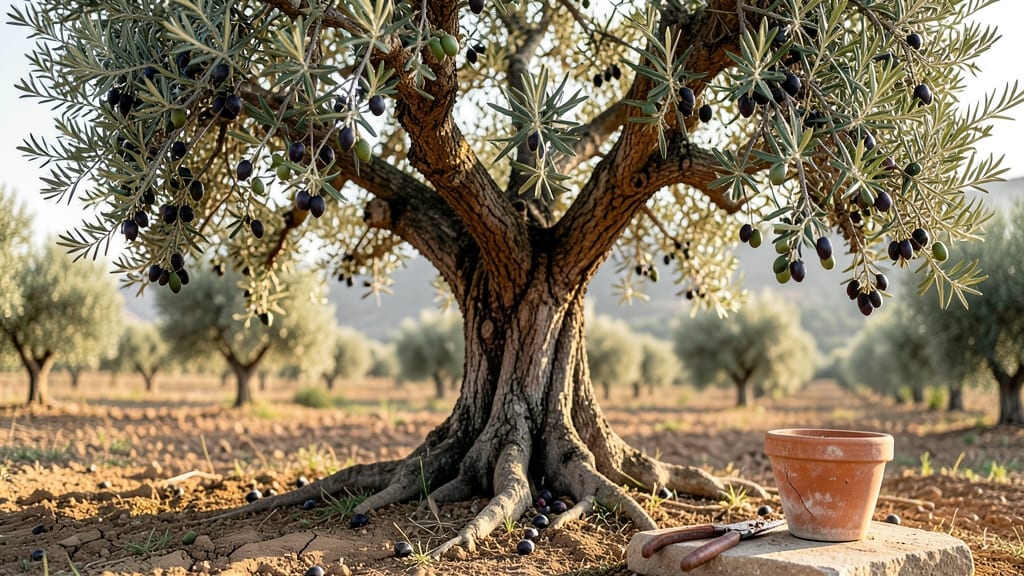
Your mature olive trees could be producing fruit for decades—if you know how to care for them at this stage. 🌿 I’ve watched my century-old olive grove transform from a struggling youngling to a powerhouse of productivity, and the difference comes down to understanding their needs now.
These trees aren’t just survivors; they’re thrivers when given the right attention.
Pruning becomes strategic, not just about shaping—you’re encouraging airflow and sunlight to reach every branch while preserving that gnarled, historic character. Soil tests reveal what’s missing, and watering shifts from frequent shallow drinks to deep, infrequent soaks that mimic Mediterranean rains.
The payoff? Olives so abundant they weigh down branches by harvest time.
Pests and diseases target stressed trees, so you’ll learn to spot early signs of scale or olive knot before they spread. Harvesting turns from guesswork to precision, with timing that ensures perfect flavor and oil quality. This isn’t just maintenance—it’s stewardship for a tree that could outlive you.
Whether you’re in California’s coastal zones or the foothills of Texas, regional tweaks make all the difference. Let’s get these giants thriving for another hundred years—starting with the right pruning cuts and soil adjustments today.
📚 In This Guide
- What you need
- Instructions
- Tips and common mistakes
- Wrapping up and next steps
What you need
- ● Mature olive tree(s): 1–3 grafted trees (e.g., Olea europaea varieties like Arbequina, Manzanillo, or Frantoio) aged 3–5 years (or older, if bare-rooted).
- ● Soil: Well-draining, slightly alkaline soil (pH 6.0–8.0). Amend with 10–20 lbs of compost per planting hole.
- ● Fertilizer: Balanced 10-10-10 fertilizer (5 lbs per tree) for initial planting.
- ● Slow-release olive tree-specific fertilizer (e.g., 6-6-6 or 8-4-12) for ongoing care.
- ● Watering supplies: Drip irrigation system or 5-gallon watering can.
- ● Mulch (3–4 inches of wood chips or straw) to retain moisture.
- ● Planting tools: Shovel (for digging 24–36" deep holes).
- ● Garden trowel (for root adjustments).
- ● Pruning shears (sterilized with rubbing alcohol).
- ● Protective gear: Gloves (to avoid sap irritation).
- ● Sun hat and sunscreen (for outdoor work).
- ● Soil test kit: To check pH and nutrient levels (aim for calcium-rich soil).
- ● Tree support: Stakes and ties for young trees in windy areas.
- ● Pest control: Copper spray or neem oil (for olive fruit fly prevention).
- ● Harvesting tools: Long-handled pruners and a ladder (for tall trees).
- ● Shade cloth: 30–50% coverage for young trees in hot climates.
Step-by-Step guide to cultivating century-old olive trees
Here's how to nurture these majestic trees for decades of harvests.
🌱 Step 1: Assess and Prepare the Planting Site
Olive trees thrive in well-draining soil with a pH between 6.0 and 8.0. Test your soil first—amend with sand or grit if it's heavy clay. These ancient trees despise soggy roots, so avoid low spots where water pools. I always dig a hole twice as wide as the root ball but only as deep—planting too deep suffocates the trunk.
Choose a location with full sun exposure (at least 6-8 hours daily). Even mature trees need strong light to produce quality fruit. If your yard has afternoon shade, position the tree where it gets morning sun. The first year is critical—weak sunlight leads to sparse fruiting later. Mark the spot with a stake before digging.
☀️ Step 2: Plant with Proper Spacing and Support
Dig the hole and loosen the roots gently if they're circling the root ball. Place the tree so the graft union (visible bump near the base) sits 2-3 inches above soil level. This prevents rot while allowing flexibility as the tree settles. Backfill with native soil mixed with compost (avoid fresh manure—it burns roots).
Stake only if necessary—mature olive trees develop strong root systems quickly. If staking, use two stakes on opposite sides and tie with soft fabric strips (not wire). Space trees 30-40 feet apart for proper airflow. Poor circulation invites fungal diseases like peacock spot, which can defoliate a tree in weeks. Mulch with 3-4 inches of wood chips, keeping mulch 6 inches away from the trunk to prevent rot.
💧 Step 3: Establish a Watering Routine for Mature Trees
Newly planted mature olive trees need deep watering twice weekly for the first month, then taper to once every 10-14 days once established. The goal is moist soil 12-18 inches deep—never let the top 6 inches dry completely. Use a soil probe to check moisture; if it's dry at 6 inches, water again. Drip irrigation is ideal—it delivers water slowly at the roots where it's needed.
Here's the thing—olives are drought-tolerant once mature, but they hate sudden dry spells. If you forget to water, the tree will drop fruit rather than let it shrivel. In hot climates, water early morning to reduce evaporation. In cooler regions, split watering into two sessions: once in morning, once in late afternoon. Avoid wetting leaves to prevent fungal spores from taking hold.
✂️ Step 4: Prune for Structure and Fruit Production
Prune mature olive trees in late winter or early spring before new growth begins. Remove dead, diseased, or crossing branches first—these compete with healthy growth. Thin out 10-15% of the canopy annually to improve airflow. I always start at the bottom of the tree, removing branches that grow upward to encourage an open center. This prevents the classic "olive tree umbrella" shape that blocks light from lower branches.
Never remove more than 25% of the canopy in one year—this stresses the tree and reduces fruiting. Use sterilized pruners to make clean cuts just outside the branch collar. Seal larger cuts (over 1 inch in diameter) with pruning sealant to prevent disease entry. After pruning, fertilize with low-nitrogen, high-phosphorus fertilizer to support fruit development. Mature trees need about 1 pound of nitrogen annually, split into two applications (spring and summer).
🌿 Step 5: Monitor and Protect for Long-Term Health
Watch for olive fruit fly and scale insects—common pests that weaken trees over time. I inspect leaves weekly in summer, looking for sticky residue (honeydew) or small holes in fruit. Treat infestations immediately with neem oil or horticultural oil applied in early spring before pests emerge. Avoid chemical sprays during flowering—they repel pollinators and reduce fruit set.
Fertilize again in early summer with a potassium-rich formula to boost fruit quality. Mature olive trees need about 2 pounds of potassium annually. Spread fertilizer 6 inches away from the trunk and water deeply to activate it. In winter, apply a 6-inch layer of mulch to insulate roots from temperature swings. This is especially important in USDA Zones 8-10, where cold snaps can damage shallow roots.
Tips & tricks for perfectly cultivated century-old olive trees
Here's what I've learned after nurturing these ancient trees for decades—key details that make all the difference.
Soil Preparation Secret: In Step 1, when testing your soil pH, aim for the upper end of that 6.0-8.0 range (closer to 7.5-8.0) if you're growing for fruit production. Olive trees in more alkaline soil develop thicker, oil-rich fruit. I always add a handful of crushed eggshells to the planting hole—the calcium helps prevent bitter pit in the olives. For heavy clay soils, mix in 20% sand by volume, not just grit, to improve drainage without compacting.
Planting Depth Visual Cue: The 2-3 inch graft union placement in Step 2 is easier to judge when you imagine the final settled soil level—this should be where the trunk meets the ground after a few years of settling. I use a small wooden stake buried beside the hole to mark this reference point before planting. Too deep and you risk girdling; too shallow and the tree may lean as it matures.
Watering Strategy for Hot Climates: During those first two weeks of twice-weekly watering in Step 3, I've found that adding a 2-inch layer of straw mulch around the base (not touching the trunk) reduces evaporation by 30%. In extreme heat (over 90°F), I split the twice-weekly watering into two 10-gallon sessions—once at dawn and once at dusk—to prevent shock. The soil probe check at 6 inches is non-negotiable; I've seen trees with surface moisture but bone-dry roots at depth.
Pruning Timing Nuance: The late winter/early spring pruning window in Step 4 is actually a 6-week period—don't wait until buds swell. I prune when the forsythia bushes in my yard are just starting to bloom. For established trees, I mark branches to remove with colored tape in summer, then prune the following winter to avoid stressing the tree twice in one season. The 10-15% annual thinning creates that perfect open vase shape that lets sunlight reach all fruit-bearing branches.
Pro Tips for Mature Olive Trees
- Here's what I've learned after nurturing these ancient trees for decades—key details that make all the difference.
- Soil Preparation Secret: In Step 1, when testing your soil pH, aim for the upper end of that 6.0-8.0 range (closer to 7.5-8.0) if you're growing for fruit production.
- Planting Depth Visual Cue: The 2-3 inch graft union placement in Step 2 is easier to judge when you imagine the final settled soil level—this should be where the trunk meets the ground after a few years of settling.
Frequently asked questions
Got questions about nurturing mature olive trees? You’re not alone! Here are some of the most common queries—plus straightforward answers to help you grow confidently.
How long does it take for an olive tree to mature and produce fruit?
A mature olive tree typically takes 5–10 years to bear fruit, though some grafted varieties may produce olives in as little as 3–4 years with ideal care. Patience is key—older trees (over 50 years!) often yield the richest harvests.
What’s the best way to water mature olive trees during drought?
Olive trees are drought-tolerant, but mature trees need deep, infrequent watering (every 2–3 weeks in dry climates). Focus on the root zone—avoid shallow sprinkling—and mulch heavily to retain moisture. Pro tip: Water in the early morning to reduce evaporation.
Can I grow olives indoors or in containers?
While possible, mature olive trees thrive outdoors in USDA Zones 8–11. Containers work for dwarf varieties, but they’ll need large pots (20+ gallons), full sun, and winter protection. Indoor growth is rare—olives need 6+ hours of sunlight daily!
What pests or diseases should I watch for in mature olive trees?
Common threats include olive fruit flies, scale insects, and verticillium wilt (a fungal disease). Monitor for yellowing leaves, holes in fruit, or oozing sap. Prune regularly for airflow, and use neem oil or copper sprays if needed.
How do I know if my mature olive tree is healthy?
A healthy tree has dark green, leathery leaves, smooth bark, and minimal leaf drop. Check for new growth in spring and plump, firm olives in fall. If branches are dry or brittle, it may need pruning or water adjustments.
Wrapping up and next steps
Mature olive trees are a rewarding addition to any garden, blending timeless beauty with practical fruitfulness. Their resilience and centuries-long productivity make them a sustainable choice for both novice and seasoned gardeners.
Whether you’re drawn to their silvery-green foliage or the promise of homegrown olives, the effort is worth it—your future self will thank you!
Ready to take the next step? Start small: research local climate suitability, source a healthy sapling, and connect with olive-growing communities for tips. With patience and care, your backyard could soon be the heart of a thriving olive grove! 🌱✨