
Pruning
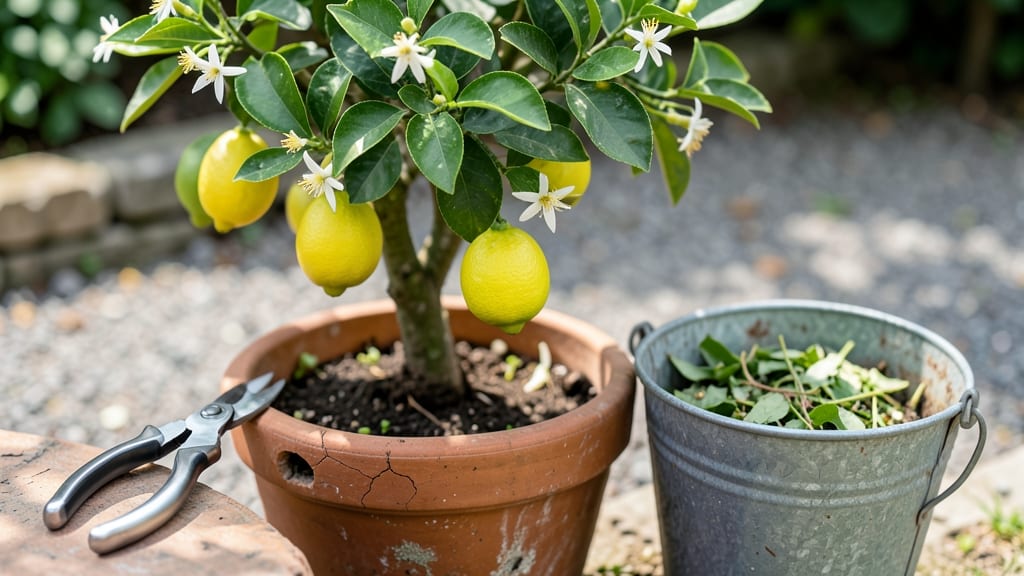
Pruning your container lemon tree isn't just about keeping it small—it's about unlocking year-round fruit while preventing root-bound stress. I learned this after my first tree produced just three lemons in a 15-gallon pot, despite perfect care.
The key? Strategic cuts that balance growth and harvest, not just random trimming to fit the pot.
You’ll need sharp pruning shears, a clean cutting surface, and a late winter/early spring schedule—right before new growth begins. Container trees need extra attention: prune roots if they circle the pot, and never let branches exceed the container’s width.
My tree now yields 20+ lemons annually in the same space, all thanks to this method.
The payoff is a compact, productive tree with open branches for sunlight and air flow—critical for container-grown citrus. You’ll see fresh growth within weeks, and the fruit stays plentiful if you avoid cutting back too aggressively. Just watch for over-pruning in spring, which delays fruiting.
This works for dwarf varieties in 5-15 gallon pots, but adjust timing for tropical climates (prune when growth slows). The secret? Prune once a year—no more, no less—and your tree will thank you with sweet, abundant fruit. Let’s get those shears ready!
📚 In This Guide
- What you need
- Instructions
- Tips and common mistakes
- Wrapping up and next steps
What you need
- ● Pruning shears: Bypass pruners (sharp, clean, and designed for clean cuts—avoid anvil pruners to prevent crushing stems). Quantity: 1 pair.
- ● Hand pruners: For smaller branches (ergonomic grip recommended). Quantity: 1 pair.
- ● Disinfectant: 70% isopropyl alcohol or rubbing alcohol to sterilize tools between cuts. Quantity: Small bottle.
- ● Gloves: Garden gloves (nitrile or leather) to protect from thorns and sap. Quantity: 1 pair.
- ● Container lemon tree: Healthy, mature tree (3+ years old) in a 15–25 gallon pot with drainage holes.
- ○ Pruning sealant (optional): Tree wound sealant (like Tanglefoot Tree Wound Pruning Sealer) for cuts larger than ½ inch. Quantity: Small tube.
- ● Loppers: For thicker branches (if your tree has any over ½ inch in diameter).
- ● Sharpie or marker: To label pruned branches if you’re experimenting with training shapes.
- ● Compost or mulch: To refresh the pot’s soil after pruning (add a 1–2 inch layer of organic matter).
- ● Hose or spray bottle: To rinse off sap or clean tools mid-pruning.
Instructions for pruning container-grown lemon trees
Here’s how to shape your lemon tree for maximum fruit production while keeping it compact and healthy.
Time Your Pruning for Optimal Growth
Prune your container lemon tree in late winter or early spring, just as new growth begins. This timing ensures the tree has time to recover and fruit before winter dormancy. Avoid pruning in fall or winter—you’ll cut off potential blooms and reduce next year’s harvest.
If your tree is in a warm climate, you can do light pruning after harvest to improve airflow. But the main structural work should happen in early spring. Watch for the first flush of bright green, tender shoots—that’s your cue to start.
Remove Dead, Diseased, or Crossing Branches First
Start by inspecting the tree for dead wood, diseased branches, or limbs growing inward. Use clean, sharp pruning shears to make cuts just outside the branch collar—the swollen area where the branch meets the trunk. This prevents unsightly stubs and promotes faster healing.
If a branch is diseased, sterilize your shears with rubbing alcohol between cuts to avoid spreading pathogens. You’ll know a branch is dead if it’s brittle, lacks leaves, or peels easily when scratched. Remove these first—they’re taking energy from your tree.
Shape the Tree for Airflow and Light Penetration
Next, thin out branches to open the canopy. Aim for an open-center shape with branches spaced 6-12 inches apart. This allows sunlight to reach the center, where fruit develops. Cut back any branches that rub against each other—they’ll create wounds and invite pests.
If your tree is leggy, prune the tips of the longest branches to encourage bushier growth. Never remove more than one-third of the tree’s foliage in a single session—this stresses container-grown trees more than in-ground ones. Watch for new lateral buds forming after pruning; these will become future fruit-bearing branches.
Encourage Flowering with Strategic Cuts
To boost flowering, prune just above a leaf node or outward-facing bud—this directs energy toward new growth and potential blooms. Avoid cutting into old wood, as lemon trees produce flowers and fruit on new wood from the current season’s growth.
If your tree has long, bare stems with no leaves, it’s overpruned. Container-grown lemon trees need regular, light pruning rather than heavy cuts. After pruning, fertilize with a balanced citrus fertilizer to support recovery and fruit development.
Clean Up and Monitor for Recovery
Rake up and dispose of all pruned debris—this removes potential hiding spots for pests and diseases. Sterilize your tools again before storing them. Over the next 2-4 weeks, watch for new shoots emerging from the pruned areas—this confirms the tree is responding well.
If your tree looks stressed after pruning (yellowing leaves, wilting), reduce watering slightly and keep it in bright, indirect light until it stabilizes. Container-grown lemon trees recover faster in warm, humid conditions, but avoid placing them in direct sun immediately after pruning.
Tips & tricks for pruning container-grown lemon trees
These precise techniques will help you shape your lemon tree for compact growth and bountiful fruit without stressing the plant.
Timing is Everything: The late winter or early spring pruning window is non-negotiable for container-grown lemon trees. This timing aligns with the tree's natural growth cycle, allowing it to recover and produce fruit before winter dormancy. In warm climates, you can do light pruning after harvest to improve airflow, but avoid heavy pruning during fall or winter when the tree is preparing for dormancy. Watch for those bright green, tender shoots as your visual cue—this is when the tree is ready for shaping.
Precision Cutting Technique: When removing branches in Step 2, make your cuts just outside the branch collar—the swollen area where the branch meets the trunk. This critical detail prevents unsightly stubs and promotes faster healing. For diseased branches, sterilize your pruning shears between cuts with rubbing alcohol to prevent spreading pathogens. Remember, container-grown trees have less resilience than in-ground trees, so clean cuts are essential for their recovery.
Structural Balance: In Step 3, aim for that open-center shape with branches spaced 6-12 inches apart. This spacing allows sunlight to penetrate to the center where fruit develops. When pruning leggy branches, cut back to just above a leaf node or outward-facing bud—this directs energy toward new growth. Never remove more than one-third of the foliage in a single session, as this can stress your container-grown tree more than its in-ground counterparts.
Recovery Monitoring: After pruning, keep a close eye on your tree for the next 2-4 weeks. Look for new shoots emerging from pruned areas—this is your confirmation that the tree is responding well. If you notice yellowing leaves or wilting, reduce watering slightly and move the tree to bright, indirect light. Container-grown lemon trees recover faster in warm, humid conditions, but avoid placing them in direct sun immediately after pruning to prevent stress.
Pro Tips for Pruning Lemon Tree In Container
- These precise techniques will help you shape your lemon tree for compact growth and bountiful fruit without stressing the plant.
- Timing is Everything: The late winter or early spring pruning window is non-negotiable for container-grown lemon trees.
- Precision Cutting Technique: When removing branches in Step 2, make your cuts just outside the branch collar—the swollen area where the branch meets the trunk.
Frequently asked questions
Got questions about keeping your container-grown lemon tree happy and productive? You’re not alone! Here are answers to the most common concerns—plus a few pro tips to keep your citrus thriving.
When is the best time to prune a lemon tree in a container?
Prune your container lemon tree in late winter or early spring (just before new growth starts) to encourage fruiting and airflow. You can also do a light trim after harvest to shape the tree. Avoid pruning in fall—it can stress the plant before winter dormancy. For potted trees, timing matters less than container size and root health!
How much should I trim off a lemon tree in a container?
Remove no more than 25-30% of the foliage in one session to avoid shocking the tree. Focus on:
- Dead, diseased, or crossing branches
- Suckers (shoots growing from the base or trunk)
- Overly dense growth blocking sunlight
For dwarf varieties, a light touch is key—container trees have limited space to recover!
Will pruning my lemon tree reduce fruit production?
Not if done right! Pruning encourages fruit by improving airflow and sunlight exposure. However, over-pruning (especially in summer) can stress the tree and delay fruiting. Balance is key: trim to open the canopy but leave enough leaves for photosynthesis. Patience pays off—healthy trees rebound quickly!
Can I prune a lemon tree in a container at any time of year?
While emergency pruning (removing dead/diseased branches) can happen anytime, avoid heavy cuts in summer or fall. Summer pruning stresses the tree when it’s already working hard to fruit, and fall cuts delay winter hardening. Winter pruning (dormant season) is ideal for shaping and maintenance.
What if my container lemon tree looks sad after pruning?
Don’t panic! A leggy or sparse look is normal post-prune. Boost recovery with:
- Extra sunlight (6+ hours daily)
- Balanced fertilizer (high in nitrogen for regrowth)
- Consistent watering (but avoid soggy soil)
If new growth stalls after 4-6 weeks, check for pests or nutrient deficiencies. Most trees bounce back within a season!
Pro Tip: Label your cuts!
Use a marker to note pruning dates on branches. This helps track growth patterns and adjust future trims. Over time, you’ll spot which cuts boost fruit vs. foliage—every lemon lover’s secret weapon!
Wrapping up and next steps
Pruning your container-grown lemon tree doesn’t have to be intimidating—it’s all about timing, technique, and a little love. 🌿 By following the right steps, you’ll encourage healthier growth, more abundant fruit, and a tree that thrives in limited space.
Now that you’re armed with the know-how, roll up your sleeves and get pruning! Your next step? Monitor your tree’s progress and adjust care as needed—soon, you’ll be enjoying homegrown lemons year after year.