
Trees
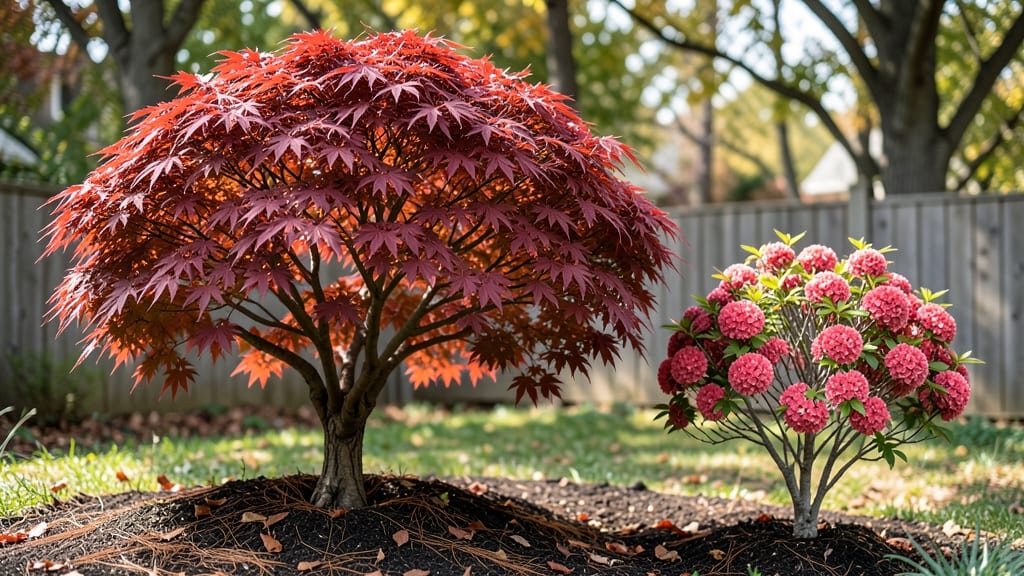
Red-leaved trees turn ordinary gardens into living works of art. 🌿 I remember the first time I saw a Japanese maple with fiery foliage—it stopped me in my tracks. These trees aren’t just plants; they’re bold statements that transform spaces year-round, from fiery autumns to deep winter hues.
The secret lies in their placement. A single dwarf red maple as a focal point draws the eye, while a row of red oak saplings creates a dramatic border.
Pair them with evergreens like boxwoods or silver birches to contrast textures, and you’ll create layers of visual interest that evolve with each season.
Imagine your garden in winter: when most plants fade, these trees glow. Their deep reds and purples stand out against snow, while spring brings fresh growth that pops against pastel blooms. The effect is effortless drama—no extra work, just natural beauty that keeps your garden lively all year.
Perfect for small yards, large estates, or even urban courtyards. Whether you’re designing a new space or refreshing an old one, these trees bring color, structure, and personality. Let’s make your garden unforgettable.
📚 In This Guide
- What you need
- Instructions
- Tips and common mistakes
- Wrapping up and next steps
What you need
- ● Red-leaved tree varieties: Japanese Maple (Acer palmatum) – Dissectum, Bloodgood, or Crimson Queen (1-3 plants, depending on space)
- ● European Beech (Fagus sylvatica ‘Purpurea’) – Atropunicea (1-2 mature specimens for bold impact)
- ● Smoke Tree (Cotinus coggygria ‘Royal Purple’) – 1-2 plants (great for mid-height drama)
- ● Red Oak (Quercus rubra) – 1-3 trees (for larger landscapes)
- ● Coral Bark Maple (Acer palmatum ‘Sango-kaku’) – 1-2 plants (stunning winter bark + foliage)
- ● Soil amendments: Compost or well-rotted manure (5-10 gallons per planting hole)
- ● Organic mulch (2-3 inches, e.g., shredded bark or pine needles)
- ● Slow-release fertilizer (10-10-10 or 5-10-5 ratio, 1 cup per tree)
- ● Planting tools: Shovel or spade (for digging holes 2x wider than the root ball)
- ● Garden trowel (for fine adjustments)
- ● Wheelbarrow (for hauling soil/mulch)
- ● Gloves (heavy-duty for protection)
- ● Watering can or hose (with adjustable nozzle)
- ● Tree stakes (for young or top-heavy trees)
- ● Epsom salt (for magnesium boost in yellowing leaves)
- ● Mulch rings (to keep mulch contained)
- ● Pruning shears (for shaping or cleanup)
- ● Soil pH test kit (to ensure optimal growing conditions)
- ● Drip irrigation system (for consistent moisture)
How to select and plant red-leaved trees for year-round color
Here's how I choose and plant these showstoppers for vibrant gardens that never fade.
🌱 Step 1: Choose the Right Varieties for Your Climate
Red-leaved trees thrive best when matched to your hardiness zone. For cooler climates, opt for Japanese maples (Acer palmatum) or European beech (Fagus sylvatica 'Purpurea'), which handle 10-20°F winters. Warmer zones suit Chinese pistache (Pistacia chinensis) or red oak (Quercus rubra), which tolerate 5-15°F.
Check the mature size too—some like dwarf ninebark (Physocarpus opulifolius 'Diablo') stay under 6 feet, while others like red maple (Acer rubrum) reach 40-60 feet. Measure your space first! I always sketch the tree's outline on paper to visualize its spread.
☀️ Step 2: Select the Perfect Planting Spot
Most red-leaved trees need full sun (6+ hours daily) to maintain their vibrant color, but a few like dwarf ferns (Dryopteris erythrosora) tolerate partial shade. Avoid low spots where water pools—root rot will kill even the hardiest red foliage.
Test the soil pH with a simple kit. Many prefer slightly acidic (6.0-6.5), but redbuds (Cercis canadensis) thrive in neutral (7.0). Amend heavy clay with 2-3 inches of compost mixed into the top 12 inches of soil. I dig a hole twice as wide as the root ball to encourage outward growth.
🪴 Step 3: Plant with Care for Long-Term Health
Dig a hole 1-2 inches deeper than the root ball but no wider—this prevents soil compaction around roots. Gently remove the tree from its container and loosen any circling roots with your fingers. Place it in the hole so the top of the root ball sits 1 inch above ground level—settling will occur over time.
Backfill with native soil mixed with half compost to improve drainage. Water deeply until the soil settles, then add 2-3 inches of mulch (keeping it 6 inches away from the trunk) to retain moisture. I always water again after mulching to help it settle.
💧 Step 4: Water and Maintain for Vibrant Foliage
Water newly planted trees once a week for the first month, then taper to every 2 weeks once established. Deep watering (until soil is 6-8 inches damp) encourages deep root growth. Overwatering causes yellow leaves—watch for this and adjust.
Fertilize in early spring with slow-release granular fertilizer (follow package rates). Red-leaved trees often need less fertilizer than green varieties, so I cut rates in half. Prune only to remove dead branches—never for shape, as this can reduce color intensity.
Tips & tricks for perfect red-leaved trees
A few simple strategies that'll help your red-leaved trees thrive and keep their vibrant color all year.
Climate Matching: Pay attention to those temperature ranges when selecting varieties. Japanese maples in warmer climates (above 20°F) will struggle—look for more heat-tolerant options like Chinese pistache instead. I once planted a Japanese maple in my zone 7 garden and watched it slowly decline over winter. The 10-20°F range is critical for these varieties to survive winter dormancy.
Sunlight Strategy: That 6+ hours of full sun isn't just about growth—it's what maintains the red color. If your tree starts losing its vibrant hue, it's likely getting insufficient sunlight. For partial shade lovers like dwarf ferns, position them where they get morning sun and afternoon shade to preserve their color intensity. I've seen red-leaved trees in shady spots turn almost green within months.
Soil Preparation: The 2-3 inches of compost mixed into the top 12 inches of soil creates the perfect environment for root development. Don't skip this step—compacted soil will strangle your tree's roots. For heavy clay soils, consider adding perlite to improve drainage. I always test soil pH before planting to ensure it matches the tree's needs, especially for redbuds that prefer neutral soil.
Planting Depth: That 1-inch above ground level placement might seem counterintuitive, but it's crucial. Settling will occur over time, so planting too deep can suffocate the roots. When backfilling, gently pat the soil to remove air pockets without compacting it. I use my hands to create a slight mound around the base to help with water drainage.
Pro Tips for Red Leaved Trees
- A few simple strategies that'll help your red-leaved trees thrive and keep their vibrant color all year.
- Climate Matching: Pay attention to those temperature ranges when selecting varieties. Japanese maples in warmer clima...
- Sunlight Strategy: That 6+ hours of full sun isn't just about growth—it's what maintains the red color. If your tree ...
Frequently asked questions
Got questions about keeping your garden vibrant with red-leaved trees? Here are some of the most common ones—and their answers!
What are the best red-leaved trees for small gardens?
For compact spaces, consider Cotoneaster varieties like ‘Fireberry’ or Dwarf Japanese Maple (e.g., ‘Bloodgood’). These stay under 10 feet tall while delivering bold color. Cornus sericea (Red Osier Dogwood) is another great choice—its slender stems add winter interest too!
When is the best time to plant red-leaved trees?
Plant in early spring or fall (4–6 weeks before frost) for optimal root establishment. Avoid summer heat or winter cold, which can stress young roots. Mulch well after planting to retain moisture and protect roots during temperature swings.
Why did my red-leaved tree lose its color this year?
Color loss often stems from nutrient deficiencies (like iron or nitrogen), overwatering, or poor drainage. Test soil pH (ideal: 5.5–6.5 for many red-leaved trees) and amend with compost or chelated iron if needed. Prune leggy growth to encourage denser, healthier foliage.
Are red-leaved trees hardy in cold climates?
Yes! Many thrive in USDA Zones 3–7, including Japanese Maples (Zone 5–8) and Red Twig Dogwood (Zone 2–7). For extreme cold, choose ‘Autumn Blaze’ Maple or ‘Royal Purple’ Smokebush. Always check specific varieties—some need winter protection (e.g., burlap wraps for young trees).
Can I grow red-leaved trees in containers?
Dwarf varieties like ‘Ember’ Sumac or ‘Little Devil’ Ninebark do well in pots (15+ gallon containers). Use well-draining soil, repot every 2–3 years, and fertilize lightly in spring. Place in full sun for maximum color intensity—just keep them near a water source for easy care!
Pro Tip:
For year-round drama, pair red-leaved trees with evergreen shrubs (like ‘Winter Gem’ Boxwood) or white-barked trees (e.g., Birch). The contrast makes their foliage pop even in winter!
Wrapping up and next steps
Red-leaved trees are the star players of year-round garden drama—adding bold color, texture, and seasonal interest with minimal fuss. Whether you’re drawn to fiery Japanese maples, deep burgundy smoke trees, or vibrant red oak varieties, these trees bring effortless elegance to any landscape.
Their unique foliage isn’t just eye-catching; it’s a conversation starter that transforms even the simplest garden into a living masterpiece.
Ready to turn your outdoor space into a showstopper? Start small—pick one or two red-leaved trees to anchor your garden, then experiment with companion plants for extra depth. Your green thumb (and your neighbors) will thank you! 🌿✨