
Trees
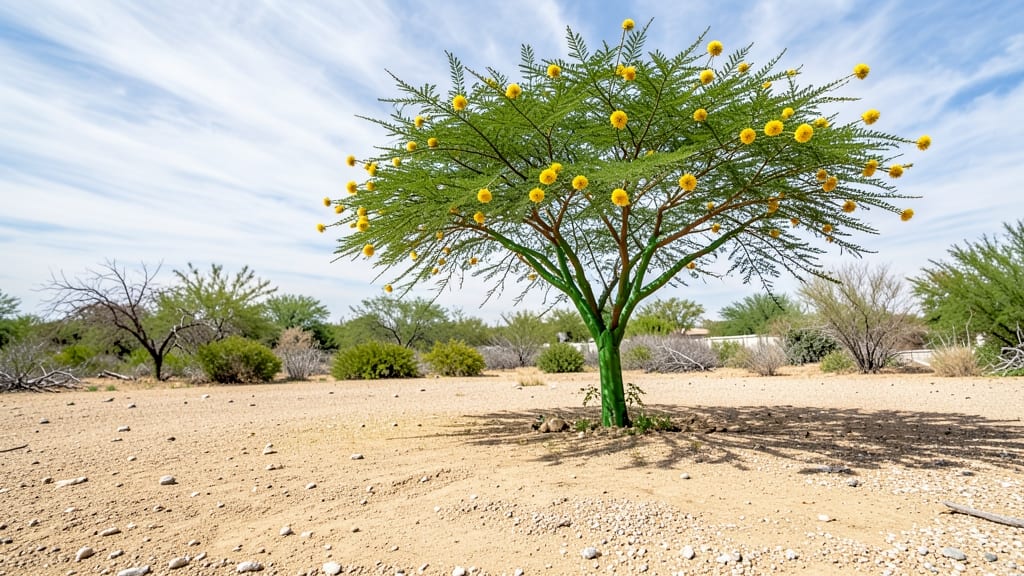
Growing trees in desert climates isn’t just possible—it’s a game-changer for transforming barren landscapes into thriving oases. 🌵 I’ve watched Joshua trees stand sentinel through 110-degree summers and mesquite roots tap into water sources miles away, proving that desert trees aren’t just survivors—they’re architects of resilience.
The secret starts with the right species: drought-tolerant natives like palo verde, ironwood, or desert willow thrive where others wither. But even these champions need smart soil prep—amend with 3-4 inches of compost to improve water retention, and mulch heavily to shield roots from scorching winds.
Watering isn’t about frequency; it’s about deep, infrequent soakings that encourage deep root growth.
What you’ll end up with is a landscape that stays green when others turn brown, provides shade in summer, and supports local wildlife.
My own desert yard now has a 20-foot mesquite that blooms in spring and a 15-foot palo verde that stays lush through droughts—proof that desert trees can be both beautiful and low-maintenance.
This approach works for urban desert yards, rural homesteads, or even container plantings in arid microclimates. The key is patience: desert trees grow slower but live longer, building strength season by season. Let’s get your desert landscape thriving!
📚 In This Guide
- What you need
- Instructions
- Tips and common mistakes
- Wrapping up and next steps
What you need
- ● Drought-tolerant tree species: 1-3 saplings (e.g., Mesquite, Palo Verde, or Desert Willow) – choose based on your region’s hardiness zone.
- ● Well-draining soil: 5+ cubic yards of a mix of native desert soil, sand, and compost (ratio: 60% soil, 30% sand, 10% compost).
- ● Mulch: 2-3 bags of wood chips or gravel (avoid organic mulch that retains too much moisture).
- ● Drip irrigation system: 50-100 feet of tubing, emitters (1-2 per tree), and a timer controller.
- ● Water storage: 5+ gallons of water per tree (or access to a reliable water source).
- ● Hand trowel or transplant spade – for digging holes (12-18 inches deep).
- ● Garden hose or watering can with a fine rose attachment.
- ● Pruning shears – to trim dead branches and encourage strong growth.
- ○ Soil pH tester (optional but helpful) – desert soils are often alkaline.
- ● Shade cloth or temporary shade structure – for young trees during extreme heat.
- ● Sun exposure: Full sun (6+ hours daily) – desert trees thrive in harsh light.
- ● Wind protection: Plant near a windbreak (e.g., rocks or a fence) if winds exceed 15 mph.
- ● Local regulations: Check for water restrictions or native plant ordinances in your area.
How to establish trees in arid environments
Here's my battle-tested approach—learned from years of planting in 100°F+ conditions.
🌱 Step 1: Select Drought-Tolerant Species
Not all trees thrive in desert climates. Prioritize native species like mesquite, palo verde, or desert willow—they've evolved to handle low rainfall and high temperatures. Avoid moisture-loving trees like maples or elms; they'll struggle and die within a year. Check local nursery recommendations for proven performers in your specific hardiness zone.
Size matters too. Larger trees need deeper root systems to access water, but their canopies create shade that cools the soil. Start with 3-5 gallon container-grown saplings—they establish faster than bare-root stock in dry conditions. Look for plants with closed root balls and healthy, flexible branches (not brittle or yellowing).
🪴 Step 2: Plant During Optimal Conditions
Timing is everything in desert planting. Schedule your work for late fall or early spring when temperatures stay below 75°F. Avoid summer—even morning planting can stress young trees. The goal is to get roots established before the first heatwave hits. Dig your planting hole twice as wide as the root ball but no deeper.
Amend the native soil with 50% native soil and 50% high-quality compost—this improves water retention without suffocating roots. Mix the amendment into the sides of the hole only; never pile it in the bottom. The native soil at the bottom provides stability and prevents root circling. Water the hole thoroughly 24 hours before planting to help settle the soil.
☀️ Step 3: Implement Deep Watering Systems
Surface watering wastes moisture and encourages shallow roots. Instead, install a drip irrigation system with emitters placed 6-12 inches from the trunk. Run it for 30-45 minutes twice weekly during the first growing season. You'll know you're doing it right when water appears 18-24 inches from the trunk—this encourages deep root growth.
Mulch heavily with 3-4 inches of organic mulch (like wood chips) extending 2-3 feet from the trunk. This creates a moisture-retaining barrier while protecting roots from extreme temperature swings. Keep mulch 6 inches away from the trunk to prevent rot. Check soil moisture weekly by inserting a screwdriver—if it goes in easily, you're overwatering.
✂️ Step 4: Prune for Desert Adaptation
First-year pruning should focus on removing dead or crossing branches—never more than 25% of the canopy. Desert trees handle stress poorly, so aggressive pruning invites disease. Wait until late winter to prune, when the tree is dormant but before new growth begins. Sterilize your pruners with rubbing alcohol to prevent bacterial spread.
Watch for sunburned leaves—they'll appear as crispy, brown patches on new growth. This happens when rapid spring warming outpaces leaf hardening. Prune these leaves immediately and provide light shade cloth for the first month of growth. Avoid fertilizing during the first year; new roots need energy to establish before supporting foliage.
Tips & tricks for desert tree establishment
Real talk: Desert tree survival isn't just about planting—it's about outsmarting the environment. Here's what I've learned after years of trial and error.
Species Selection Strategy: When choosing between mesquite, palo verde, or desert willow in Step 1, consider their mature sizes. Mesquite grows into a medium-sized tree with excellent drought tolerance, while palo verde offers faster greening but needs slightly more water. Desert willow provides shade quickly but requires consistent moisture during establishment. I always verify the species' hardiness zone match—this prevents costly mistakes.
Timing is Everything: The 24-hour pre-watering before planting in Step 2 is non-negotiable. This settles the soil and creates better root contact. I've seen planting failures where this step was skipped—roots simply couldn't establish properly. For extra insurance, I water again immediately after planting to eliminate air pockets around the root ball.
Watering System Precision: In Step 3, those 30-45 minutes of drip irrigation aren't just arbitrary—they're calibrated to deliver 1-1.5 gallons of water per emitter. Use a rain gauge to verify your system's output. The goal is to saturate the soil to 18-24 inches deep without runoff. I've had to adjust emitter flow rates three times before getting this right in different soil types.
Mulch Application Technique: That 3-4 inches of mulch in Step 3 needs to be spread evenly but not piled against the trunk. I use a 6-inch gap between mulch and trunk to prevent moisture buildup that causes rot. For extra protection, I add a 1-inch layer of coarse sand between the mulch and soil—this improves drainage while maintaining moisture retention.
Pro Tips for Trees Growing In Desert
- Real talk: Desert tree survival isn't just about planting—it's about outsmarting the environment.
- Species Selection Strategy: When choosing between mesquite, palo verde, or desert willow in Step 1, consider their mature sizes.
- Timing is Everything: The 24-hour pre-watering before planting in Step 2 is non-negotiable.
Frequently asked questions
Got questions about thriving trees in desert conditions? Here are some of the most common inquiries—and practical answers—to help you green up arid landscapes with confidence!
How do trees survive in desert environments?
Desert trees like mesquite, palo verde, and Joshua trees have evolved deep root systems (some reaching 100+ feet!) to tap into underground water. Others, like creosote bushes, have waxy leaves to reduce evaporation. Pro tip: Mimic nature by planting drought-tolerant species with deep roots and mulching heavily to retain moisture.
How long does it take for trees to establish in desert soil?
Patience is key! Most desert trees take 2–5 years to fully establish, depending on species and water availability. Young trees need regular (but deep) watering during their first year to encourage root growth. After that, many thrive with rainwater alone—just avoid overwatering, which can suffocate roots.
What’s the best way to water desert trees?
Deep, infrequent watering is the golden rule. Instead of daily shallow watering, soak the root zone every 2–4 weeks (or when the top 6 inches of soil are dry). Use drip irrigation or soaker hoses to deliver water directly to roots, reducing waste. Morning watering minimizes evaporation—just avoid late evenings to prevent fungal growth.
Can I grow non-desert trees in a desert climate?
Some adaptable trees (like Texas ebony or desert willow) can thrive, but most non-native species struggle. If you’re set on non-desert trees, choose fast-growing, drought-resistant varieties (e.g., mulberry or sycamore) and provide extra mulch + shade cloth during extreme heat. Expect slower growth and higher maintenance.
Why is my desert tree dropping leaves or dying?
Common culprits include overwatering (most deadly in deserts!), pests like bark beetles, or poor drainage. Check for:
- Yellowing leaves → Overwatering or nutrient deficiency (try iron supplements).
- Wilting or brown edges → Underwatering or heat stress (increase shade/mulch).
- Holes or sawdust-like frass → Insect infestation (neem oil or insecticidal soap helps).
If the tree is completely leafless, it may be dormant (normal for some species) or dead—gently scratch the bark to check for moisture.
Wrapping up and next steps
The resilience of trees thriving in deserts is nothing short of nature’s masterpiece—proving that even in the harshest conditions, life finds a way. 🌵✨ Whether you’re inspired to nurture your own arid-adapted greenery or simply fascinated by their survival strategies, the key takeaway is clear: patience, preparation, and precision are your best allies.
Start small—pick one hardy species, like a Joshua tree or mesquite, and watch as your desert oasis transforms into a thriving ecosystem.
Ready to take the next step? Research local nurseries, connect with desert gardening communities, or even experiment with container gardening to test what works best in your climate. Your green thumb can make a difference—one desert tree at a time!