
Trees
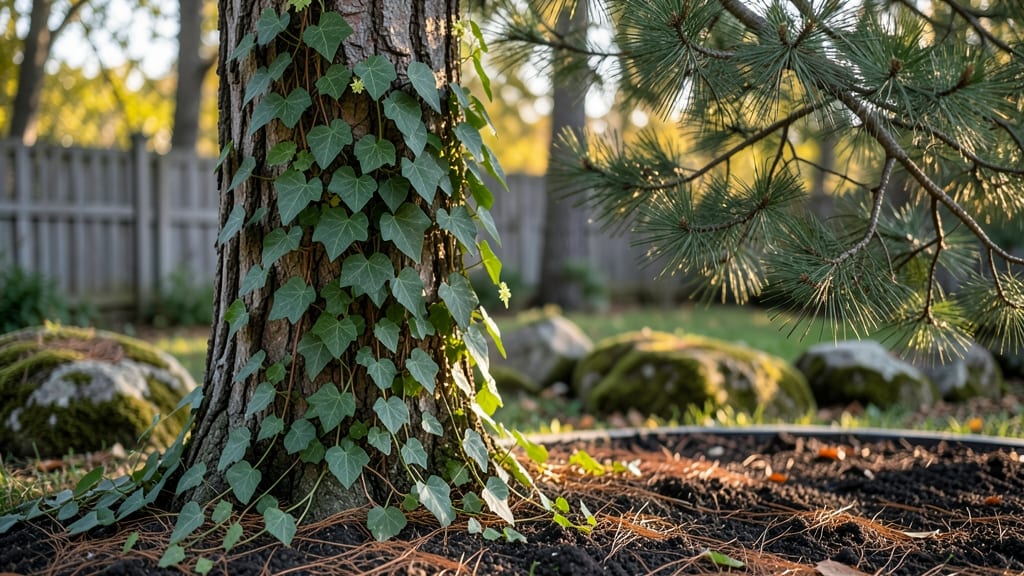
Vines climbing your pine trees can turn them into stunning vertical gardens—but only if you pick the right ones. 🌿 The wrong vines strangle roots, spread poison ivy, or invite pests, while the right ones add lush greenery without harm.
My 10-year-old ponderosa pine now sports clematis and wisteria that bloom for months without crowding its branches.
First, identify the vines: poison ivy (three-leaf clusters), English ivy (aggressive spreaders), and mistletoe (parasitic) must go. Safe options like climbing roses or honeysuckle thrive without competing for nutrients. Grab pruning shears, gloves, and a 5-gallon bucket for debris—then work methodically from top to bottom to avoid tearing bark.
You’ll end up with a tree that looks like a living tapestry—fragrant blooms in spring, shade in summer, and winter interest from persistent foliage. The key is annual pruning to keep vines controlled and roots unstressed.
Mulch around the base to block invasive creepers, and watch your pine stay healthy while becoming the neighborhood’s most eye-catching centerpiece.
Works for any pine variety—just adjust vine choices to your climate. Southern pines handle camellias, while northern pines pair well with ivy-free vines like trumpet honeysuckle. Start small, and your tree will thank you for years to come.
📚 In This Guide
- What you need
- Instructions
- Tips and common mistakes
- Wrapping up and next steps
What you need
- ● Vines: 1–3 healthy, disease-free vines per tree (species vary by climate—see recommendations below)
- ● Top picks: Clematis (hardy, fast-climbing), Wisteria (fragrant, but needs space), or Honeysuckle (low-maintenance, pollinator-friendly)
- ● Support Structures: 1–2 tree-friendly trellises (bamboo or metal, 4–6 ft tall, flexible to avoid root damage)
- ● OR 3–5 soft garden twine or nylon straps (1/4-inch width, static-free)
- ● Pruning Tools: 1 pair bypass pruners (sharp, for clean cuts)
- ● 1 hand saw (for thicker vines or branches)
- ● Safety Gear: 1 pair gloves (gardening or leather for grip)
- ● 1 step stool or ladder (if trees are tall; never stand on trunks!)
- ● 1 mulch (2–3 inches of shredded bark or pine needles to retain moisture)
- ● 1 fertilizer (balanced 10-10-10 or slow-release vine-specific food)
- ● 1 spray bottle (for misting new vine cuttings)
- ● 1 stake or bamboo pole (to temporarily support young vines)
- ● ✅ Sunlight check: Ensure your pine tree gets at least 6 hours of sunlight daily (most vines thrive here!).
- ● ✅ Root space: Leave 3–4 feet of clearance around the pine’s drip line to avoid root competition.
- ● ✅ Season timing: Plant vines in early spring (after last frost) or fall for best establishment.
How to train vines on pine trees for season-long decoration
Here’s my go-to method for blending vines with pines without smothering the tree’s roots.
🌱 Step 1: Choose the Right Vines and Timing
Select fast-growing, non-invasive vines like clematis, climbing roses, or wisteria—plants that won’t strangle the pine’s trunk or choke its root zone. Avoid aggressive spreaders like kudzu or ivy, which can smother the tree’s bark over time. Spring is the best time to plant, when the vine’s roots can establish before summer heat.
I always test the vine’s growth habit first. If it’s a twining vine, it’ll naturally spiral around the pine’s branches. If it’s a clinging vine, use soft garden twine to guide it upward until it finds purchase. Plant the vine at least 3 feet away from the pine’s trunk—close enough for visual harmony, but far enough to avoid root competition.
🪴 Step 2: Install Support Structures for Guided Growth
Pine trees have flexible branches, but their bark is delicate. I install a lightweight trellis or spiral support along the tree’s trunk and main branches to give the vine structure without damaging the pine. Use galvanized wire or untreated wood—nothing that will rust or degrade quickly. Secure the trellis with soft ties or plastic-coated zip ties to avoid cutting into the bark.
For larger pines, I add a secondary trellis on the lower branches to encourage the vine to climb upward naturally. The key is to mimic the vine’s natural climbing behavior—if it twines, let it spiral; if it clings, provide small hooks or rough surfaces for grip. Avoid heavy metal structures that could weigh down the branches over time.
☀️ Step 3: Train and Prune for Balance
Once the vine starts growing, gently weave its tendrils through the trellis or around the pine’s branches. I do this in early summer, when the vine is actively growing but not yet woody. Avoid forcing the vine to grow in tight loops—this can weaken the stems. Instead, guide it in a loose spiral or along the trellis for even distribution.
Prune the vine twice a year: once in late spring to shape growth and again in early fall to remove dead or overgrown sections. Never let the vine completely cover the pine’s lower branches—this blocks sunlight and can stress the tree. Aim for 30-40% coverage at most, focusing on the upper canopy where the pine’s foliage is densest.
✂️ Step 4: Maintain Year-Round Without Overwhelming the Tree
Water the vine deeply once a week during the first growing season to help it establish roots, but avoid overwatering—the pine’s root system is shallow and sensitive. Mulch around the base of the vine (but not the pine’s trunk) with 2-3 inches of organic mulch to retain moisture and suppress weeds. Keep the mulch 6 inches away from the pine’s bark to prevent rot.
In winter, I lightly prune any dead or frost-damaged vine growth, but I leave most of the structure intact. Pines are evergreens, so they provide year-round shelter for the vine’s dormant buds. If the vine looks stressed, I reduce watering in late fall to encourage dormancy. The goal is harmony—let the pine’s natural shape guide the vine’s growth, not the other way around.
⏰ Step 5: Monitor for Signs of Stress
Watch for yellowing needles on the pine—this could mean the vine is shading too much sunlight. If you see this, trim back the vine slightly or move it to a less dense branch. Also, check for pests like spider mites or aphids, which can affect both the vine and the pine. A neem oil spray applied in early summer keeps pests in check without harming the tree.
Every 2-3 years, assess the vine’s growth. If it’s outpacing the pine’s natural spread, prune it back aggressively in late winter to reset its balance. The pine should always remain the dominant feature—the vine is just the accent. With this approach, you’ll have a stunning, low-maintenance display that complements the tree’s natural beauty.
Tips & tricks for perfect vines on pine trees
A few thoughtful adjustments can make all the difference when blending vines with pine trees without compromising either plant's health.
Vine Selection Matters: Beyond clematis and wisteria, consider jasmine or star jasmine for fragrant options that won't overwhelm the pine. I've found that evergreen vines like English ivy (when properly managed) can provide year-round color without the same aggressive growth as kudzu. The key is matching the vine's mature size to your pine's scale—smaller vines for dwarf pines, larger varieties for mature trees.
Support System Strategy: For the lightweight trellis in Step 2, I recommend using bamboo stakes tied with soft twine—they're sturdy yet flexible enough to sway with the tree during storms. The spiral support should have at least 6 inches between each turn to prevent the vine from getting trapped. This spacing also allows you to easily check for pests without disturbing the plant.
Pruning Precision: When you're pruning twice yearly in Step 3, focus on removing any vine growth that's thicker than a pencil—these woody stems can become permanent and difficult to remove later. I use sharp, clean pruners and make cuts just above a leaf node or bud to encourage new growth. This technique keeps the vine's energy directed toward climbing rather than thickening.
Seasonal Care Adjustments: During the first growing season's weekly watering in Step 4, I check soil moisture by pushing my finger 2 inches into the ground. If it's dry, water deeply; if still moist, hold off. This prevents the common mistake of overwatering, which can lead to root rot in both plants. In winter, I add a 2-inch layer of straw mulch around the vine's base for extra insulation—just remember to keep it clear of the pine's trunk.
Pro Tips for Vines On Pine Trees
- A few thoughtful adjustments can make all the difference when blending vines with pine trees without compromising either plant's health.
- Vine Selection Matters: Beyond clematis and wisteria, consider jasmine or star jasmine for fragrant options that won't overwhelm the pine.
- Support System Strategy: For the lightweight trellis in Step 2, I recommend using bamboo stakes tied with soft twine—they're sturdy yet flexible enough to sway with the tree during storms.
Frequently asked questions
Got questions about growing vines on pine trees? You’re not alone! Here are some of the most common concerns—plus clear, actionable answers to keep your trees thriving and your vines happy.
What are the best vines for climbing pine trees without damaging them?
Opt for lightweight, non-invasive vines like Clematis, Honeysuckle, or Climbing Roses. Avoid heavy vines (e.g., Wisteria or Ivy), which can strain branches or smother the pine’s needles over time. Always choose varieties with a gentle grip—twining or tendril-based climbers work best!
How long does it take for vines to establish on a pine tree?
Most vines take 1–3 years to fully establish, depending on the species and climate. Fast growers like Honeysuckle may show noticeable progress in a season, while slower climbers (e.g., Clematis) need patience. Prune lightly in the first year to encourage upward growth and reduce stress on the pine.
Will vines crowd out my pine tree’s roots or steal nutrients?
If planted too close (within 3–5 feet of the pine’s trunk), vines can compete for water and nutrients. To avoid this, use container-grown vines for the first 2 years or install a root barrier (like landscape fabric) around the pine’s base. Mulch the pine separately to keep resources balanced.
When is the best time to plant vines on a pine tree?
Spring (after the last frost) or early fall (6–8 weeks before winter) are ideal. Vines planted in early spring get a full growing season to establish roots, while fall plantings benefit from cooler temps and reduced competition. Avoid planting in summer heat, which stresses both the vine and pine.
How do I prune vines on a pine tree to keep them healthy?
Prune in late winter or early spring to remove dead, crossing, or overgrown branches. Use bypass pruners for clean cuts and avoid heavy pruning (never trim more than 25% of the vine at once). For pines, gently tie vines to branches with soft twine or spiral wraps to prevent bark damage.
Are there any pests or diseases I should watch for?
Keep an eye out for spider mites (common on vines) and pine bark beetles (which target stressed pines). Treat vines with neem oil or insecticidal soap if pests appear. Ensure good airflow around the pine to reduce fungal risks like needle blight. Regular inspections in spring and fall catch issues early!
Wrapping up and next steps
Transforming your pine trees into stunning, vine-covered canvases is easier—and more rewarding—than you might think! 🌿✨ By choosing the right vines, spacing them wisely, and providing proper care, you can enjoy year-round beauty without risking your trees’ health.
Whether you opt for Clematis, Honeysuckle, or Wisteria, the key is balance: let the vines climb, but never crowd the roots.
Ready to get started? Pick one vine variety that suits your climate and space, then grab your tools and follow the steps outlined above.
With a little patience, your pine trees will soon become a breathtaking focal point in your garden—and you’ll be the proud gardener who made it happen!